


Understanding the Great Migration
The Great Migration takes place across the Serengeti–Mara ecosystem, which stretches from central and northern Tanzania into southwestern Kenya. This ecosystem includes Serengeti National Park, the Ngorongoro Conservation Area, and the Maasai Mara. The animals move in a roughly circular pattern, following seasonal rains that cause grass to grow in different regions throughout the year.
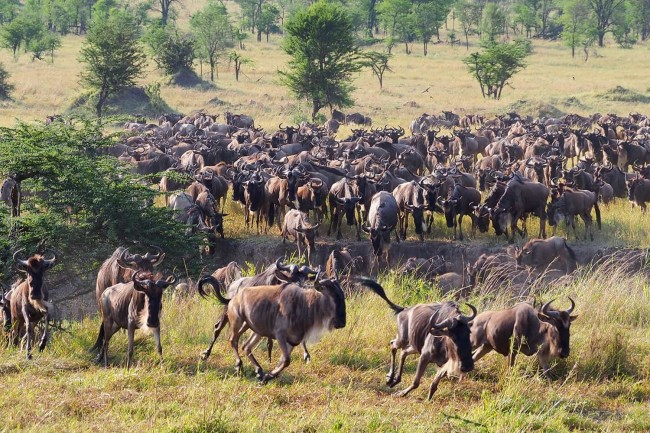
As the herds move, they shape the landscape itself—trampling grass, fertilizing soil, and supporting a complex food web. Large predators such as lions, leopards, cheetahs, and hyenas closely follow the herds, relying on them for survival. This interaction between prey, predators, vegetation, and climate is what makes the migration not just dramatic, but ecologically vital.
When to Experience the Great Migration
There is no single “best” time to see the Great Migration, as each period of the year offers a different perspective and experience. What travelers witness depends largely on seasonal rainfall, herd movement, and geographic location.
January – March | Calving Season (Southern Serengeti & Ndutu Area)
During the early months of the year, the herds gather on the short-grass plains of the southern Serengeti and the Ndutu region. This period is known as the calving season, when hundreds of thousands of wildebeest calves are born within a short span of time. The abundance of newborn animals attracts predators, leading to frequent sightings of hunting behavior.
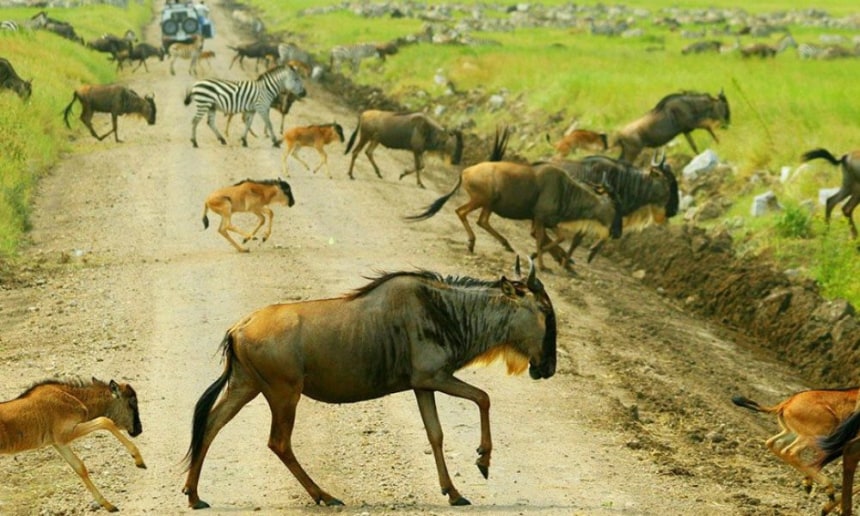
The open landscape allows for excellent visibility, making this season particularly rewarding for photography and observation. Visitors during this time experience intense wildlife activity combined with wide, scenic views.
April – May | Transition and Green Season (Central Serengeti)
As the rains continue, the herds begin moving northward toward the central Serengeti. This season is often referred to as the green season, when the park is lush and vibrant. While road conditions can be more challenging, the scenery is exceptionally beautiful, and tourist numbers are generally lower.
This period is ideal for travelers who prefer quieter safaris and appreciate dramatic skies, fresh vegetation, and a sense of wilderness. Wildlife viewing remains excellent, even without dramatic river crossings.
June – July | Grumeti River Crossings (Western Serengeti)
By mid-year, the migration reaches the western corridor of the Serengeti, where the herds face their first major obstacle: the Grumeti River. These crossings are tense and unpredictable, as crocodiles lie in wait and predators patrol the riverbanks.
While not as famous as the Mara River crossings, the Grumeti crossings offer equally dramatic encounters, often with fewer vehicles. This is a transitional period that signals the migration’s movement toward the northern Serengeti.
August – October | Mara River Crossings (Northern Serengeti)
This is the most widely known and photographed phase of the Great Migration. As the herds reach the northern Serengeti, they must cross the Mara River, a powerful and dangerous barrier. The crossings are chaotic, emotional, and completely unpredictable—sometimes happening multiple times a day, sometimes not at all.
This period attracts the highest number of visitors, and while sightings can require patience, witnessing a crossing is a once-in-a-lifetime experience for many travelers.
November – December | Return Journey (Central to Southern Serengeti)
As short rains begin, the herds slowly move back south toward the Serengeti plains. This return journey offers excellent general wildlife viewing and fewer crowds. It is a rewarding time for travelers seeking balance between migration sightings and overall safari enjoyment.
Where to Position Yourself in the Serengeti
The Serengeti covers an immense area, and being in the right region at the right time is crucial. Each zone plays a specific role in the migration cycle:
Southern Serengeti & Ndutu: Calving and predator activity
Central Serengeti (Seronera): Year-round wildlife and transition periods
Western Corridor: Grumeti River crossings
Northern Serengeti: Mara River crossings
Choosing locations carefully enhances both wildlife sightings and overall safari satisfaction.
What Travelers Can Expect on a Migration Safari
A migration safari offers far more than dramatic moments. Travelers should expect long game drives, changing weather conditions, and days filled with observation and anticipation. Even when river crossings are not happening, the presence of massive herds creates unforgettable scenes across the plains.
In addition to wildebeest and zebras, visitors encounter elephants, giraffes, buffalo, diverse birdlife, and a wide range of predators. Each day brings new encounters shaped by nature rather than schedules.
Photography and Viewing Considerations
Photography during the Great Migration requires patience and preparation. Wildlife behavior is unpredictable, and the most powerful moments often occur without warning. A knowledgeable guide helps position vehicles ethically while maximizing viewing opportunities.
Early mornings and late afternoons offer the best light, while binoculars and zoom lenses enhance the experience. Flexibility is essential—nature operates on its own timeline.
The Importance of an Experienced Guide
The Great Migration is complex, and its success as a travel experience depends heavily on expert guidance. An experienced local guide understands animal behavior, seasonal movements, and terrain conditions. They monitor daily changes and adjust plans accordingly.
Beyond logistics, a guide provides context—explaining why animals move, how ecosystems function, and what visitors are witnessing. This transforms a safari from observation into meaningful understanding.
Final Reflections
The Great Migration is not simply about river crossings or dramatic chases—it is about life in motion, survival, and balance within one of the world’s last great natural ecosystems. Every season tells a different story, and no two visits are ever the same.
For travelers who approach it with curiosity, patience, and respect, the Serengeti offers an experience that is both humbling and unforgettable. With the right timing, location, and guidance, witnessing the Great Migration becomes one of the most profound wildlife experiences on Earth.