


| 8 mins read
There is something deeply satisfying about watching a railway platform disappear while a new landscape slowly takes its place. Cities become suburbs, suburbs become fields, and eventually mountains, valleys, or open countryside fill the window. Unlike flying, the distance remains visible.
That feeling is helping to usher rail travel into a new chapter in 2026-2027. Explore Worldwide identified rail travel among its major travel trends for the year, reporting a 25 per cent year-on-year increase in rail journey bookings and a 41 per cent rise in future rail bookings compared with 2024. The research reflects growing interest in slower, more experiential ways to travel.
There is also a practical reason for the revival. Across Europe, trains can make particular sense for short- and medium-distance journeys, taking travellers directly between city centres while avoiding airport transfers and lengthy airport procedures. The European Environment Agency identifies rail as the lowest-emitting major motorised passenger transport mode in the European Union.
Yet sustainability is only part of the story. A train gives you time to notice a destination before you arrive. Add a local guide at the other end and the journey becomes something more than transportation. You arrive with questions, observations and a little context.
Glacier Express Switzerland
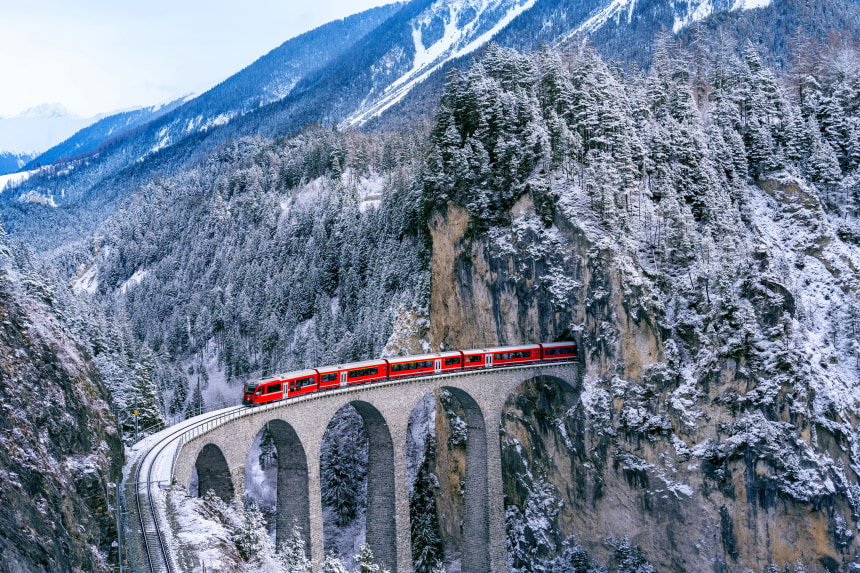
The Glacier Express crosses the Swiss Alps between Zermatt and St Moritz, taking around eight hours for the complete journey. The route passes through dramatic mountain scenery and the Landwasser Viaduct, while sections of the journey form part of the UNESCO-listed Rhaetian Railway landscape.
The best way to build the journey into a wider holiday is to give yourself time at either end. In Zermatt, a local guide can explain the history of the mountain village, introduce Alpine traditions and suggest walks suited to the season. In St Moritz, a guide can take you beyond the famous resort and into the villages and landscapes of the Engadin valley.
The train itself deserves unhurried attention. Rather than filling the day with activities, leave room simply to watch the landscape change.
Worth knowing: The Glacier Express requires seat reservations, and its timetable varies by season.
West Highland Line Scotland
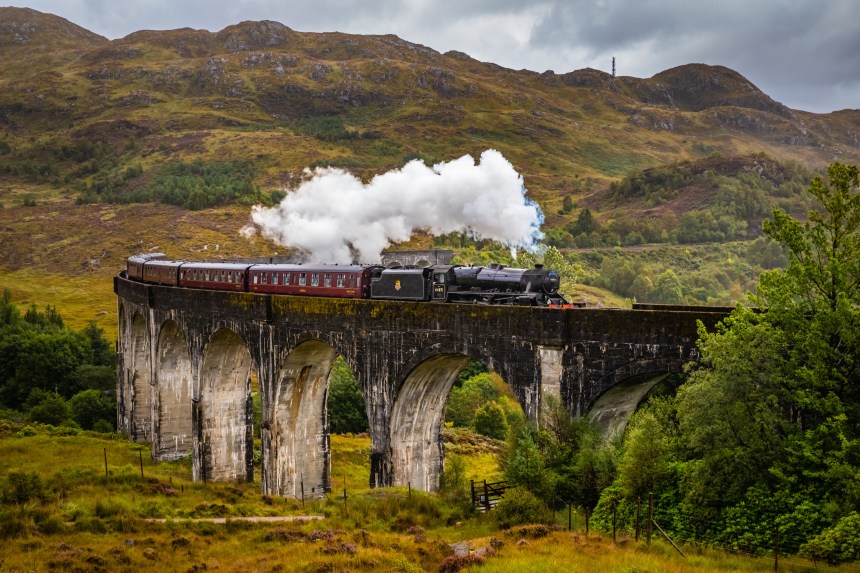
From Glasgow, the West Highland Line travels towards Fort William and Mallaig, passing lochs, mountains, moorland and increasingly remote landscapes. The route also passes the famous Glenfinnan Viaduct, while the wider journey reveals some of the most dramatic scenery in western Scotland.
Rannoch Moor is one of the most striking sections, with an enormous sense of space and very little development around the railway. Further north, Fort William provides access to Ben Nevis, while Mallaig sits on the coast opposite the islands of the Inner Hebrides.
A local guide can make the difference between seeing these places and understanding them. In Fort William, a guide can help plan walks around the weather and explain Highland history. In Mallaig, local knowledge can reveal more about fishing traditions and connections with nearby islands.
Glenfinnan is another place where context matters. The viaduct is internationally recognisable from the Harry Potter films, but the surrounding landscape has a much older history, including its association with the Jacobite rising.
The West Highland Line is therefore ideal for travellers who want scenic rail travel without the formality of a luxury train. Its appeal lies in the landscape itself.
Palace on Wheels India
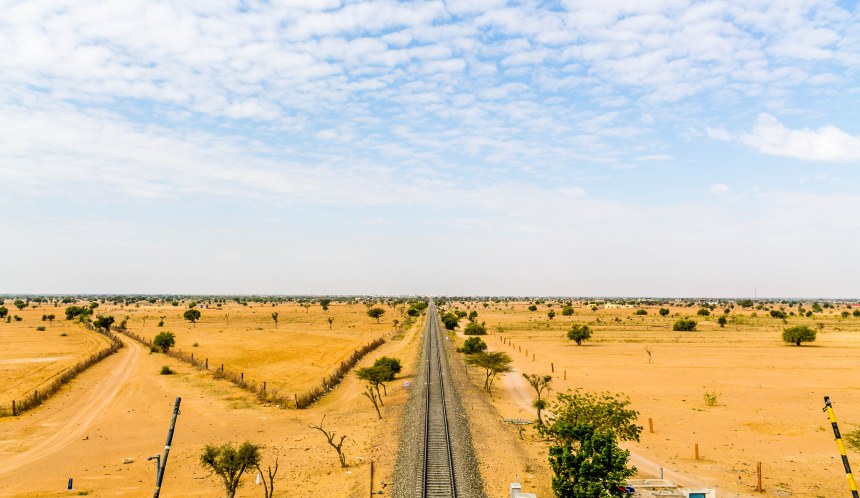
In Rajasthan, rail travel takes on an entirely different character. The Palace on Wheels combines overnight train travel with a route through some of northern India's most celebrated heritage destinations.
The seven-night itinerary begins and ends in New Delhi and includes Jaipur, Sawai Madhopur, Chittorgarh, Udaipur, Jaisalmer, Jodhpur, Bharatpur and Agra.
The overnight schedule means passengers can settle into their cabins while the train travels between destinations. By morning, the landscape and architecture have changed completely.
Local guides are particularly valuable in Rajasthan because the history is layered. In Jaipur, a guide can connect the City Palace and Jantar Mantar with the development of the historic city. In Udaipur, local knowledge adds depth to the lakes and palaces, while in Jodhpur, a guide can explain the history of Mehrangarh Fort before leading you through the streets below.
In Jaisalmer, a guide can also help travellers understand the distinctive sandstone architecture and local craft traditions rather than seeing the Golden City simply as a photographic backdrop.
The train provides the grand setting. The guide gives the individual cities their meaning.
Tren a las Nubes Argentina
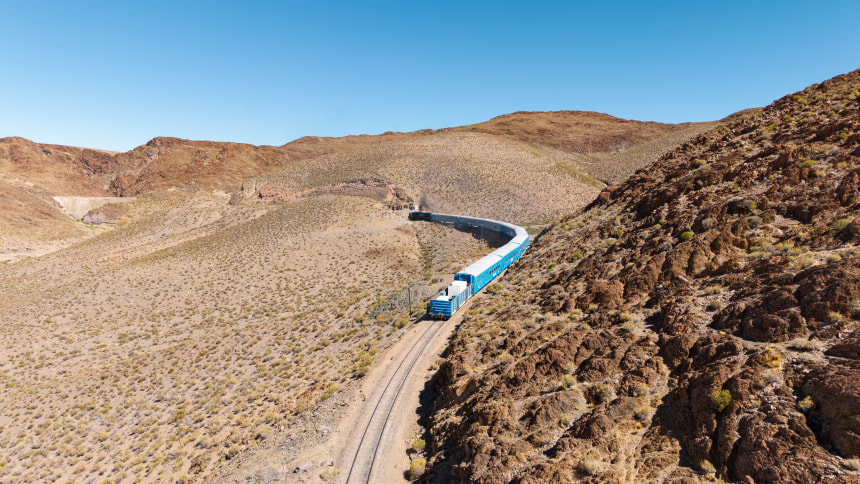
Northern Argentina offers one of the world's most dramatic high-altitude railway experiences. The Tren a las Nubes combines road travel from Salta with a railway journey from San Antonio de los Cobres to the La Polvorilla Viaduct, which stands at roughly 4,200 metres above sea level.
The route crosses the Quebrada del Toro before reaching the high puna. The scenery is extraordinary, but altitude makes this a journey that benefits from practical preparation.
A guide based in Salta can introduce the region's geography and history before the railway experience begins. They can also explain Andean culture, local traditions and the communities connected with the highland landscape.
Altitude should not be treated casually. Travellers should allow time to acclimatise and avoid strenuous activity if they feel unwell. Mountain weather can also affect operations, so keeping some flexibility in the itinerary is sensible.
This is slow travel in its most literal form. The train does not simply cross the landscape. It reveals how dramatically geography changes as you climb away from Salta.
Flåm Railway Norway
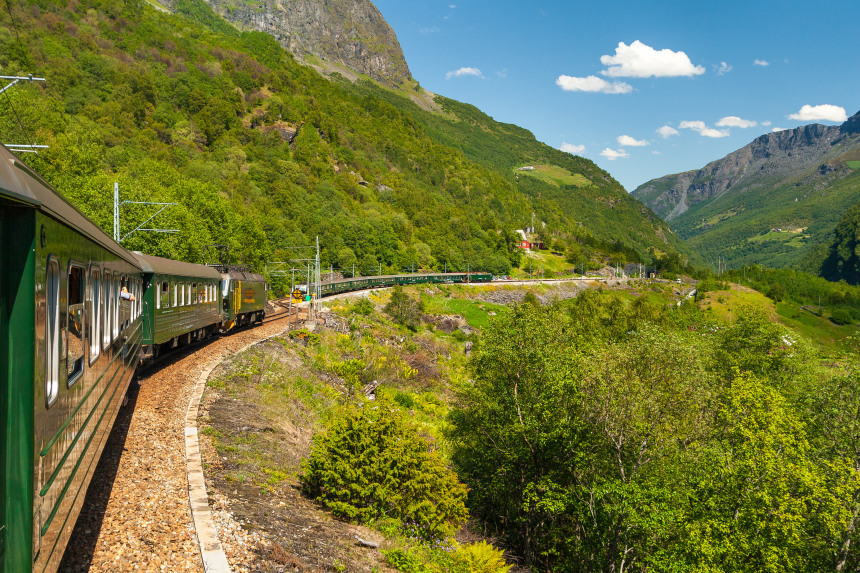
The Flåm Railway is considerably shorter than the other journeys, but its scenery is remarkably concentrated. The railway connects Flåm with Myrdal in about 55 minutes, climbing steeply through the Flåm Valley past waterfalls, mountain farms and dramatic slopes.
For travellers arriving through Bergen, the railway works particularly well as part of a wider fjord itinerary. Myrdal connects with the Bergen Railway, while Flåm provides access to the Aurlandsfjord and surrounding valley.
A guide in Bergen can help put the fjord landscape into context before you travel. A guide in Flåm can instead focus on the local valley, walking routes, village life and practical ways to combine the railway with a fjord cruise or outdoor activity.
The relatively short journey is also a reminder that spectacular rail travel does not need to take an entire day. Sometimes an hour of carefully chosen scenery is enough.
How to combine rail travel with a local guide

The most useful arrangement is often surprisingly simple. Book the train as the centrepiece of the journey, then arrange for a local guide to meet you at the destination station.
Confirm the meeting point in advance, particularly at large stations. Allow some flexibility for train delays and luggage collection. If possible, give yourself at least a few hours before the next major booking.
The guide does not necessarily need to travel on the train. In fact, the quiet time aboard can be one of the best parts of the experience. Read, watch the scenery, talk to fellow passengers or simply let the landscape unfold.
Use the guide when local knowledge genuinely adds something: interpreting history, navigating unfamiliar transport, finding regional food, choosing a suitable walk or understanding cultural traditions.
That is the real principle behind rail travel as a form of slow travel. A plane can make a destination feel like somewhere you have suddenly appeared. A train gives you a gradual introduction.
Then, when a local guide meets you at the station, the landscape outside the window becomes the beginning of a conversation.
The train shows you the world changing. The guide helps you understand what you have arrived to see.
FAQ
What is the best scenic train journey?
It depends on the experience you want. The Glacier Express suits Alpine scenery, the West Highland Line offers Highland wilderness, Palace on Wheels combines luxury with heritage, Tren a las Nubes delivers high altitude adventure, and the Flåm Railway focuses on fjord scenery.
Why is rail travel becoming popular in 2026?
Rail combines scenery, comfort and a slower pace with lower emissions than many competing forms of transport. Explore Worldwide has reported strong growth in rail bookings and identified rail as a significant travel trend for 2026.
Is train travel better than flying in Europe?
For many short- and medium-distance journeys, trains can offer convenient city-centre connections while producing substantially lower transport emissions than aviation.
Why use a local guide after a train journey?
A local guide adds cultural and historical context while helping with practical matters such as transport, food, walking routes and places that can be difficult to discover independently.
How should I arrange a guide for a rail journey?
Arrange the guide around your arrival. Confirm the station, meeting point and expected arrival time beforehand, while allowing some flexibility for delays.
Which of these journeys is best for luxury travel?
Palace on Wheels is the strongest choice for travellers seeking a luxury rail experience combined with India's heritage cities.