

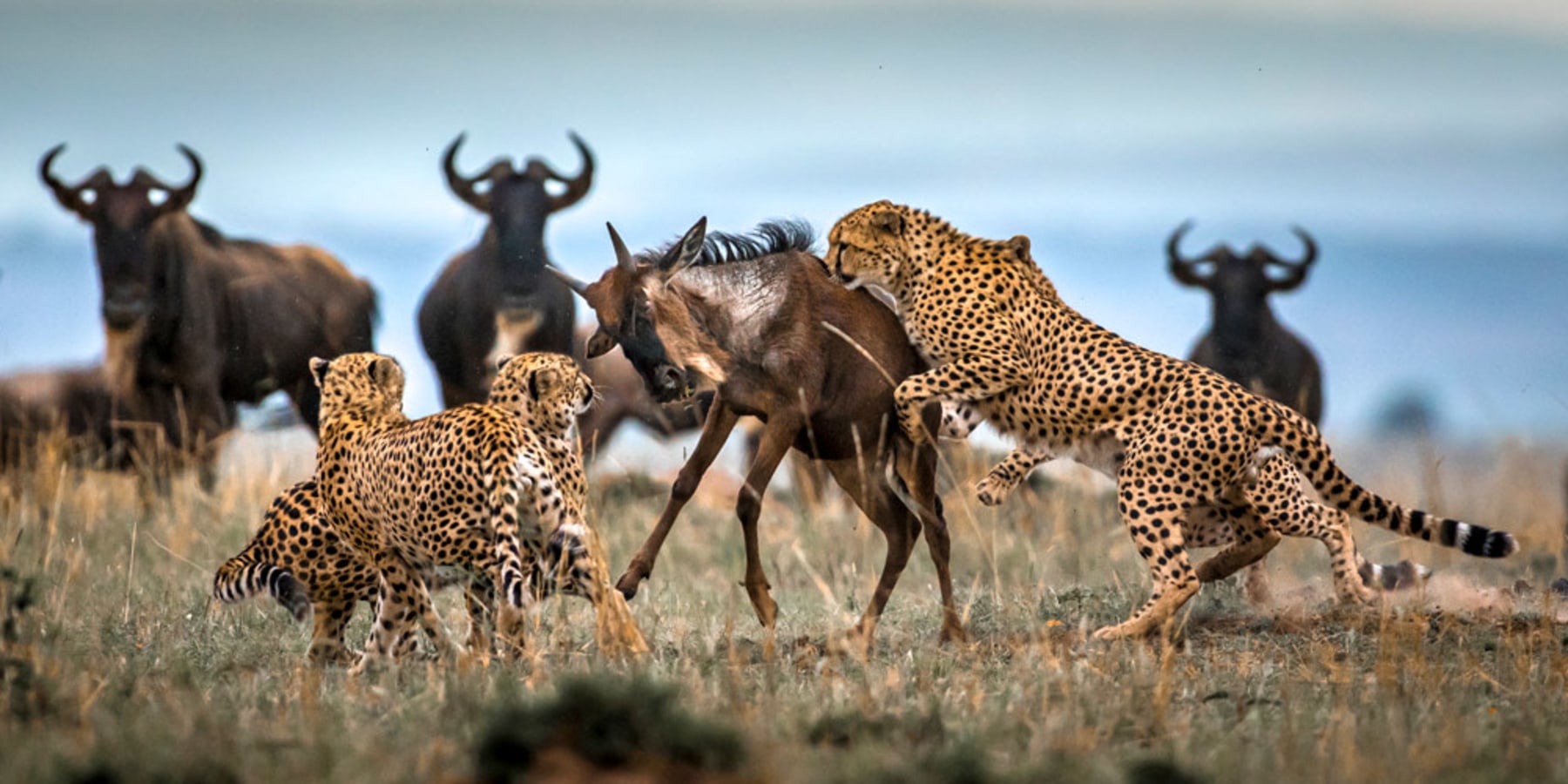

Serengeti National Park, located in northern Tanzania, is one of Africa's most iconic wildlife reserves, renowned for its stunning landscapes, rich biodiversity, and the annual Great Migration of wildebeest and other animals. Established in 1951, the park sprawls over approximately 14,750 square kilometers, showcasing a range of ecosystems including savannahs, grasslands, and riverine forests.
The park is home to a diverse array of wildlife, including the "Big Five"—lions, elephants, buffalo, leopards, and rhinoceroses—along with a multitude of herbivores and bird species. The Great Migration, occurring between April and July and then again from November to December, attracts millions of wildebeest and zebras as they move in search of greener pastures, making it a prime destination for wildlife enthusiasts and photographers.
In addition to its natural beauty and wildlife, Serengeti National Park is recognized for its conservation efforts, working to protect its ecosystems and species from threats such as poaching and habitat destruction. The park's unique combination of natural wonders and cultural heritage, including the presence of the Maasai people, enhances its significance as a UNESCO World Heritage Site.
Overall, Serengeti National Park stands as a symbol of wildlife conservation and a testament to the incredible natural heritage of East Africa, attracting visitors from around the world who seek to experience its breathtaking landscapes and dynamic wildlife.