

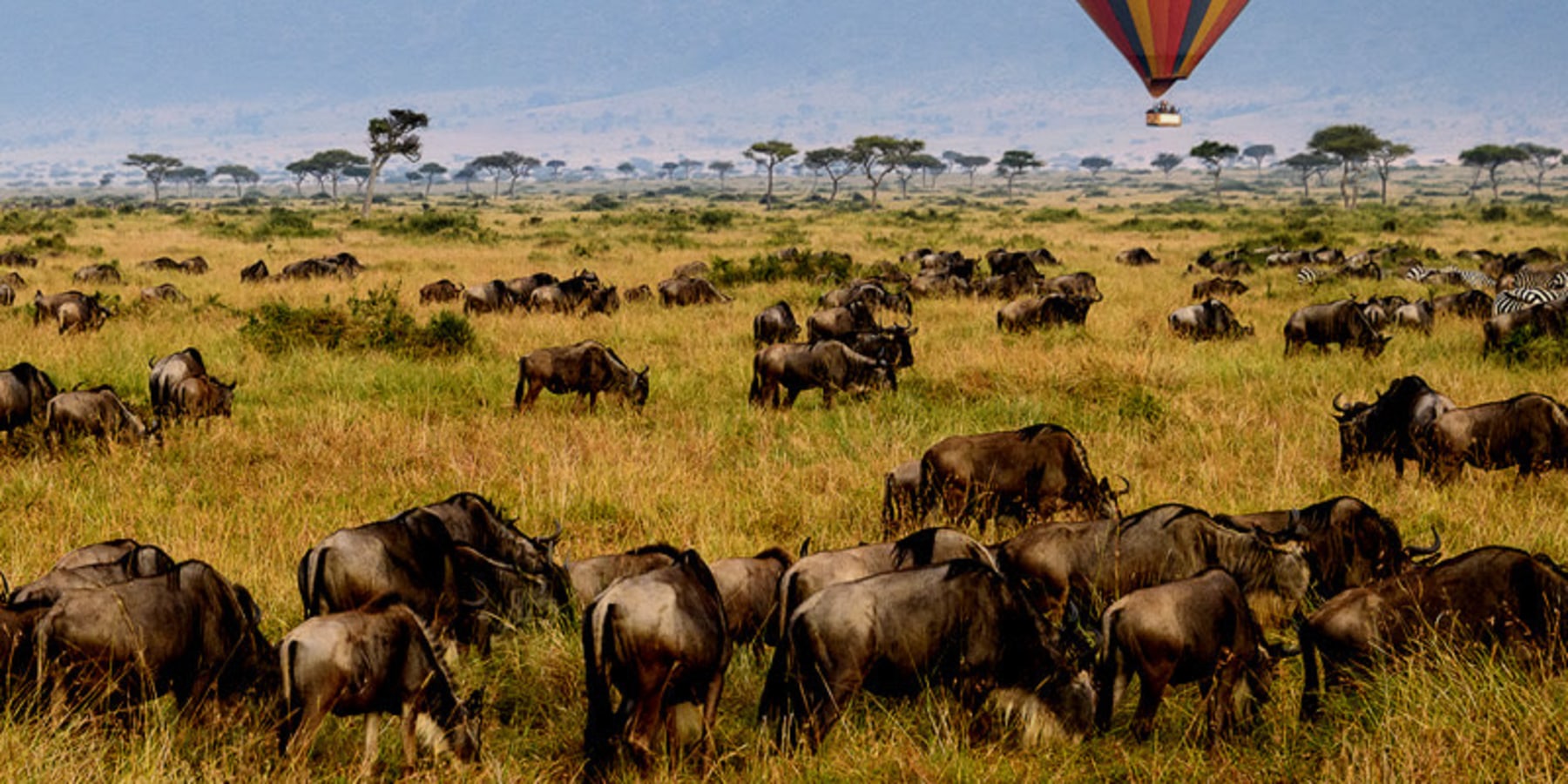

Maasai people called this park ‘Siringet’, meaning endless plains. The Serengeti speaks for itself, and with good reason, not only the migration of over 1 million wildebeest through its plains and woodlands but also unique landscapes and other spectacular wildlife.
The Serengeti is home to the world’s largest populations of Wildebeest, Zebra, Cape Eland, Lion, Cheetah, Hyena and Gazelles. The scenic beauty of the sky with cool nights and warm days makes your visit to this remaining home for the great migration of large mammals incredible!
Climate
The climate of Serengeti National Park is subtropical, with a rainy season from November to April and a dry season from May to October.
The park is located between 1,100 and 2,000 meters and has an annual average rainfall of 900 to 1,000 mm.
Getting there
The park can be accessed by road and air.
Road. Accessed from all towns and cities to the present entry or exit points/gates, namely Naabi Hill, Seronera, Ndutu, Kusini, Kirawira, Handajega, Ikoma, Tabora ‘B’, Lamai, Lobo, Ndabaka, Machochwe and Kleins.Air. There are all-weather airstrips in the center of the park (Seronera), in the South (Kusini), in the East (Lobo), in the West (Kirawira) and the North (Kogatende & Lamai). There are scheduled and private charters from Arusha, Mwanza, Kilimanjaro, Musoma, Dar es Salaam and Zanzibar.
Attractions
Serengeti National Park is a world-renowned Biosphere Reserve and World Heritage Site with more attractions than any other national park in Africa. The Great Migration, The Big Five, Unique Bird Collections, Endangered Species, the highest concentration of Carnivores and Herbivores, and Scenic and Spectacular Landscapes are some of the attractions one will encounter!