


If you have around nine days in eastern China and want a trip that combines ceramics, traditional villages, local culture and hiking, this route works particularly well:
Beijing→ Jingdezhen → Wuyuan → Huizhou Ancient City → Xidi → Hongcun → Huangshan → Tunxi → Xixinanzhen → Next Destination
What makes this itinerary especially suitable for international travelers is that most major transfers can be done by high-speed rail, while the slower village sections can be handled with local taxis, tour buses, ride-hailing or private transfers.
The scenery also changes constantly.
You begin with ceramics and contemporary design in Jingdezhen, move through the rural landscapes of Wuyuan, continue into traditional Huizhou villages, and finish with two full days in the Huangshan mountains.
Before You Start: A Few Things International Travelers Should Know
Traveling independently in China is much easier than many first-time visitors expect, but a few tools make a big difference.
1. High-speed rail is the backbone of this route
The key rail sections are:
Jingdezhen North → Wuyuan
Wuyuan → Huangshan North
Huangshan North → Maybe Shanghai, I went back to Beijing
For long-distance travel, high-speed rail is usually the easiest option.
Foreign passports can be used to book train tickets, but during busy travel periods it is better to reserve tickets as early as possible.
At larger stations, signs normally include English, and passport holders can usually use staffed or designated gates when automatic ID gates are not available.
2. Google Maps is not the best navigation tool in mainland China
This surprises many international travelers.
Google Maps may be incomplete or unreliable for local navigation in mainland China.
For day-to-day travel, local map apps such as Amap / Gaode Maps are usually much more accurate.
For travelers who do not read Chinese, it helps to save:
hotel names in Chinese
train station names in Chinese
attraction names in Chinese
screenshots of addresses
Showing the Chinese name to a taxi driver is often much easier than trying to pronounce it.
3. Mobile payment is very useful
China is highly cashless.
Most restaurants, taxis, cafés, convenience stores and attractions prefer mobile payment.
International travelers should ideally set up: Alipay and WeChat Pay before traveling. (For foreign travelers, maybe Alipay plus or Alipay+)
Both can support international bank cards in many cases.
It is still a good idea to carry some cash as backup, especially in rural areas or when dealing with very small local businesses.
4. Ride-hailing is often easier than street taxis
In cities such as Jingdezhen and Huangshan, ride-hailing is useful for short transfers.
For places such as:
Xidi → Hongcun → Tangkou
a private car, local driver or pre-arranged transfer may be more convenient than trying to connect several buses.
This is especially true if you are traveling with luggage.
Tour buses usually operate on a fixed and fairly tight schedule, so they may not be the best fit for your arrangement. However, they are still one of the most convenient and cost-effective ways to travel between scenic spots within the same region.
5. Translation apps help, but basic preparation helps more
English is not widely spoken in smaller towns and villages.
You do not need to speak Chinese to travel independently, but it helps to keep a note on your phone with:
hotel address
destination name
dietary restrictions
emergency contact
train number
next hotel name
A translation app can handle most simple situations.
The trip itinerary you can refer to
Day 1|Arrive in Jingdezhen
After arriving in Jingdezhen (we took flight from Tianjin to
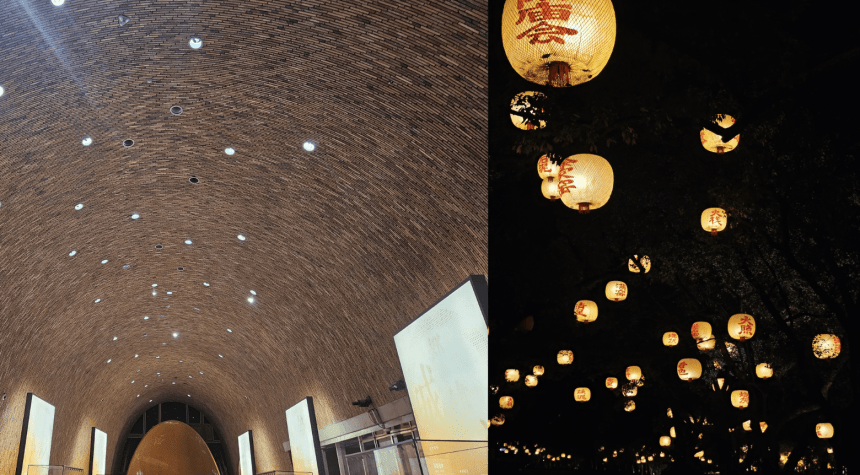
Jingdezhen), keep the first day concentrated around the historic ceramic district.
Visit:
? Taoyangli Historical and Cultural District
? Imperial Kiln Site / Imperial Kiln Museum
Taoyangli is one of the best introductions to Jingdezhen.
It combines old streets, kiln remains, traditional ceramic history and the former imperial porcelain production area.
The Imperial Kiln Museum is also worth seeing for its architecture alone.
Stay: Jingdezhen
Tranportation: Ride-hailing, Walk
Day 2|China Ceramics Museum + Hands-on Pottery
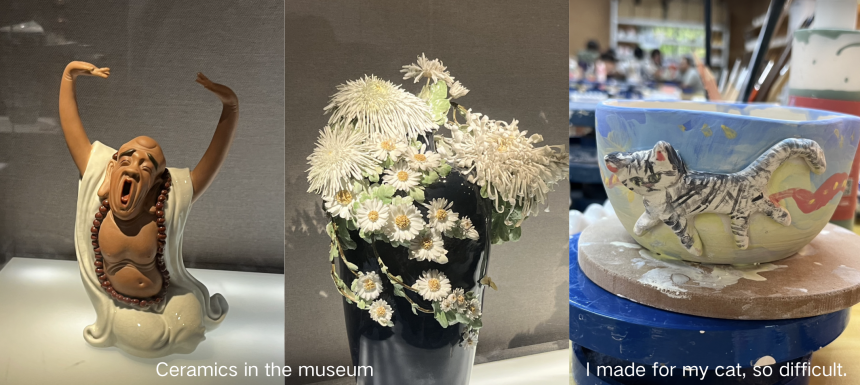
Spend the morning at:
? Jingdezhen China Ceramics Museum
Allow around two to three hours.
It gives useful historical context before trying pottery yourself.
In the afternoon, book a ceramic workshop.
Possible experiences include:
wheel throwing
hand-building
underglaze painting
blue-and-white porcelain painting
decorating cups or plates
Rather than adding several more attractions, I would keep the afternoon focused on actually making something.
Stay: Jingdezhen
Tranportation: Ride-hailing
Day 3|Jingdezhen → Wuyuan
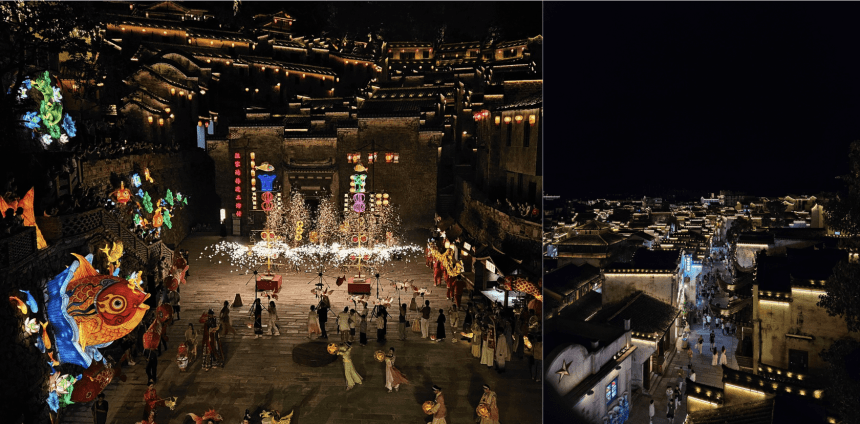
Travel to Wuyuan.
In the late afternoon or evening, visit:
? Xiangao Ancient Town
The main reason to visit is the evening atmosphere.
One of the most popular experiences is the:
? Fish Lantern Parade
Large illuminated fish lanterns move through the old streets, creating one of the most photogenic evening experiences in Wuyuan.
The performance schedule can change seasonally, so check the programme shortly before your visit rather than assuming it runs every night.
Stay: Wuyuan
Tranportation: Ride-hailing
Day 4|Huangling + Wunvzhou
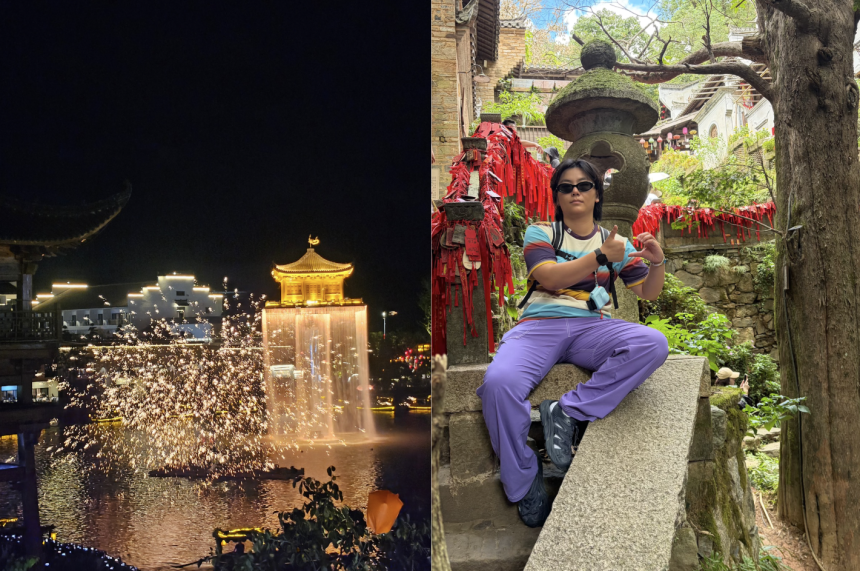
Spend most of the day at:
? Huangling
Highlights include:
hillside village architecture
traditional drying displays
mountain views
terraced landscapes
narrow village lanes
Late summer is already a good season for the colourful drying displays known as shaiqiu. (Not take lots of photos in Huangling)
Return to Wuyuan in the afternoon.
In the evening:
? Wunvzhou Resort
Huangling and Wunvzhou offer very different experiences.
Huangling is more traditional and landscape-focused, while Wunvzhou is mainly an evening entertainment and performance destination.
Stay: Wuyuan
Tranportation: Ride-hailing, Tour buses
Day 5|Wuyuan → Xidi → Hongcun
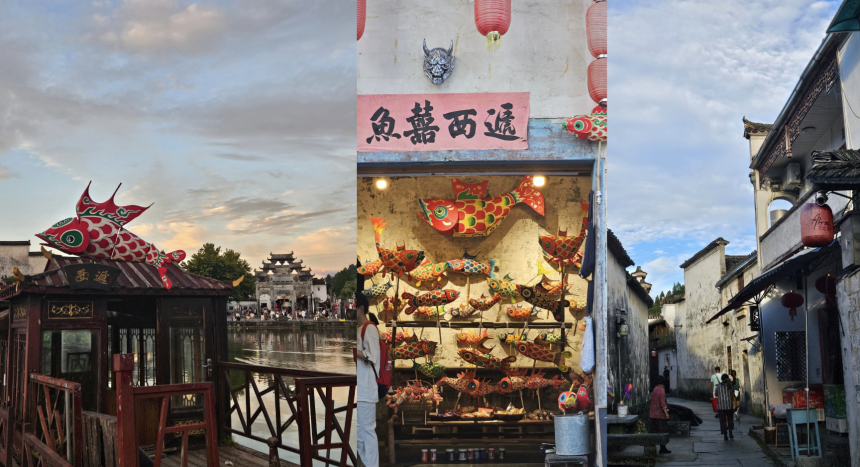
Travel from Wuyuan into the Huangshan region.
A practical arrangement is:
Wuyuan → Hongcun area → leave luggage → Xidi → return to Hongcun
Visit:
? Xidi Ancient Village
Xidi is especially worthwhile for travelers interested in architecture.
Look closely at:
ancestral halls
old residences
gateways
wood carvings
stone carvings
narrow alleys
traditional Huizhou houses
Xidi and Hongcun are both UNESCO-listed villages, but they feel different.
Xidi is stronger for architecture.
Hongcun is stronger for overall scenery.
Stay: Hongcun
Tranportation: Tour buses, Ride-hailing
Day 6|Hongcun → Tangkou, Mountain Huangshan
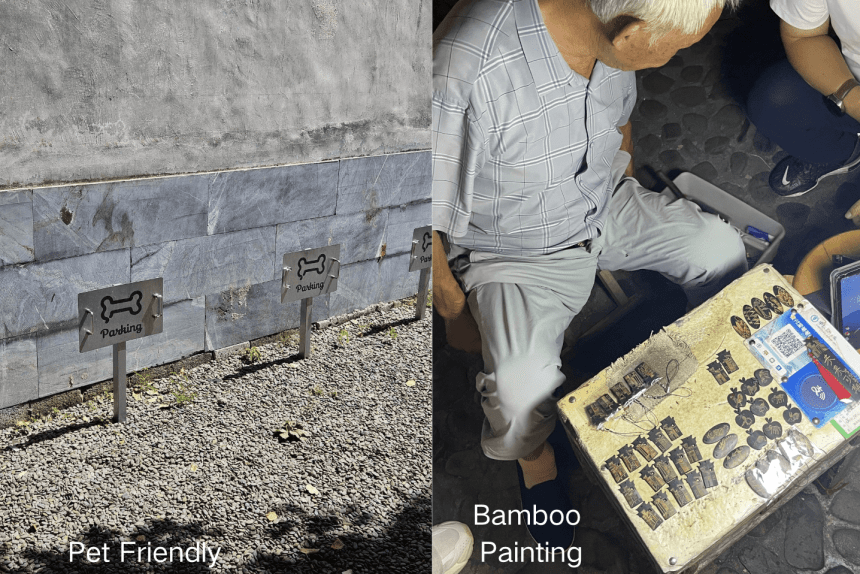
Explore:
? Hongcun
A classic walking route is:
South Lake → South Lake Academy → Moon Pond → Chengzhi Hall → village lanes
If you stay nearby, visit early in the morning before the larger tour groups arrive.
Around midday, travel to:
? Tangkou
Tangkou is the main gateway to the southern entrance of Huangshan Scenic Area.
Use the afternoon to:
prepare hiking gear
confirm transport
pack a small overnight bag
leave your main suitcase at the hotel
rest
Stay: Tangkou
Tranportation: Tour buses, Ride-hailing
Day 7|Huangshan Day 1
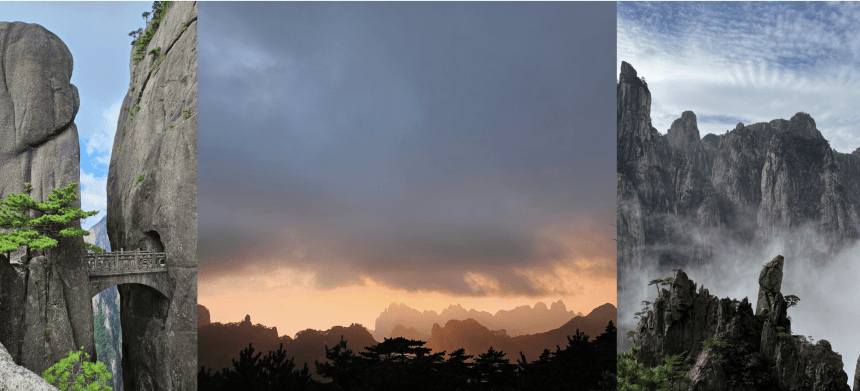
Enter Huangshan from the southern entrance.
A recommended route is:
Tangkou
→ scenic shuttle
→ Yungu Temple
→ Yungu Cableway
→ Beginning-to-Believe Peak
→ Beihai
→ Paiyun Pavilion
→ West Sea Grand Canyon
→ Tianhai / Bright Summit area
For a first visit, taking the cableway for the initial ascent usually makes sense.
It saves energy for the more scenic hiking sections higher on the mountain.
Major highlights include:
? Beginning-to-Believe Peak
? Beihai
? Paiyun Pavilion
? West Sea Grand Canyon
? Sunset viewpoint near your summit hotel
Watch the sunset if weather conditions allow.
Stay: Huangshan summit
Walk, just walk
Day 8|Sunrise → Front Mountain → Chengkan → Tunxi
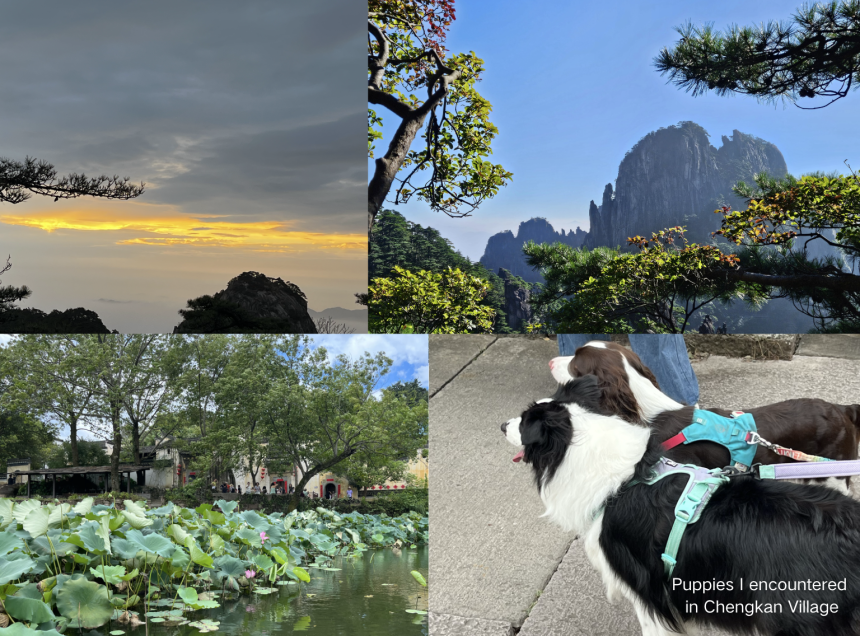
Wake up early for sunrise if conditions are suitable. (Not that lucky for sunrise when I secondly went to Huangshan, and the photo is the memory for my first Huangshan trip)
Continue through:
Bright Summit
→ Aoyu Peak
→ Hundred-Step Cloud Ladder
→ Yuping Pavilion
→ Greeting Guest Pine
Descend via the front side of the mountain.
If Tiandu Peak is open, weather is safe and you still have enough energy, it can be considered as an optional challenge.
After leaving Huangshan, continue to:
? Chengkan Ancient Village
Chengkan is known for its traditional Huizhou architecture, lake scenery, old lanes and distinctive village layout.
Allow roughly 1.5–2.5 hours.
This is the most physically demanding day of the entire itinerary, so Chengkan should remain optional if the Huangshan section takes longer than expected.
Continue to central Huangshan in the evening.
Visit:
? Tunxi Old Street
If you still have energy:
? Liyang In Lane
Stay: Tunxi / Huangshan city centre
Tranportation: Ride-hailing
Day 9|Xixinan → Departure
Before leaving Huangshan, spend the morning at:
? Xixinan Ancient Village
Xixinan has become one of the most popular places around Huangshan in recent years.
Unlike the more architectural focus of Xidi or Hongcun, Xixinan feels greener and more relaxed.
Expect:
riverside walks
old trees
traditional houses
small bridges
forest-like scenery
In 2026, Xixinan ranked among the most popular attractions in the Huangshan area, and local tourism transport connects the village with Huangshan North Railway Station.
Spend the morning walking through the village, have lunch, and then continue to Huangshan North Railway Station for your journey home.
Optional Attractions
These places are worth considering if you have extra time or need a backup plan.
Jingdezhen
Taoxichuan Ceramic Art Avenue
Best for contemporary ceramic design, evening markets and cafés.
Sculpture Factory & Pottery Workshop Market
Good for independent ceramics and shopping.
Sanbao International Ceramic Valley
Studios, galleries and a slower artistic atmosphere.
Yaoli Ancient Town
Better as an additional full-day trip.
Wuyuan
Likeng
Classic small bridges and riverside village scenery.
Sixiyan Village
A quieter traditional village option.
Jiangwan
Another established Wuyuan heritage destination.
Huangshan Region
Huizhou Ancient City
A good alternative if Chengkan has to be dropped.
Qiyun Mountain
Useful as a nature-focused backup if Huangshan conditions are poor.
Mukeng Bamboo Forest
A half-day option near Hongcun.
Liyang In Lane
Easy to combine with Tunxi Old Street in the evening.
Ticket Booking & Reservations
International travelers should plan ahead for several parts of this itinerary.
Train tickets
High-speed train tickets can usually be booked using a passport.
It is useful to keep your passport number and full legal name consistent across all bookings.
Huangshan tickets
Huangshan can become very busy during holidays and peak travel seasons.
It is better to reserve:
scenic area admission
cableway tickets if required
summit hotel
optional peak reservations
in advance when possible.
Museum reservations
Some museums and attractions in China use real-name reservation systems.
Passport information may be required.
If an online booking page is difficult to use in English, hotels are often able to help confirm local reservation procedures.
Luggage Strategy
This route becomes much easier if you travel light.
A practical approach is:
Main suitcase: kept at hotels during city and village sections
Small backpack: used for Huangshan overnight
When moving between Wuyuan, Xidi, Hongcun and Tangkou, luggage is one of the main reasons private transfers can be worth the extra cost.
Food & Dietary Needs
Most destinations on this route have plenty of local restaurants.
However, English menus are not guaranteed.
International travelers with dietary restrictions should save a short Chinese sentence explaining what they cannot eat.
For example:
vegetarian
no pork
no peanuts
no shellfish
food allergy
This is more reliable than trying to explain everything verbally.
Internet Access
Hotel Wi-Fi is widely available, but international travelers should prepare mobile data before arrival.
A working data connection is especially useful for:
translation
ride-hailing
mobile payment
train updates
map navigation
Download important booking confirmations and hotel addresses in advance in case mobile service becomes unstable.
Useful Chinese Place Names
Saving these names can make the trip much easier:
景德镇 — Jingdezhen
婺源 — Wuyuan
篁岭 — Huangling
徽州古城 — Huizhou Ancient City
西递 — Xidi
宏村 — Hongcun
汤口 — Tangkou
黄山风景区 — Huangshan Scenic Area
屯溪老街 — Tunxi Old Street
黄山北站 — Huangshan North Railway Station
Showing these names directly to drivers is often faster than using English.
Accommodation Plan
Night 1 — Jingdezhen
Night 2 — Jingdezhen
Night 3 — Wuyuan
Night 4 — Wuyuan
Night 5 — Tunxi
Night 6 — Tangkou
Night 7 — Huangshan summit
Night 8 — Tunxi
The accommodation I would book earliest is the hotel on Huangshan Mountain.
Why This Route Works for First-Time Visitors to China
This itinerary gives travelers several very different experiences without requiring domestic flights between every stop.
You get:
? Jingdezhen — ceramics and contemporary design
? Wuyuan — rural scenery and hillside villages
? Ancient Huizhou — history and architecture
? Xidi & Hongcun — preserved village landscapes
? Huangshan — mountain hiking and iconic scenery
It is also a good example of how easy it can be to combine China’s high-speed rail network with slower local travel.
The main challenge is not distance.
It is knowing when to use: high-speed rail, ride-hailing, local transport or a private driver.
Once that is planned properly, the whole route becomes much easier.
For travelers interested in culture, photography, hiking, architecture and everyday life in China, this is one of the most balanced routes in eastern China.