

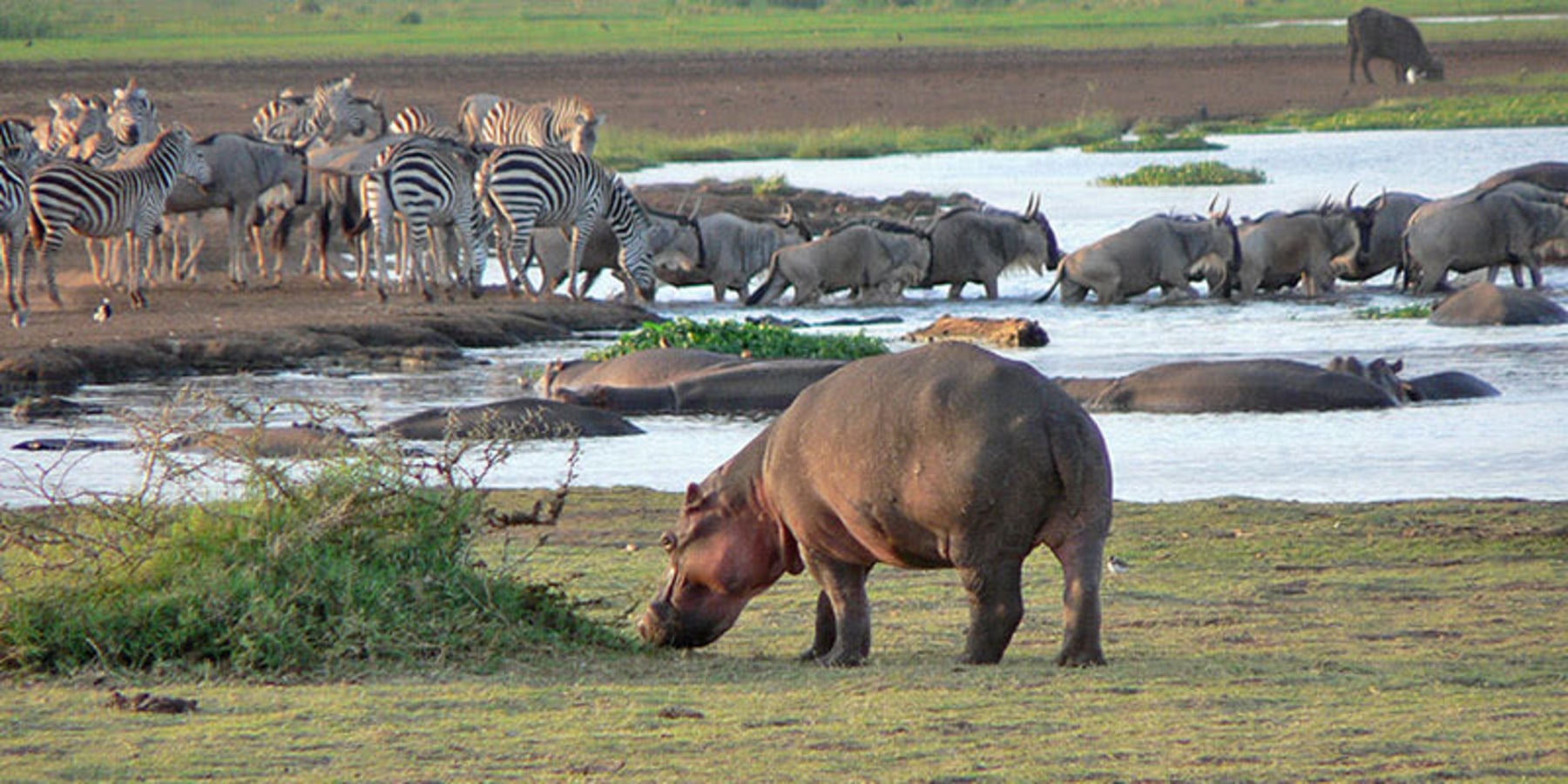

The Ngorongoro Crater is one of Africa’s most famous sites and is said to have the highest density of wildlife in Africa. A UNESCO World Heritage Site, it is located 180 km west of Arusha in the Crater Highlands area of Tanzania. Sometimes described as an ‘eighth wonder of the world’, the Crater has achieved world renown, attracting an ever-increasing number of visitors each year. You are unlikely to escape other vehicles here, but you are guaranteed great wildlife viewing in a genuinely mind-blowing environment. There is nowhere else in Africa quite like Ngorongoro!
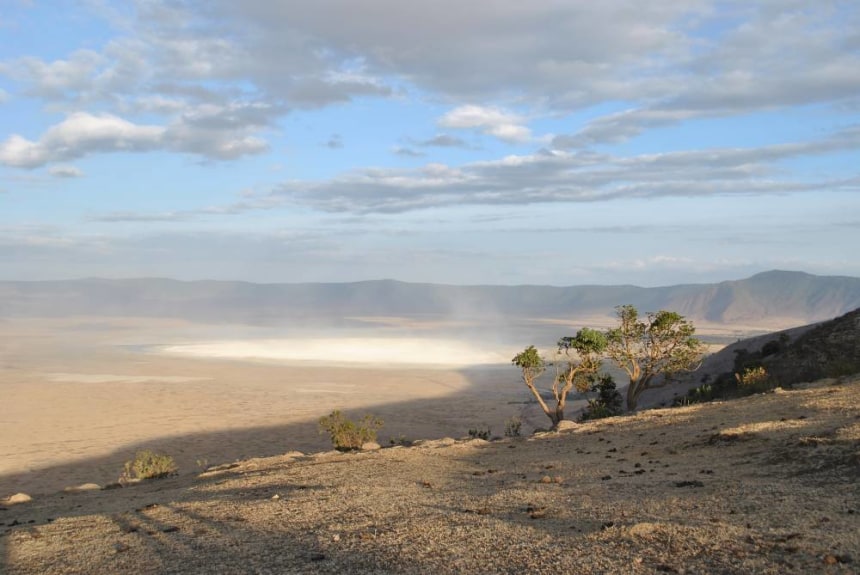
The Ngorongoro Crater is the world’s largest intact volcanic caldera. Forming a spectacular bowl of about 265 square kilometres, with sides up to 600 metres deep; it is home to approximately 30,000 animals at any one time. The crater rim is over 2,200 metres high and experiences its own climate. From this high vantage point, it is possible to make out the tiny shapes of animals making their way around the crater floor far below. Swathes of cloud hang around the rocky rim most days of the year and it’s one of the few places in Tanzania where it can get chilly at night.
Ngorongoro Crater is one of the most likely areas in Tanzania to see the endangered Black Rhino, as a small population is thriving in this idyllic and protected environment. It is currently one of the few areas where they continue to breed in the wild. Your chances of encountering leopard here are also good, and fabulous black-maned lions. Many flamingos are also attracted to the soda waters of Lake Magadi.
The Ngorongoro Conservation Area also protects Olduvai Gorge, situated in the plains area. It is considered to be the seat of humanity after the discovery of the earliest known specimens of the human genus, Homo habilis as well as early hominidae, such as Paranthropus boisei. The Olduvai Gorge or Oldupai Gorge is a steep-sided ravine in the Great Rift Valley, which stretches along eastern Africa. Olduvai is in the eastern Serengeti Plains in northern Tanzania and is about 30 miles long. It lies in the rain shadow of the Ngorongoro highlands and is the driest part of the region. The gorge is named after ‘Oldupaai’, the Maasai word for the wild sisal plant, Sansevieria ehrenbergii.
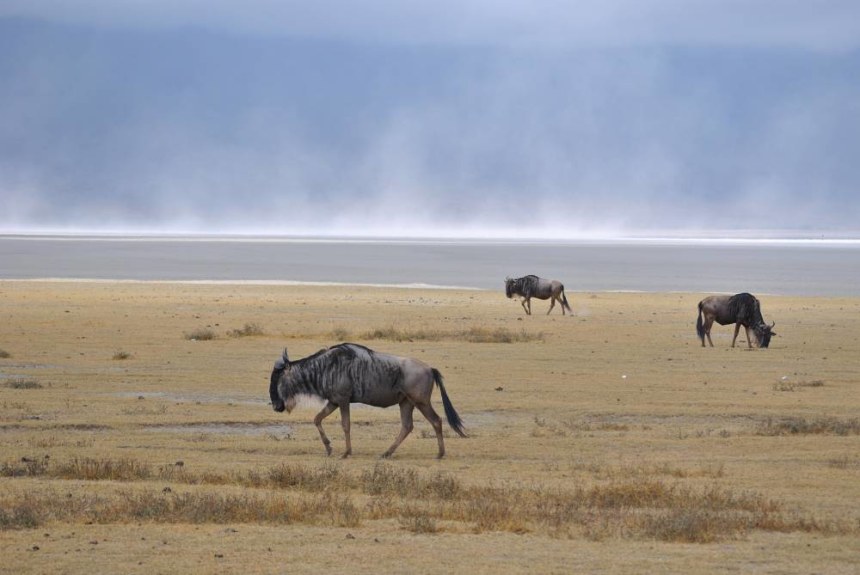
Beyond the Olduvai Gorge, about 15 km northwest, there is a remarkable volcanic ash known as the ‘shifting sand’. It is believed and observed that this elegant black sand dune is constantly being pushed by the Eastern winds and slowly inch by inch it moves forward across the Ngorongoro crater’s plains. It has been estimated that the Ngorongoro dune moves at about 17 meters per year. The volcanic ash is believed to have being originated from the Mount Oldonyo Lengai volcanic eruption. This mountain is an active volcanic mountain and its recent eruption happened in the year 2007.
Part of the reason behind the Ngorongoro Conservation Area has been to preserve the environment for the Maasai people who were diverted from the Serengeti Plains. Essentially nomadic people, they build temporary villages in circular homesteads called Bomas. There are possibilities to visit a couple of these now, which have been opened up for tourists to explore. Here you can see how the huts are built in a strict pattern of order according to the chronological order of the wives, and experience what it must be like to rely on warmth and energy from a fire burning at the heart of a cattle dung dwelling with no chimney. These proud cattle herding people have a great history as warriors, and even though they are no longer allowed to build villages inside, they continue to herd their cattle into the crater to graze and drink, regardless of the predators nearby.
What To Do
Game viewing in the crater
Safaris in the crater’s highlands
Walking to the museum
Birds watching in the crater
Cultural tourism with Maasai and Haadzabe tribes
Picnic site teeming
Archeological finding at Olduvai Gorge and shifting sand attraction
Getting There – Car and flights
Best Time To Visit
Since the wildlife mainly stays in the crater all year round, there is really no good or bad time to visit. However, given that the crater floor does get busy with vehicles, it can be more pleasant to visit during low season. Higher water levels in Lake Magadi (in the centre of the Crater) also result in higher concentrations of flamingos. Whenever you visit to Ngorongoro, you are guaranteed excellent safari action.