


It has been many years since I first visited Peking, the capital city of China, as an adult on a business trip. My own business was yet to take shape, and I was on a mission to provide interpreting service to a French pharmaceutical company located in Peking, together with another female interpreter Wu. It was the spring of 2009, just after the 2008 Summer Olympic Games hosted by Peking for which rigorous measures had been taken to ensure air quality, so although Peking is notorious for its heavy smog, I was luckily spared.
We arrived at a small hotel nestled in a narrow street, inside what seemed to be a courtyard. Only a few blocks away lies the CBD area, including Beijing World Towers. However, we could hardly catch a glimpse of the hustle and bustle of urban life from where we lived. We rose early in the morning to have old-fashioned breakfast, a bowl of soybean milk and a piece of pancake, at a shabby streetfront restaurant. The sky was remarkably clear, and I thought I could almost sense the ancient past in the atmosphere, something akin to solemnity that has somehow seeped into the vast expanse of time and space. In the evening, we had dinner at one of the busy restaurants on the main road. Several rows of tables stood on the open ground in front of the restaurant, where diners sat chatting merrily amid the din, which was partly due to the busy traffic. Strangely, it didn't feel annoying when you immersed yourself in this clamor and stayed in touch with life's concreteness.
In one of the idle evenings, we went to Sanlitun (in Chinese: 三里屯) not far from where we lived, an outdoor shopping mall full of bars, restaurants and fashion brands. Now I can hardly recall anything about that place, except that the name still reminds me of glowing shades of blue and purple, an impression that has more to do with loneliness and dreams, which perfectly matched my own feelings at the moment. Unfortunately, we lost our way home, however, we were not in a hurry, and even went into a store to have our nails polished. We wandered about in the street with few passers-by and lined sparsely with streetlamps, tall buildings towering over us, as the night began to darken.
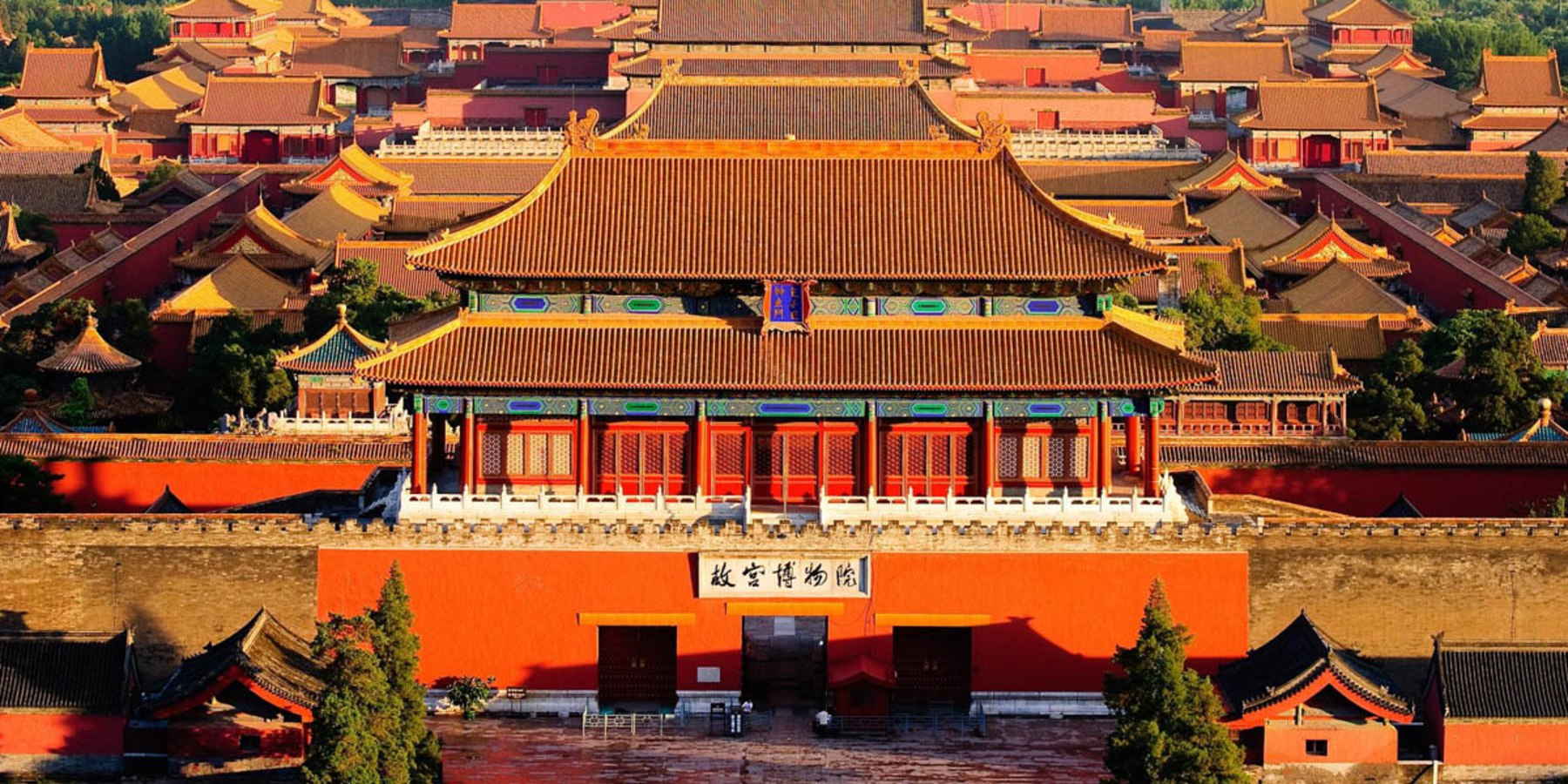
On the weekend, we visited the Imperial Palace or the Forbidden City (in Chinese: 故宫), a large complex of magnificent buildings that cover an area of about 720,000 square meters. We each rented a GPS audio tour guide at the entrance of the Palace. The tour lasted about three to four hours. However, it was not the buildings that impressed me most, although I was deeply awed by their formidable size. It was the stories that once took place in these buildings. I tried to imagine the place as it used to be, with all the bright colored decorations and people moving about. These people had been irrevocably trapped in the space that belonged to the past, too preoccupied with their own sufferings to care about the destiny of their residence. Now it has been fully deserted, and is rumored to be frequented by ghosts of dead concubines and maids at night.
Besides the Imperial Palace, we also visited the Summer Palace (in Chinese: 颐和园) , another must-see attraction in Peking. Then Wu suggested we go to Houhai (in Chinese: 后海) where the Mansion of Prince Gong is located. But there wasn't enough time. Half a year later, I happened to accompany my customer to attend a meeting in Peking. It was winter, everywhere the roads and roofs were blanketed with snow. Houhai was close to where I lived, so I went there after work. Houhai is actually a lake surrounded by a wide array of bars, cafes and restaurants in Chinese-style buildings and is known for its vibrant nightlife. I walked along the lake in the chilly night, savoring my solitude while relishing the hilarious scenes along the way. But after you walked past them, everything was quickly drown in the dark and hollowness suspended over the lake, leaving the vast area as undisturbed as before.