

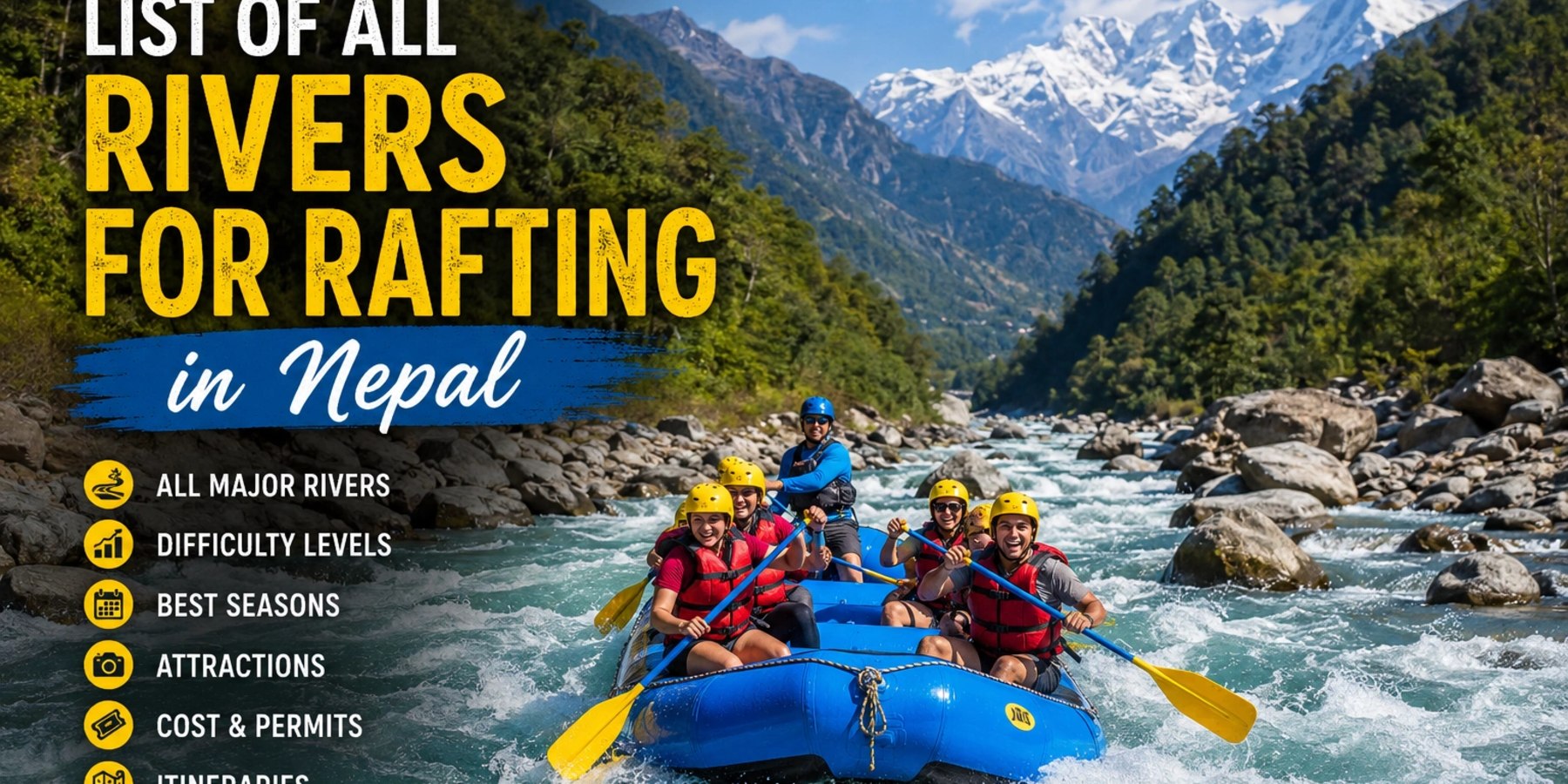

Nepal is one of the world's premier destinations for white water rafting, offering an exceptional combination of snow-fed Himalayan rivers, dramatic landscapes, thrilling rapids, and authentic cultural experiences. Flowing from the towering peaks of the Himalayas through deep gorges, lush valleys, forests, and traditional villages, Nepal's rivers provide unforgettable rafting adventures suitable for everyone, from first-time paddlers to seasoned white water enthusiasts.
More than simply an adventure activity, rafting in Nepal allows travelers to experience the country's natural beauty from a unique perspective. Every river offers its own personality. Some feature gentle currents ideal for beginners and families, while others challenge experienced rafters with powerful Grade IV and Grade V rapids. Along the journey, travelers enjoy panoramic mountain views, riverside beaches, waterfalls, wildlife, and opportunities to camp beneath clear Himalayan skies.
Nepal is home to numerous rafting rivers, each differing in length, water volume, difficulty, scenery, and accessibility. Popular rivers such as the Trishuli, Bhote Koshi, Seti, Kali Gandaki, Sun Koshi, Karnali, Tamur, Marshyangdi, Arun, and Bheri attract adventure seekers from around the world throughout the year.
Whether planning a one-day rafting excursion from Kathmandu, a multi-day wilderness expedition, or combining rafting with trekking, wildlife safaris, cultural sightseeing, or mountain adventures, Nepal offers rafting experiences for every travel style and budget.
This comprehensive guide explores the complete list of major rafting rivers in Nepal, including locations, rafting grades, best seasons, starting and ending points, attractions, trip durations, suitability, challenges, estimated costs, permits, and practical travel information to help travelers choose the perfect white water adventure.
Why Nepal Is One of the World's Best Rafting Destinations?
Several factors make Nepal one of the finest white water rafting destinations globally.
The rivers originate directly from Himalayan glaciers, creating exciting rapids with continuous water flow during much of the year. The country's diverse topography produces everything from calm stretches suitable for beginners to technically demanding sections that challenge expert paddlers.
Rafting routes pass through spectacular landscapes featuring snow-capped mountains, deep river gorges, terraced hillsides, dense forests, remote villages, suspension bridges, waterfalls, and rich biodiversity. Many rivers also flow through regions inhabited by diverse ethnic communities, allowing travelers to experience Nepal's unique cultural heritage.
Another advantage is the variety of rafting trips available. Visitors can enjoy half-day adventures, full-day trips, overnight camping expeditions, or week-long river journeys combining adventure with wilderness exploration.
Professional river guides, internationally recognized safety standards, quality rafting equipment, and well-established adventure tourism operators have made Nepal a trusted destination for rafting enthusiasts worldwide.
Complete List of Major Rivers for Rafting in Nepal
Nepal offers numerous rivers suitable for commercial rafting and kayaking. The most popular rafting rivers include:
Trishuli River
Bhote Koshi River
Sun Koshi River
Kali Gandaki River
Seti River
Karnali River
Bheri River
Marshyangdi River
Tamur River
Arun River
Upper Seti River
Lower Seti River
Budhi Gandaki River
Balephi River
Likhu River
Indrawati River
Each river provides a different level of adventure, scenery, river characteristics, and trip duration.
Trishuli River Rafting
Location
The Trishuli River flows through central Nepal between Kathmandu, Pokhara, and Chitwan, making it the country's most accessible rafting destination.
Difficulty Level
Grade II to Grade III+
The Trishuli River offers moderate rapids with exciting wave trains and calm sections, making it an excellent choice for beginners, families, students, and first-time rafters.
Best Season
September to early December
March to May
Monsoon rafting is also possible but features stronger currents and higher water levels.
Trip Duration
Half-day rafting
Full-day rafting
Two-day camping trip
Starting Point
Common rafting trips begin at Charaudi, Fishling, or Benighat.
Ending Point
Most rafting trips conclude at Kurintar, Mugling, or Gaighat.
Major Rapids
Some of the famous rapids include:
Ladies Delight
Upset
Surprise
Monsoon
S Bend
Tea Pot
Pinball Rapid
These rapids provide exciting action while remaining suitable for most travelers.
Main Attractions
Scenic river valleys
Green hills
Suspension bridges
Riverside villages
Sandy beaches
Easy access from Kathmandu and Pokhara
Camping opportunities
Suitable For
The Trishuli River is recommended for:
Beginners
Families
School groups
Corporate outings
Adventure lovers with limited time
Challenges
Although considered beginner-friendly, participants should still prepare for cold water, occasional strong rapids during the monsoon season, and continuous paddling over several hours.
Bhote Koshi River Rafting
Location
The Bhote Koshi River originates near the Nepal–Tibet border before descending rapidly through steep mountain valleys east of Kathmandu.
Difficulty Level
Grade IV to Grade V
Bhote Koshi is regarded as one of Nepal's most technically demanding commercial rafting rivers.
Best Season
October to December
March to May
Water levels during the monsoon can become extremely challenging.
Trip Duration
One day
Two days
Starting Point
Rafting generally starts near Baseri or Lamosangu.
Ending Point
Trips usually finish near Dolalghat.
Major Rapids
Popular rapids include:
Frog in Blender
Gerbil in the Plumbing
High Anxiety
Midnight Express
These rapids feature steep drops, technical maneuvering, and powerful hydraulic waves.
Main Attractions
Narrow Himalayan gorges
Crystal-clear mountain water
Dramatic cliffs
Dense forests
Fast-flowing white water
Spectacular canyon scenery
Suitable For
Bhote Koshi is recommended only for:
Experienced rafters
Adventure enthusiasts
Strong swimmers
Experienced kayakers
Challenges
Participants should expect continuous technical rapids, powerful currents, cold Himalayan water, limited recovery sections, and physically demanding paddling throughout the journey.
Sun Koshi River Rafting
Location
The Sun Koshi River begins in the Tibetan Plateau before flowing through eastern Nepal toward the plains.
Difficulty Level
Grade III to Grade V
Sun Koshi is internationally recognized as one of the finest multi-day rafting expeditions in the world.
Best Season
October to November
March to April
Trip Duration
Typically 8 to 10 days.
Starting Point
Most expeditions begin at Dolalghat.
Ending Point
The rafting journey generally ends at Chatara.
Major Rapids
Notable rapids include:
Meat Grinder
Punch and Judy
Rhino Rock
Harkapur Rapid
High Anxiety
Black Hole
Main Attractions
Remote Himalayan landscapes
Riverside camping
Traditional villages
Dense forests
Wildlife viewing
Long wilderness expedition
Birdwatching
Cultural encounters
Suitable For
The Sun Koshi River is ideal for:
Intermediate rafters
Experienced paddlers
Adventure photographers
Expedition travelers
Outdoor enthusiasts
Challenges
The journey requires physical endurance due to its extended duration. Travelers should be prepared for continuous camping, changing weather conditions, long rafting days, and limited access to modern facilities.
Kali Gandaki River Rafting
Location
The Kali Gandaki River flows through one of the deepest river gorges in the world between the Annapurna and Dhaulagiri mountain ranges.
Difficulty Level
Grade III to Grade IV+
The river combines technical rapids with breathtaking Himalayan scenery.
Best Season
September to November
March to May
Trip Duration
Generally 3 to 4 days.
Starting Point
Most rafting expeditions begin near Beni.
Ending Point
Trips usually conclude at Mirmi or Setibeni, depending on the selected itinerary.
Major Rapids
Well-known rapids include:
Small Brother
Big Brother
Refugee
Devil's Drop
These rapids deliver exciting wave trains, technical turns, and continuous white water.
Main Attractions
Views of Annapurna and Dhaulagiri
Deep Himalayan gorge
Traditional Magar and Gurung villages
Waterfalls
Sandy beaches
Riverside camping
Rich cultural landscapes
Suitable For
The Kali Gandaki River is recommended for:
Intermediate rafters
Adventure travelers
Nature photographers
Groups seeking a multi-day rafting experience
Challenges
Participants should expect strong currents, technical rapids, varying weather conditions, and continuous paddling through narrow mountain gorges.
Seti River Rafting
Location
The Seti River flows through central Nepal, connecting the regions around Pokhara, Damauli, and Chitwan. Known for its warm water, scenic valleys, and gentle rapids, the Seti River is one of Nepal's most relaxing rafting destinations.
Difficulty Level
Grade II to Grade III
The river offers smooth stretches mixed with moderate rapids, making it ideal for travelers seeking a balance between adventure and relaxation.
Best Season
September to December
March to May
The Seti River remains suitable for rafting during much of the year due to its consistent water flow.
Trip Duration
One day
Two days
Starting Point
Most rafting trips begin near Damauli.
Ending Point
Rafting generally ends near Gaighat.
Major Rapids
Jungle Roll
Ups and Downs
Small Surprise
These rapids provide enjoyable excitement without becoming overly technical.
Main Attractions
Warm river water
Beautiful limestone cliffs
Green forests
Birdwatching opportunities
Riverside camping
Peaceful rural landscapes
Suitable For
The Seti River is recommended for:
Beginners
Families
Couples
School groups
Nature lovers
Challenges
The river contains fewer technical rapids than Nepal's more adventurous rivers, making it less suitable for travelers seeking extreme white water experiences.
Karnali River Rafting
Location
The Karnali River flows through western Nepal and is the country's longest river. It passes through remote forests, deep valleys, and untouched wilderness before entering the plains.
Difficulty Level
Grade III to Grade V
Karnali offers one of Nepal's most exciting wilderness rafting expeditions.
Best Season
October to November
March to April
Trip Duration
Typically 8 to 10 days.
Starting Point
Most rafting expeditions begin at Sauli.
Ending Point
Trips usually conclude near Chisapani.
Major Rapids
God's House
Flip and Strip
Sweetness and Light
Juicer
Captivity
Main Attractions
Remote wilderness
Sandy river beaches
Jungle camping
Wildlife sightings
Fishing opportunities
Untouched natural landscapes
Long expedition rafting
Suitable For
The Karnali River is ideal for:
Experienced rafters
Expedition groups
Adventure travelers
Wilderness enthusiasts
Challenges
Due to its remote location, participants should be prepared for extended camping, limited communication facilities, physically demanding rafting days, and changing river conditions.
Bheri River Rafting
Location
The Bheri River is located in western Nepal and is considered one of the country's best rivers for scenic expedition rafting.
Difficulty Level
Grade III to Grade IV
The river provides exciting rapids combined with calm sections suitable for fishing and wildlife observation.
Best Season
October to December
March to May
Trip Duration
Four to five days.
Starting Point
Most trips start near Samjhighat.
Ending Point
Rafting usually finishes near Chisapani.
Major Rapids
Big Brother
Wall Rapid
Twin Falls
Main Attractions
Crystal-clear water
Jungle landscapes
Birdwatching
Remote villages
Camping beaches
Freshwater fishing
Suitable For
Recommended for:
Intermediate rafters
Nature lovers
Families with previous rafting experience
Multi-day adventure groups
Challenges
Participants should be comfortable with several consecutive rafting days and overnight camping in remote areas.
Marshyangdi River Rafting
Location
The Marshyangdi River flows through the Annapurna region and is widely regarded as Nepal's most technically challenging commercial rafting river.
Difficulty Level
Grade IV to Grade V+
The steep gradient produces continuous, fast-moving rapids requiring excellent teamwork and strong paddling skills.
Best Season
October to November
March to April
Trip Duration
Two to three days.
Starting Point
Most rafting trips begin near Ngadi.
Ending Point
The journey generally concludes at Bimalnagar.
Major Rapids
Instant Karma
Twinkle
Adrenaline
Mama's Big Butt
Main Attractions
Annapurna mountain views
Narrow canyons
Technical white water
Spectacular scenery
Remote villages
Suitable For
Recommended only for:
Experienced rafters
Expert paddlers
Adventure professionals
Challenges
The Marshyangdi River demands excellent physical fitness, previous rafting experience, and the ability to respond quickly to technical rapids.
Tamur River Rafting
Location
The Tamur River originates in eastern Nepal near the Kanchenjunga region before flowing through remote valleys toward the plains.
Difficulty Level
Grade III to Grade IV+
Best Season
October to November
March to April
Trip Duration
Ten to twelve days.
Starting Point
Most expeditions begin after trekking to Dobhan.
Ending Point
Rafting finishes at Chatara.
Major Rapids
Ashram
Hell's Gate
Snake Rapid
Main Attractions
Kanchenjunga region
Remote mountain villages
Wildlife
Long expedition rafting
Camping
Scenic valleys
Suitable For
Intermediate rafters
Experienced adventure travelers
Expedition groups
Challenges
The journey combines several trekking days before rafting begins, making good physical fitness essential.
Arun River Rafting
Location
The Arun River flows through eastern Nepal after entering from Tibet and eventually joins the Sun Koshi River.
Difficulty Level
Grade III to Grade IV
Best Season
October to November
March to April
Trip Duration
Nine to eleven days.
Starting Point
Expeditions generally begin after flying to Tumlingtar and trekking to the river.
Ending Point
Most trips finish at Chatara.
Major Rapids
Hill Rapids
Big Boulder
Entrance Rapid
Main Attractions
Scenic trekking approach
Remote Himalayan landscapes
Riverside camping
Wildlife
Traditional villages
Suitable For
Intermediate rafters
Expedition travelers
Outdoor enthusiasts
Challenges
The combination of flights, trekking, camping, and rafting requires good stamina and preparation.
Upper Seti River Rafting
Location
The Upper Seti River is located near Pokhara and is one of Nepal's most popular destinations for short rafting adventures.
Difficulty Level
Grade III to Grade IV
Best Season
September to December
March to May
Trip Duration
Half day.
Starting Point
Hemja, Pokhara.
Ending Point
Yamdi Bridge.
Major Rapids
Continuous wave trains
Technical drops
Fast channels
Main Attractions
Close to Pokhara
Short adventure
Mountain scenery
Easy accessibility
Suitable For
Travelers with limited time and those seeking an exciting half-day rafting experience.
Challenges
The river features continuous rapids with limited recovery sections despite its short duration.
Lower Seti River Rafting
Location
The Lower Seti flows from Damauli toward Chitwan through peaceful countryside.
Difficulty Level
Grade II to Grade III
Best Season
October to May
Trip Duration
Two days.
Starting Point
Damauli.
Ending Point
Gaighat.
Main Attractions
Family-friendly rafting
Riverside camping
Forest scenery
Birdwatching
Suitable For
Beginners
Families
School groups
Budhi Gandaki River Rafting
Location
The Budhi Gandaki River flows through central Nepal from the Manaslu region.
Difficulty Level
Grade IV to Grade V
Best Season
October
November
March
April
Trip Duration
Two to four days.
Suitable For
Experienced rafters looking for technical white water adventures.
Challenges
The river contains steep gradients, narrow gorges, and powerful rapids requiring excellent teamwork.
Balephi River Rafting
Location
Sindhupalchok District.
Difficulty Level
Grade III to Grade IV
Best Season
September to May.
Trip Duration
One day.
Suitable For
Adventure travelers seeking a short rafting experience close to Kathmandu.
Likhu River Rafting
Location
Central Nepal.
Difficulty Level
Grade IV
Best Season
October to April.
Trip Duration
One day.
Suitable For
Experienced rafters looking for technical rapids within easy reach of Kathmandu.
Indrawati River Rafting
Location
Sindhupalchok District.
Difficulty Level
Grade III to Grade IV
Best Season
September to November.
Trip Duration
One to two days.
Suitable For
Intermediate rafters seeking exciting rapids in a scenic river valley.
Estimated Cost of Rafting in Nepal
Rafting costs vary depending on the river, duration, transportation, accommodation, meals, and group size.
| Rafting Trip | Estimated Cost (Per Person) |
|---|---|
| Half-Day Rafting | USD 35 to USD 60 |
| Full-Day Rafting | USD 45 to USD 80 |
| Two-Day Rafting | USD 120 to USD 220 |
| Three to Five-Day Expedition | USD 300 to USD 700 |
| Seven to Twelve-Day Expedition | USD 700 to USD 1,500 |
Prices generally include rafting equipment, professional guides, safety kayakers where required, meals during the trip, transportation from designated meeting points, and camping equipment for multi-day expeditions.
Are Permits Required for Rafting?
Most commercial rafting trips in Nepal do not require a separate rafting permit for international visitors. However, permits or entry fees may apply when rafting routes pass through protected areas, conservation areas, or national parks. Multi-activity itineraries that combine rafting with trekking may also require trekking permits depending on the destination.
Travelers should confirm permit requirements before departure. Professional operators such as Khushi Travels & Consulting Group Pvt. Ltd. assist with transportation, logistics, required documentation, experienced river guides, quality safety equipment, accommodation arrangements, and customized rafting itineraries for individuals, families, student groups, and corporate travelers across Nepal.
Best Time for Rafting in Nepal
Nepal offers rafting opportunities throughout much of the year, but river conditions vary depending on the season. Choosing the right time ensures safer rafting, better scenery, and the most enjoyable experience.
Autumn (September to November)
Autumn is considered the best season for rafting in Nepal. Rivers flow at ideal levels after the monsoon, creating exciting rapids while maintaining excellent safety conditions. The weather is pleasant, mountain views are clear, and temperatures are comfortable for outdoor activities.
This season is suitable for almost every rafting river, including Trishuli, Sun Koshi, Bhote Koshi, Kali Gandaki, Karnali, and Marshyangdi.
Spring (March to May)
Spring is another excellent rafting season. Melting Himalayan snow increases river flow, making rapids more exciting while maintaining stable weather conditions. Colorful forests and blooming rhododendrons enhance the scenery along many rafting routes.
Most rivers remain suitable for beginners as well as experienced rafters during spring.
Winter (December to February)
Winter rafting is possible on several rivers, especially Trishuli, Seti, and Lower Seti. Water levels are lower and temperatures are colder, but the calmer conditions are often ideal for first-time rafters who prefer moderate rapids.
Proper thermal clothing and wetsuits are recommended during winter.
Monsoon (June to August)
Monsoon rafting is generally recommended only for experienced adventurers. Heavy rainfall significantly raises water levels, increasing the size and power of rapids. Some rivers may temporarily suspend commercial rafting operations if conditions become unsafe.
Professional guides carefully monitor weather forecasts and river conditions before every trip.
Choosing the Right River Based on Experience
Selecting the right river is one of the most important factors in enjoying a safe and memorable rafting adventure.
Best Rivers for Beginners
Trishuli River
Seti River
Lower Seti River
These rivers offer moderate rapids, beautiful scenery, and professional support, making them excellent choices for families and first-time rafters.
Best Rivers for Intermediate Rafters
Kali Gandaki River
Bheri River
Tamur River
Arun River
Indrawati River
These rivers combine exciting white water with manageable technical sections suitable for travelers with some previous rafting experience.
Best Rivers for Experienced Rafters
Bhote Koshi River
Marshyangdi River
Karnali River
Budhi Gandaki River
Likhu River
These rivers feature continuous Grade IV and Grade V rapids that demand excellent teamwork, strong swimming ability, and previous white water experience.
Essential Safety Tips for Rafting in Nepal
Safety should always be the highest priority during any rafting expedition. Following professional guidance significantly reduces risk and allows travelers to enjoy the adventure with confidence.
Some essential safety tips include:
Always wear a certified life jacket and helmet.
Listen carefully to the safety briefing before entering the river.
Follow all paddle commands given by the river guide.
Inform guides about any medical conditions before the trip begins.
Wear appropriate clothing that dries quickly.
Avoid alcohol before and during rafting.
Secure cameras, phones, and personal belongings in waterproof bags.
Stay inside the raft unless instructed otherwise.
Learn the basic swimming position used if someone falls into the river.
Choose a rafting trip appropriate for personal fitness and experience.
Professional rafting companies also provide rescue equipment, first aid kits, throw bags, safety kayakers for difficult rivers, and trained river guides certified in swift water rescue.
What to Pack for a Rafting Trip?
Packing the right equipment helps ensure a comfortable and enjoyable rafting experience.
Clothing
Quick-drying T-shirts
Lightweight shorts