

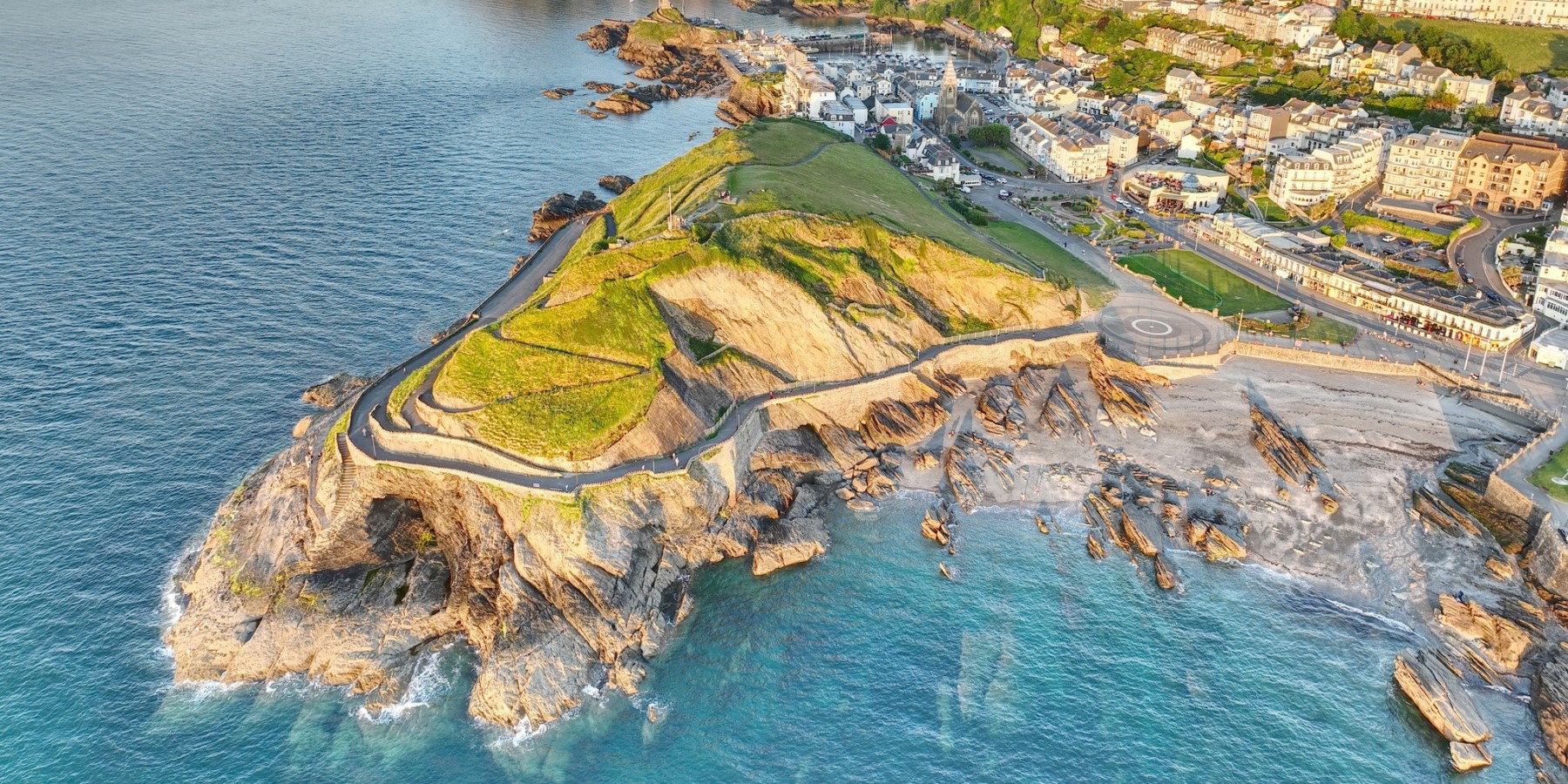

Ilfracombe has been occupied since the Iron Age. Hillsborough Hill to the east of the town still has the Hill Fort. Because of the natural layout, the Harbour has been designated a safe port on the Bristol channel. It has always been a busy port. St Nicholas Chapel sits on top of Lantern Hill overlooking the entrance to the Harbour. It is a 13th-century building and was used as a fisherman's chapel. Later on, it became a fully working lighthouse and is still active today, guiding ships safely into the Harbour.
Ilfracombe is comprised of two communities farming and fishing. And during the 18th and 19th centuries, Ilfracombe became a popular tourist destination, and it was not uncommon for between 6 to 10 steamships to arrive daily, all filled with tourists. The railway's arrival in 1874 boosted the tourism trade even more.
Ilfracombe has a wide variety of architectural-style buildings dating from the 13th to the 21st Century. The town has ancient streets, for example, Fore Street leading to the Harbour, and on the higher ground, there are Georgian and Regency period terraces and mansions.
Ilfracombe is steeped in history. It was the site of 3 major English Civil War battles, and between 1700 and 1850, when the smuggling trade was rife in England due to heavy tax on certain goods, Ilfracombe was heavily involved. Nearly every person and home had some sort of involvement.
They also say that part of the reason for WW1 was the incident at Rapparee Cove between local lad Alfie Price and the Kaiser when he gave the future German Emperor a bloody nose. The Kaiser never forgot that moment and vowed to seek revenge.
If you're planning a UK staycation this year, you'd be hard-pressed to beat Ilfracombe, Devon, for a family holiday. There is plenty to see and do, and its status as the culinary and cultural core of North Devon is growing.