


While most foreign tourists stick to Shanghai's Bund, Beijing's Great Wall, and Xi'an's Terracotta Warriors, a small group chooses a completely different path — leaving behind the fast-developing coastal cities and venturing into China's vast rural heartland. There are no Starbucks, no English menus, and taxis are hard to come by. But the landscapes are more real, the people warmer, and the culture more authentic.
This guide isn't for everyone. It's for those who want more than a checklist of famous sights — for those willing to go deeper.

- Why Travel Rural China? — 2026 Trends
1. Foreign travelers are "escaping" the big cities
In 2026, a clear trend has emerged in China's inbound tourism: travelers are extending their footprints from first-tier cities to second- and third-tier cities, even to counties and villages. Going to Dali, Lijiang, or Guilin is no longer unusual — more and more young foreign travelers are heading to lesser-known counties. During summer, inbound travelers to Yining and Linzhi grew over 600% year-on-year, Datong grew nearly 300%, and Dunhuang more than doubled.

On overseas social media, videos of rural China regularly get hundreds of millions of views — sunrises over rice terraces, smoke rising from ancient villages, ethnic minority festivals — these images are reshaping the world's impression of China beyond "just skyscrapers."
2. What rural travel offers you
In cities, you see China's speed. In the countryside, you see China's warmth. China has 56 ethnic groups, each with its own language, clothing, festivals, and food — in cities, you only see the surface; deep in the countryside, you see the full picture. Miao silver jewelry in Guizhou, Bai tie-dye in Yunnan, Uyghur Muqam music in Xinjiang — these aren't museum exhibits; they're living culture flowing through everyday life.
- What Changes, What Doesn't — Rural vs. Urban
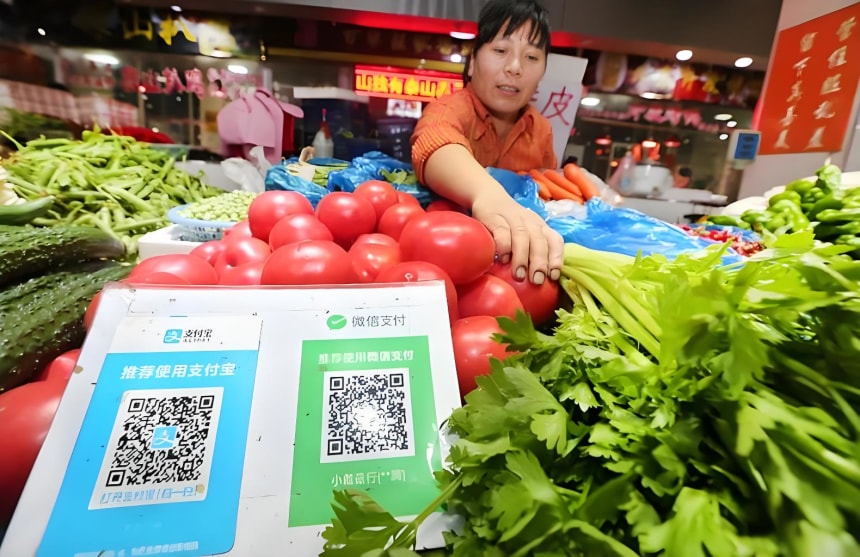
1. What stays the same: Mobile payment is still king
Many assume rural areas mean cash only — that's not entirely true. WeChat Pay and Alipay are just as common in the countryside, from county supermarkets to roadside vegetable stalls.
That said, there are exceptions — in some remote mountain areas, cash may be preferred. Best to bring both: mobile payment as primary, plus 500-1000 RMB in small bills as backup.
2. What changes: Transportation becomes a challenge
This is the biggest hurdle in rural travel. If you're used to the convenience of "just DiDi it" in Shanghai or Beijing, rural areas will feel different — ride-hailing rarely reaches actual villages.
How to handle it:
Ask your hotel reception to arrange a local driver — you can hire them by the day or per trip. This driver may become your most reliable contact in the area — add them on WeChat.
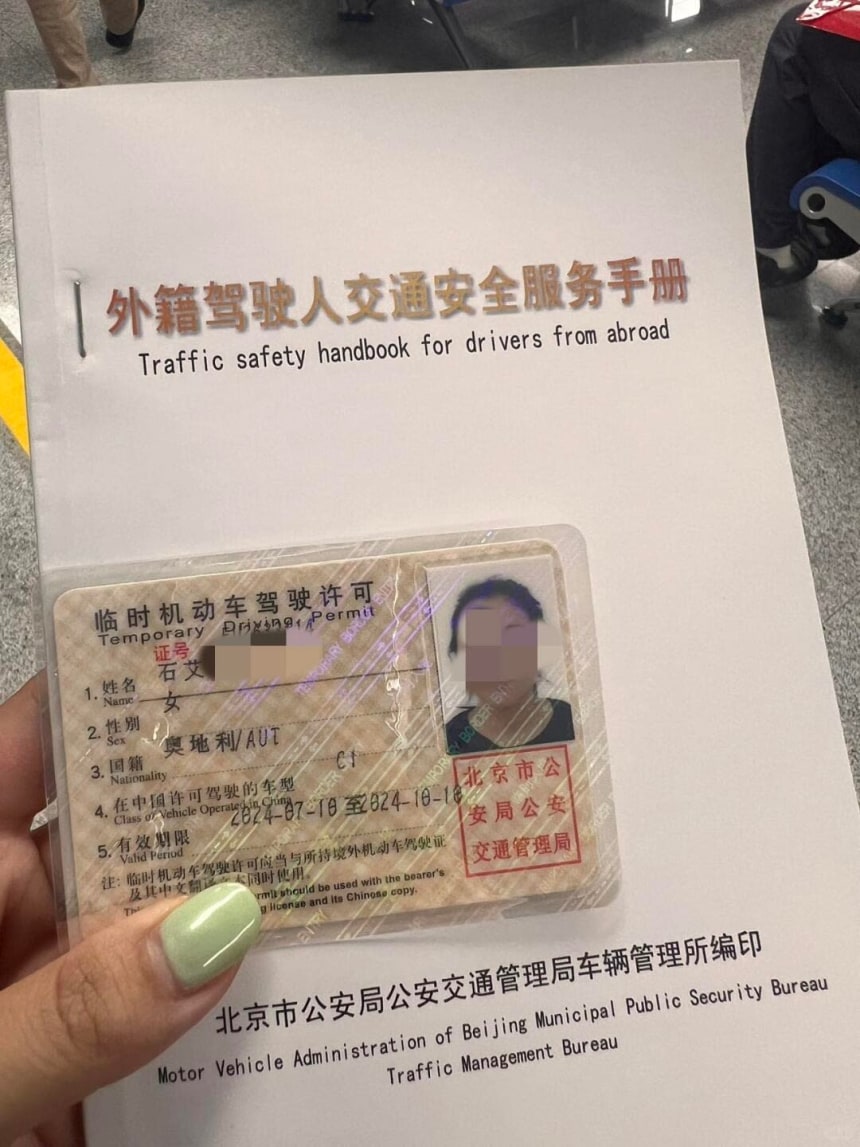
If you have a Chinese Temporary Driving Permit, self-driving is the most flexible option — you can stop anytime for photos or explore unpaved roads. Without a license, hiring a driver or using public transport are your best alternatives.
Some towns and villages have buses, but schedules are limited and irregular — ask locals for details.
3. What changes: Language barrier increases significantly
In big cities, younger locals speak some English, and hotels/restaurants work with translation apps. In the countryside, the situation is very different — Mandarin may not be fluent, let alone English. Even if you speak Mandarin, you may encounter completely unintelligible dialects.
How to handle it:
Translation apps are your lifeline — Baidu Translate or Microsoft Translator, with offline Chinese packs downloaded.
Learn a greeting in the local dialect — it'll make people's day.
Body language + smile + translation app will solve 90% of problems.
Save screenshots of key phrases (destination names, hotel addresses, common questions) on your phone.
- Transportation: How to Reach and Move Around Rural China
1. High-speed rail + bus: The most economical combo
China's high-speed rail network now reaches many smaller cities. You can take the train to the nearest prefecture-level city, then transfer to a long-distance bus or hire a driver to reach your village. Effective April 15, 2026, passengers holding Mainland Travel Permits for Hong Kong/Macau Residents (non-Chinese citizens) can use their permits directly for entry and exit at stations after purchasing tickets on 12306, without offline verification — smoothing the transition.

2. Self-driving: The most flexible option
If you have a Chinese Temporary Driving Permit, renting a car is a great way to explore rural China. China's highways and national roads are world-class, and most rural roads are well-paved. In remote areas, signage is fairly comprehensive, often with English translations. The biggest advantage: you can stop whenever the view catches your eye.
Recommended rental platforms: Zuche (神州租车) and eHi (一嗨租车) — both offer English interfaces.
3. Hiring a driver: The most hassle-free option
If you prefer not to drive, hiring a driver is a great alternative. Your hotel reception can usually arrange one. Agree on the price beforehand — per day or per trip — and clarify whether fuel and tolls are included.
Key tip: No matter how you travel, download offline maps for your destinations in your navigation app (like Amap) before departure. Rural signal can be unreliable — offline maps are your safety net.

- Accommodation: Where to Stay in Rural China
1. Choose hotels that accept foreign guests
This is one of the most common issues foreign travelers face in rural areas. Although the law now allows all hotels to host foreign guests, many rural hotel owners don't know the regulation has changed and may still say "we can't accept foreigners."
Safest approach: Book through Trip.com. Hotels listed on Trip.com are fully aware they will host foreigners, and staff know the check-in procedures.

If you arrive and are turned away:
Politely tell the front desk: "Now all hotels can accept foreigners — just need to register my passport." If needed, ask them to confirm with the local police station.
Or call the 12367 National Immigration Administration hotline for assistance.
2. Try local guesthouses
In some villages, staying in a traditional guesthouse is itself part of the experience — waking up in a century-old building, with birdsong and a view of rice terraces outside your window. When booking, verify whether the property accepts foreign guests, or call ahead to confirm.
- Hygiene & Toilets: Squat Toilets and Toilet Paper
This is the topic nobody asks about but everyone encounters in rural China.
1. Squat toilets are the norm
In rural public restrooms, squat toilets are standard — you'll rarely find sit-down toilets. If you're not used to squatting, prepare yourself mentally. Doing some leg stretches before your trip can actually help make the transition smoother.

2. Bring your own supplies
Many public restrooms don't provide toilet paper — this is true. Always carry tissues or wet wipes with you. Hand sanitizer is also a good idea.
3. Food safety — better than you might think
The good news: China's food safety has improved dramatically over the past 2-3 decades. Even in remote villages, supply chains are well-regulated, and the risk of food poisoning is very low.
Still, prepare:
Bring anti-diarrhea medication and stomach remedies — not because you'll definitely need them, but because changing your diet can take some adjustment.
- Language & Communication: Dialects, Culture, and Connections
1. China is far more diverse than you think
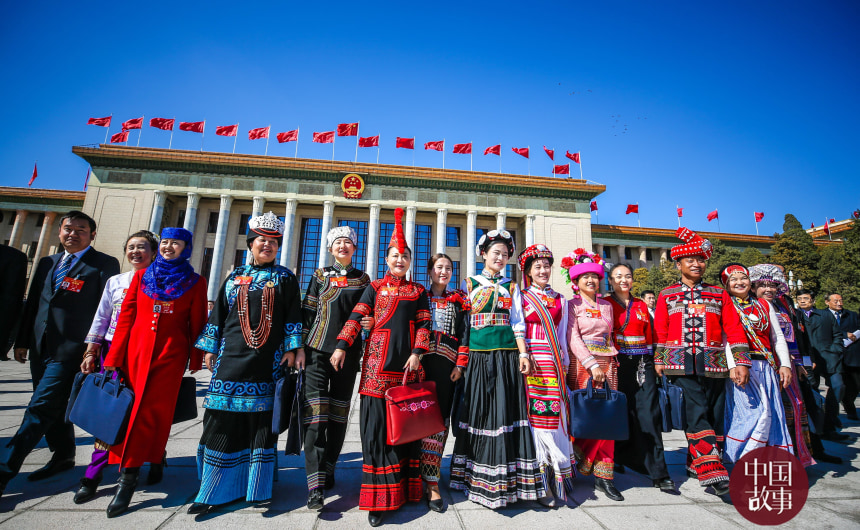
China has 56 ethnic groups. In Sichuan, Qinghai, and Gansu, you'll see bilingual signs in Mandarin and Tibetan; in Xinjiang, Uyghur script alongside Chinese; in Yanbian, Jilin, Korean script on storefronts. The people you meet may not speak Mandarin, and they may not look the same either.
One of the great rewards of rural travel is experiencing this diversity up close.
2. You will be stared at — but it's friendly curiosity
In rural areas, foreigners are still a novelty. Kids may stare; elderly people may look at you with curiosity. Don't take it as offensive — in 99% of cases, they're just too shy to start a conversation.
A simple "Ni Hao" will bring an instant smile. If you can sit down and chat (with a translation app), you'll find their curiosity about the outside world is as deep as yours about theirs.
3. You may be invited
Chinese hospitality runs deep. In rural areas, it's even more genuine — you may be invited into someone's home for tea or a meal. If time allows, say yes. It's worth more than any sightseeing stop.

- Rural Cuisine: "Chinese Food" Is a Vast Umbrella
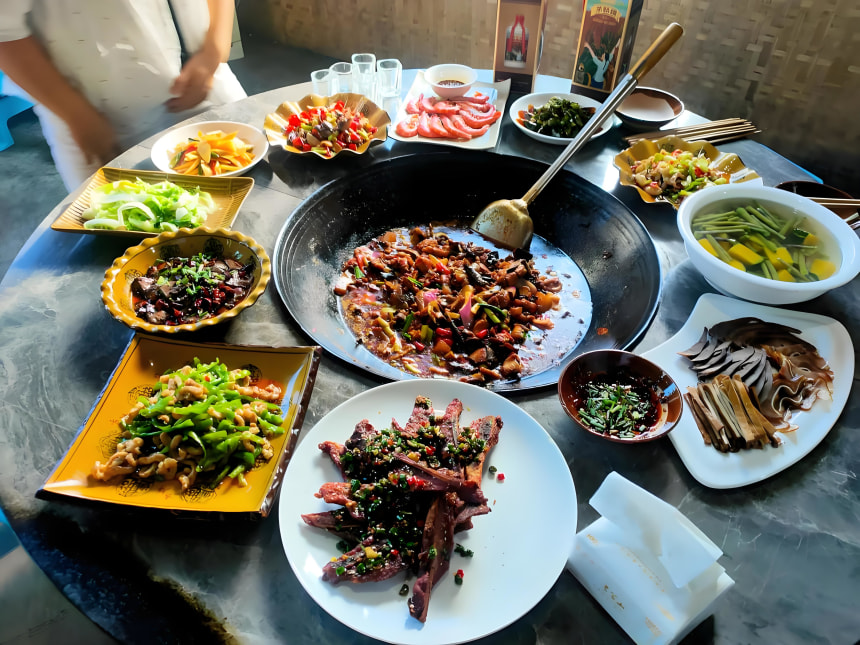
The term "Chinese food" is as broad as "European food" — pizza and fish and chips both fall under that umbrella, but they're completely different. The same applies to China's regional cuisines.
Guangdong — Dim sum, wontons, light vegetable dishes. Focuses on natural flavors.
Sichuan — Numbing and spicy — hotpot, skewers, mapo tofu.
Xinjiang — Pilaf, grilled lamb, naan — Central Asian influence, heavy on lamb and spices.
Yunnan — Rice noodles, wild mushrooms, sour-spicy flavors — incredibly diverse ingredients.
Guizhou — Sour fish soup, beef tripe hotpot — sour flavors dominate, unique and bold.
When eating in rural areas: be prepared for menus without English, ask the owner for local specialties, or use your translation app. Rural ingredients are often fresher and more authentic — something you can't buy at any price in a city restaurant.
- Recommended Destinations: Rural China Itinerary Ideas
1. Yunnan — Yuanyang Rice Terraces & Hani Villages
Yuanyang's rice terraces are a UNESCO World Heritage site, carved into mountainsides by generations of Hani people. During the winter flooding period and spring planting season, the terraces reflect the sky, creating an incredible spectacle.

2. Guizhou — Xijiang Miao Village
The world's largest Miao settlement, with thousands of stilt houses climbing the hillside. At night, lights illuminate the entire slope like scattered stars.

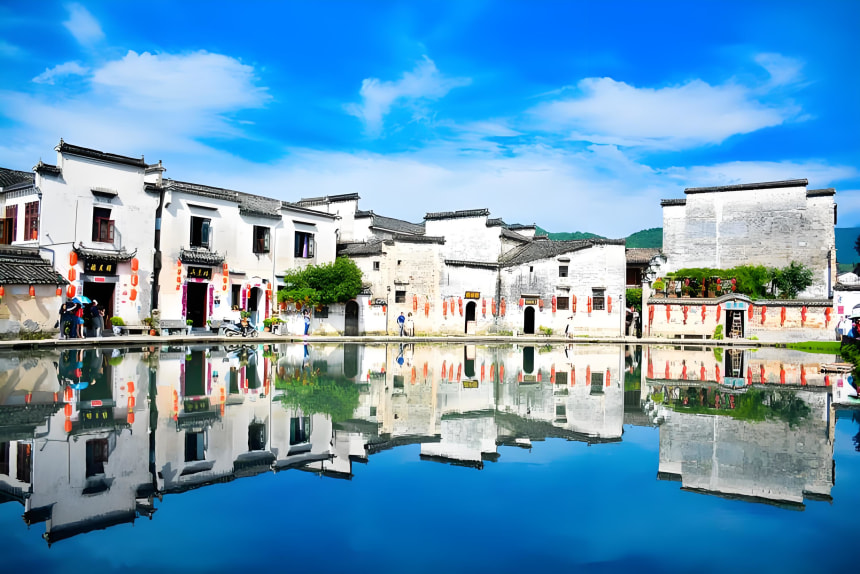
3. Anhui — Hongcun & Xidi
Classic Hui-style architecture — white walls, dark tiles, horse-head gables reflected in village ponds — like a living ink painting. These villages also served as filming locations for Crouching Tiger, Hidden Dragon.
4. Guangxi — Longji Rice Terraces
Terrace fields carved by Zhuang and Yao people over centuries, rising from the valley floor to the mountaintops. Different seasons bring different colors — spring reflections, summer green, autumn gold, winter white.
5. Xinjiang — Kanas Lake & Hemu Village
Tuvan villages surrounded by snow-capped mountains and forests. Autumn here is often described as "God's palette" — golden birch, dark green pine, turquoise lakes — colors so vivid they feel unreal.

- Practical Tips: Rural Travel Checklist
Before you go:
Major China apps (WeChat, Alipay, Amap, DiDi, Trip.com) installed and set up
Translation app with offline Chinese pack downloaded
Offline maps downloaded in navigation app
eSIM installed or know how to get local SIM
500-1000 RMB in small bills
Extra items to pack:
Tissues and wet wipes (keep on you at all times)
Hand sanitizer
Anti-diarrhea and stomach remedies
Power bank (rural charging may be less accessible)
Some snacks (in case local options are limited)
Mindset preparation:
Build flexibility into your schedule — delays may happen
Embrace "imperfection" — that's rural China
Keep an open mind and see challenges as part of the experience

- Final Thoughts
Traveling in rural China comes with real challenges — language barriers, transportation hassles, unfamiliar toilets. But once you get past the adjustment period, you'll find rewards no city trip can match: watching sunrise over rice terraces, sipping butter tea in a Miao stilt house, chatting with a Uyghur uncle under a grape trellis using nothing but gestures and smiles. These are the moments that make every bit of effort worth it.
China's countryside is vast and diverse — 56 ethnic groups, countless dialects and cuisines, endless landscapes and stories — enough to keep you exploring for years. Start today. Start with your next trip.
Got more questions about your trip to China? Drop them below – I'm happy to help!

I'm Yuan, a local tour guide registered on tourHQ, based in Shanghai and covering the Yangtze River Delta region (including Suzhou, Hangzhou, Nanjing, and beyond). I don't just take you to the famous sights – I'll bring you to hidden alleyway eateries, share stories that never make it into guidebooks, and craft a journey that fits your pace and interests.
Ready to explore the real China with a local? Click on my profile now to learn more!
https://www.tourhq.com/guide/CN38750/yuan-shen
Let me help make your China trip truly unforgettable – see you soon!