

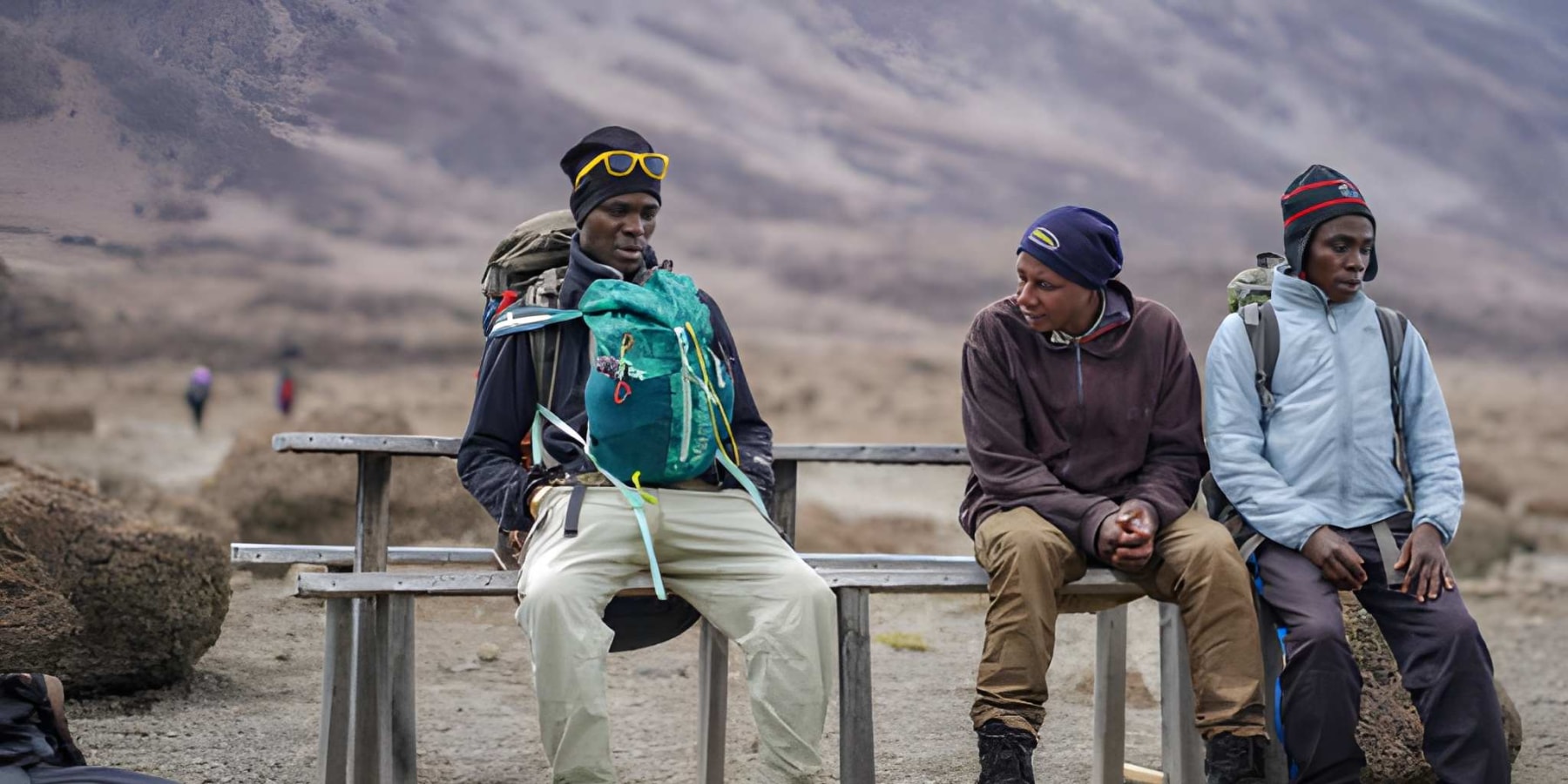

Climbing Mount Kilimanjaro typically takes 5 to 9 days to reach the summit—Uhuru Peak (5,895m / 19,341 ft)—and descend to the finish gate.
While it’s possible to complete the trek in 5 or 6 days, longer itineraries dramatically improve your summit success rate by allowing better acclimatization and reducing fatigue. For most climbers, 7–9 days is the safest and most enjoyable option.
Why Duration Matters: Acclimatization Is Everything
Kilimanjaro is a non-technical “walk-up” mountain, but altitude—not terrain—is the biggest challenge.
The primary reason climbers fail to reach the summit is poor acclimatization. As you ascend, oxygen levels decrease. Without enough time to adjust, you risk Acute Mountain Sickness (AMS).
According to the Wilderness Medical Society’s altitude guidelines, controlling ascent rate is one of the most effective ways to prevent altitude illness. Simply put:
More days = better acclimatization = higher success rate.
Summit Success Rates (Historical Data)
5-day climbs: ~27% success rate (2006 data)
8-day climbs: ~85% success rate
Modern guiding standards and improved gear likely mean today’s success rates are even higher on longer routes.
Important: Physical fitness does not improve acclimatization. Even very fit hikers can suffer altitude sickness if they ascend too quickly.
How Long Does Each Route Take?
Kilimanjaro has several established routes, each varying in duration, scenery, and success rate.
Marangu Route – 5–6 Days
64 km (40 mi). Hut accommodation. Shorter itinerary; lower success rate.Umbwe Route – 5–6 Days
37 km (23 mi). Steep, direct, and challenging. Best for experienced climbers.Rongai Route – 6–7 Days
65 km. Drier northern approach. Less crowded and scenic.Machame Route – 6–7 Days
49 km (30 mi). Popular and scenic. Strong acclimatization profile.Lemosho Route – 7–9 Days
66 km (35 mi). Excellent acclimatization and diverse scenery.Northern Circuit – 8–9 Days
66 km (35 mi). Longest and least crowded route. Maximizes acclimatization.
Why Choose a 7–9 Day Climb?
Choosing a longer itinerary offers several advantages:
Better Acclimatization
Extra days allow gradual altitude gain and recovery.
Reduced Fatigue
Spreading out hiking distances prevents burnout before summit night.
Higher Success Rate
Longer routes consistently produce better summit outcomes.
Enhanced Experience
You’ll enjoy Kilimanjaro’s ecosystems—from rainforest to alpine desert—without rushing.
Unless you’ve recently climbed another high-altitude peak like Mount Meru or Mount Kenya, a 7–9 day route is strongly recommended.
Should You Choose a 5- or 6-Day Climb?
Short routes may appeal due to:
Lower cost
Limited vacation time
Preference for shorter treks
However, they come with trade-offs:
Lower summit success rates
Increased fatigue
Greater altitude sickness risk
A common question to consider:
Is saving one or two days worth risking your summit attempt?
Short routes are best suited to experienced, recently acclimatized climbers.
How Long Does the Descent Take?
Descending from Uhuru Peak takes approximately 2 days:
Day 1: ~5 hours from summit to overnight camp
Day 2: 4–6 hours to the park gate
Although descending is physically easier in terms of altitude, tired legs and steep terrain make careful pacing essential.
Fastest Recorded Climbs (For Perspective)
Elite athletes have completed extraordinary speed ascents:
Karl Egloff – 4h 56m (Umbwe Route)
Kristina Schou Madsen – 6h 52m (Mweka Route)
Simon Mtuy – 9h 19m (self-supported)
Kilian Jornet – 7h 14m (previous record)
These are exceptional feats requiring extreme conditioning and pre-acclimatization. For most climbers, Kilimanjaro is about safety and experience—not speed.
So, How Long Will It Take You?
For the vast majority of climbers:
Minimum recommended: 6 days
Ideal duration: 7–9 days
Best balance of safety and success: 8 days
Taking your time significantly increases your chances of standing on the Roof of Africa.
Final Recommendation
Climbing Kilimanjaro is a once-in-a-lifetime journey. The additional days required for proper acclimatization are a small investment compared to the time, travel, and financial commitment involved.
Don’t rush your dream summit. Choose a route that gives your body time to adapt—and gives you the best chance to reach Uhuru Peak safely and confidently.