


Hidden Cultural Gems Around Merzouga: Villages, Music, and Ancient Traditions
When people imagine the Moroccan Sahara, they often picture endless golden dunes, camel caravans, and spectacular sunsets. While these iconic experiences certainly define Merzouga, they represent only part of the story. Hidden among the desert landscapes are centuries-old villages, vibrant musical traditions, and communities that have carefully preserved their unique way of life.
For travelers seeking a deeper connection with Morocco, exploring the cultural heritage around Merzouga offers an unforgettable journey beyond the sand dunes.
Discovering the Villages Beyond the Dunes
The area surrounding Merzouga is home to several small villages where daily life continues much as it has for generations. Built from traditional earthen architecture that blends naturally with the desert environment, these villages reflect the ingenuity of people who have adapted to one of the world's most challenging climates.
Walking through these communities, visitors can observe traditional craftsmanship, local markets, and family-owned farms nourished by ancient irrigation systems. Hospitality remains one of the region's greatest treasures, and guests are often welcomed with a warm smile and a glass of freshly prepared Moroccan mint tea.
These villages offer an authentic glimpse into desert life that many visitors miss when focusing only on the famous sand dunes.
The Rich Heritage of Amazigh Culture
Merzouga lies within a region deeply connected to Amazigh heritage. The Amazigh people have lived across North Africa for thousands of years, preserving their language, customs, and traditions despite centuries of change.
Visitors may notice beautifully woven carpets, handmade jewelry, colorful clothing, and intricate embroidery that each tell stories passed down through generations. Every design carries cultural meaning, representing family identity, nature, and the history of the Sahara.
Many local families continue to practice traditional crafts using techniques inherited from their ancestors, making every handmade piece both beautiful and culturally significant.
The Soul of the Desert: Gnawa Music
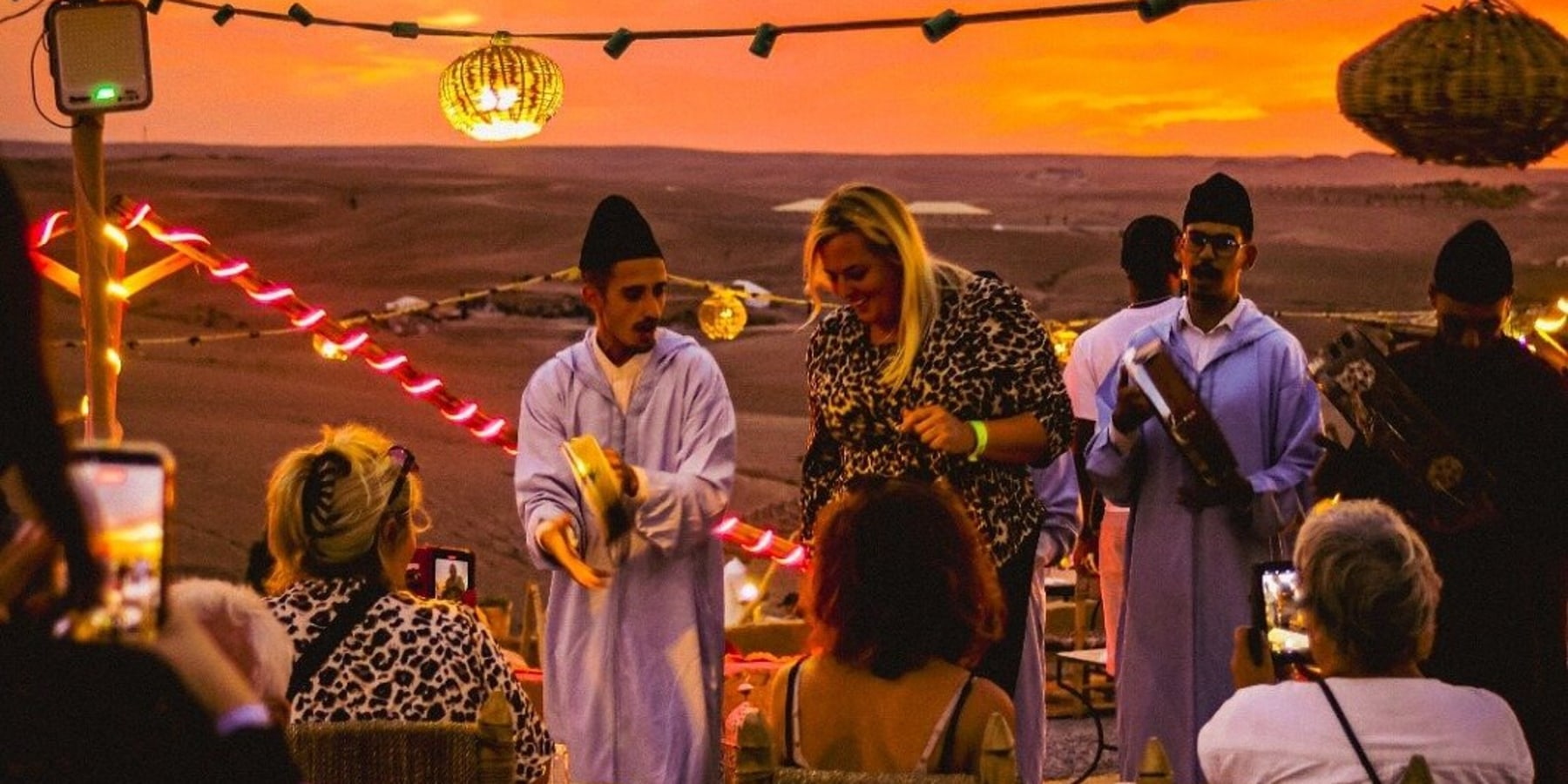
One of the most captivating cultural experiences around Merzouga is discovering the powerful rhythms of Gnawa music.
Rooted in African spiritual traditions, Gnawa music combines hypnotic percussion, soulful singing, and the distinctive sound of the three-stringed guembri. Evening performances create an atmosphere unlike anywhere else in Morocco, where music becomes both entertainment and a celebration of cultural identity.
Many travelers find that attending a live performance in a small village offers a far more intimate experience than larger tourist venues, allowing genuine interaction with local musicians and a deeper appreciation of this remarkable musical heritage.
Ancient Traditions That Continue Today
Life in the Sahara still follows traditions shaped by the rhythms of nature. Seasonal farming, date harvesting, animal herding, and community gatherings remain essential parts of everyday life.
Visitors can witness traditional bread baking in earthen ovens, learn about the preparation of authentic Berber dishes, and discover how families have survived for centuries by carefully managing scarce water resources.
The famous Moroccan tea ceremony also reflects the values of friendship, generosity, and hospitality. Sharing tea is more than a simple refreshment—it is an invitation to slow down, converse, and connect.
The Oasis of Life
Near Merzouga, lush palm groves create a striking contrast with the surrounding desert. These oases have supported local communities for generations, providing shade, water, and fertile land for cultivating dates, vegetables, and aromatic herbs.
Walking through the palm groves offers a peaceful escape while revealing how ancient irrigation techniques continue to sustain life in the Sahara.
Local Cuisine with Desert Flavors
Food is another window into the culture of the region.
Traditional dishes often feature locally grown dates, fresh vegetables, aromatic spices, and slow-cooked meats prepared in clay tagines. Berber pizza, known locally as Madfouna, is one of the area's signature specialties and reflects the creativity of desert cooking.
Meals are often shared communally, reinforcing the importance of family and hospitality within the local culture.
Respecting Local Customs
Travelers who take time to understand local customs often enjoy more meaningful interactions.
Simple gestures such as dressing modestly in villages, asking permission before photographing people, learning a few words in Arabic or Tamazight, and accepting tea when offered demonstrate respect for local traditions.
Responsible tourism also supports local artisans, musicians, guides, and family-run businesses, helping preserve the cultural heritage that makes the Sahara so special.
Why Cultural Experiences Matter
The beauty of Merzouga extends far beyond its famous dunes. Its true magic lies in the people who call the desert home—their stories, music, traditions, and remarkable resilience.
Travelers who venture beyond the typical tourist route discover that the Sahara is not simply a destination to see but a culture to experience. Every conversation, shared meal, musical performance, and village visit adds another layer to understanding one of Morocco's most fascinating regions.
Whether listening to the hypnotic rhythms of Gnawa music, exploring ancient villages, tasting traditional cuisine, or sharing mint tea beneath the desert sky, visitors leave with memories that go far beyond photographs.
Merzouga's hidden cultural gems remind us that the greatest journeys are often measured not by the places we visit, but by the people we meet and the traditions we are fortunate enough to experience.