


Kaohsiung is often introduced as Taiwan’s great southern port city, but for me, as someone born and raised here, the harbor is much more than a landmark. It is where the history, culture, food, and changing identity of the city come together.
When I guide visitors around Kaohsiung, I like to connect these different layers rather than simply move from one sightseeing spot to another. A journey through the harbor area can take us from Taiwan’s maritime trading history to contemporary art, traditional street food, riverside life, and finally the open ocean—all within a single day.
Pier-2 and Glory Pier: Where an Industrial Harbor Became a Cultural District
A good place to begin is the Pier-2 Art Center, once part of Kaohsiung’s working warehouse and port infrastructure.
Today, old warehouses, railway tracks, public artworks, cafés, exhibitions, and creative spaces have completely changed the atmosphere of this part of the harbor.
What I enjoy most here is not simply the artwork. Pier-2 tells part of the story of Kaohsiung itself.
For generations, this was an industrial city built around the harbor, manufacturing and international trade. Today, the same waterfront has become a place for art, leisure, tourism, music, and everyday city life.
Walking toward Glory Pier, visitors can also see modern Kaohsiung emerging along the waterfront. The views here are especially enjoyable in the late afternoon, when the light begins to soften and locals come out to walk, cycle, meet friends, or simply enjoy the harbor breeze.
This combination of industry and creativity is one of the things that makes modern Kaohsiung unique.
The British Consulate at Takow: Returning to Kaohsiung's Trading Past
To understand why Kaohsiung became such an important port, I like to take visitors further back in time.
The Former British Consulate at Takow, overlooking the entrance to Kaohsiung Harbor, brings us back to the 19th-century treaty-port period, when Takow—as Kaohsiung was once known internationally—was opening to foreign trade.
Standing on the hillside and looking across the harbor today, it is fascinating to imagine foreign merchants, ships, customs officials, and local traders arriving here more than a century ago.
For me, this is one of those places where history becomes easier to understand because the geography is still visible in front of you.
You can see the harbor entrance, Cijin across the water, and the routes that once connected southern Taiwan with the wider world.
Instead of treating the consulate simply as an old building, I like to share the larger story behind it: how international trade gradually transformed Takao from a regional settlement into the modern port city of Kaohsiung.
Along the Love River: Discovering the City's Slower Rhythm
After exploring the harbor, the Love River offers a completely different mood.
Walking along the river is one of the easiest ways to experience the relaxed side of Kaohsiung. There is no need to rush.
The riverside is about enjoying the breeze, watching boats pass, seeing people exercise or meet friends, and experiencing the everyday rhythm of the city.
Visitors sometimes expect Kaohsiung to feel heavily industrial because of its history. Walking beside the Love River usually changes that impression.
Kaohsiung is spacious, sunny and surprisingly relaxed. Water is always close to the city's identity—whether it is the river, harbor or Taiwan Strait.
For a traveller, sometimes simply walking with a local and talking about how the city has changed can be as memorable as visiting another famous attraction.
Gushan Ferry Pier: A Taste of Everyday Kaohsiung
One of my favourite transitions in a harbor journey is arriving at the Gushan Ferry Pier.
The ferry terminal has long connected the city with Cijin, and the surrounding neighbourhood still carries the atmosphere of an older Kaohsiung.
Around the ferry area, I enjoy introducing visitors to local snacks and small eateries rather than only recommending famous restaurants.
Depending on the traveller's taste, this might mean Taiwanese street food, seafood, traditional snacks, desserts, tea, or simply stopping somewhere interesting that catches our attention.
As someone who loves food and coffee, I believe tasting a city is one of the best ways to understand it.
Food is not just something we eat between attractions. It tells us about migration, local ingredients, climate, family traditions and the way ordinary people live.
Taking the Ferry to Cijin: From City Life to an Ocean Holiday
Then comes one of the simplest but most enjoyable experiences in Kaohsiung: taking the short ferry ride across the harbor to Cijin Island.
Within minutes, the atmosphere changes.
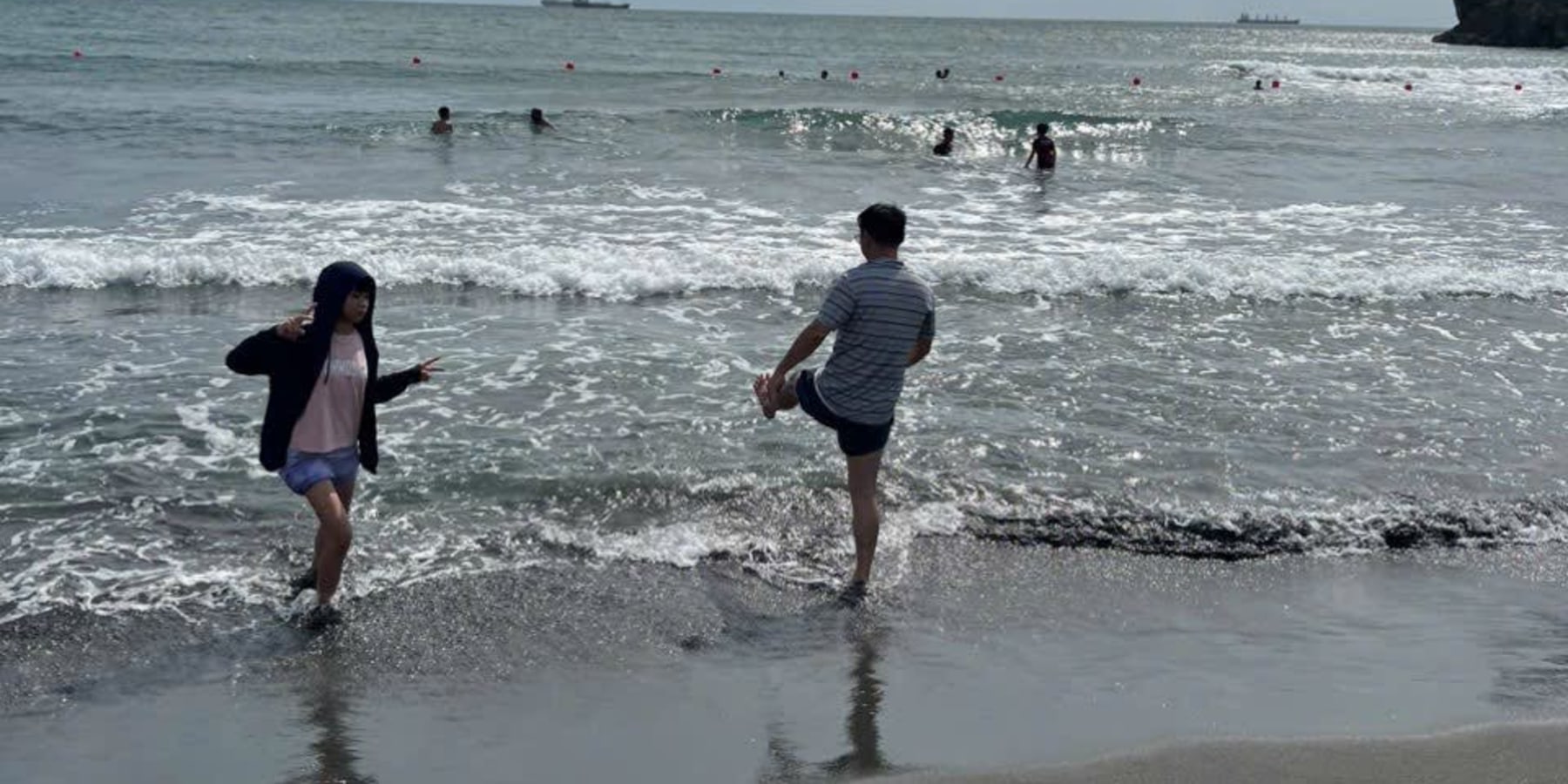
The dense urban waterfront gives way to seafood streets, temples, bicycles, beaches and the smell of the ocean.
Cijin feels connected to metropolitan Kaohsiung while still having its own island character.
Depending on the time and interests of my guests, we can explore the old streets, walk along the coast, enjoy fresh seafood, visit historical sites or simply slow down beside the beach.
Around sunset, Cijin can be particularly beautiful.
For travellers who have spent several days visiting temples, museums or busy commercial districts elsewhere in Taiwan, the ocean atmosphere offers a refreshing contrast.
It feels less like completing a sightseeing list and more like taking a short holiday within the city.
Why I Enjoy Sharing This Route
I have travelled independently for more than ten years and visited dozens of cities around the world, particularly across Asia.
Those experiences changed the way I think about guiding.
When I travel, I rarely remember only the famous landmark. I remember the neighbourhood someone showed me, the food I had never tried before, the conversation over coffee, or the moment when I finally understood why a place developed the way it did.
That is also the experience I hope to create for visitors to my hometown.
As a Kaohsiung local, I have personally witnessed many changes here—from its industrial and trading heritage to today's more diverse waterfront lifestyle.
I do not want travellers simply to see Kaohsiung.
I want them to understand why the harbor matters, taste the food locals enjoy, hear the stories behind the old neighbourhoods, feel the sea breeze, and experience the city at a comfortable local pace.
That is what makes a private local tour special to me: turning sightseeing into a connection with the place.
Practical Tips for This Kaohsiung Harbor Experience
The route can be customized from approximately 4 hours to a full day, depending on how deeply you want to explore. Pier-2, Glory Pier, the Love River, Gushan and Cijin can be combined conveniently using walking, Kaohsiung's light rail, MRT and ferry services.
For the most comfortable experience, I usually recommend starting in the afternoon if the itinerary includes Cijin, so we can enjoy the waterfront and possibly finish with sunset by the ocean.
Comfortable walking shoes, sun protection and drinking water are recommended, particularly during Kaohsiung's warmer months.
Most importantly, come with an appetite and some curiosity—because Kaohsiung is a city best experienced through history, food, people and the sea.