

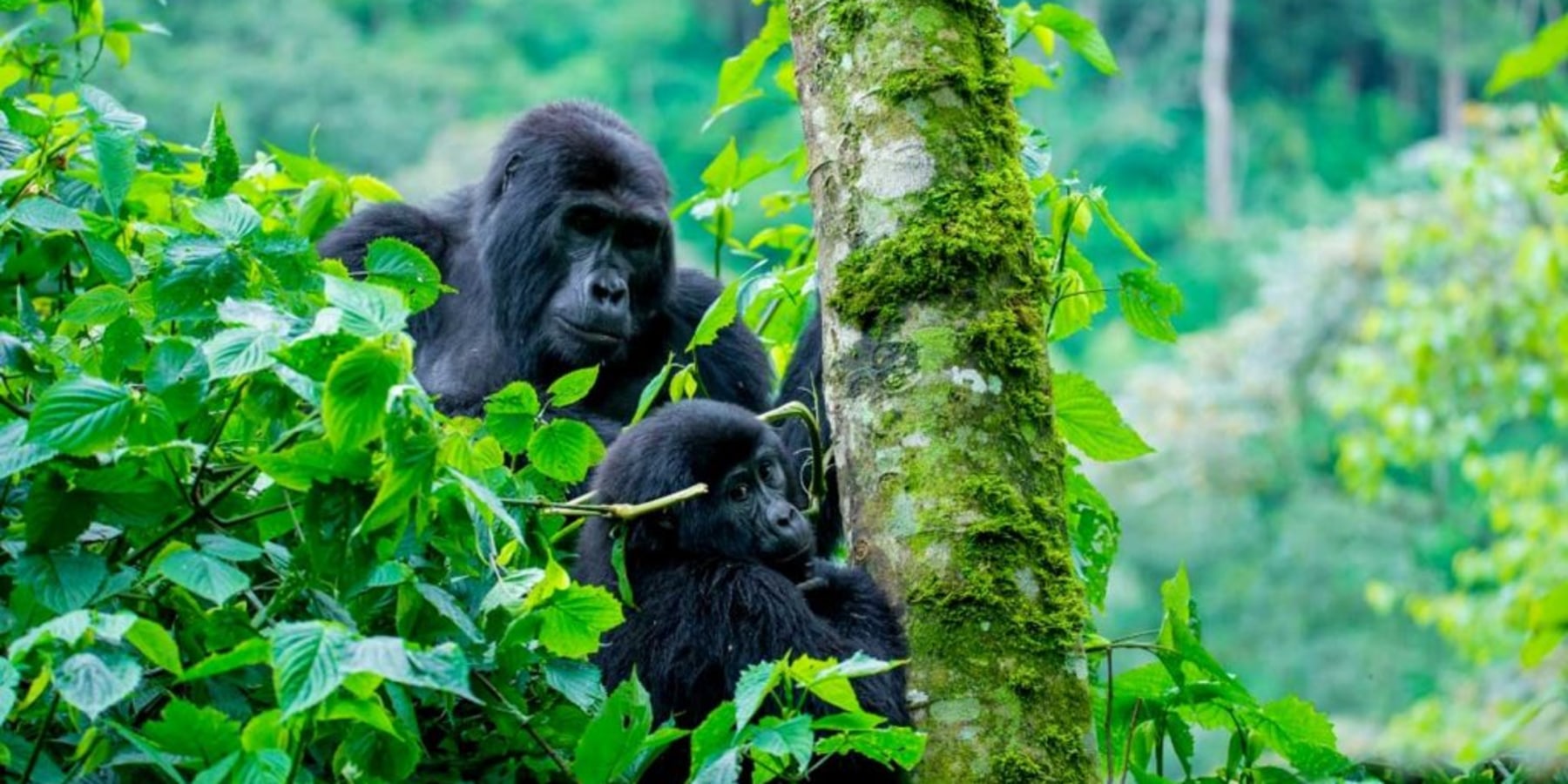

Gorilla trekking in Uganda is one of the few wildlife experiences that lives up to the hype: you hike into misty rainforest, push through vines, and then suddenly a silverback is sitting two metres off the trail, watching you back.
Uganda is home to roughly half of the world's mountain gorillas, which makes it one of the best places on earth to see them. This guide covers the practical side: where to go, how permits work, what to pack, and how to behave once you are in the forest, so you can plan with confidence and enjoy the hour that most visitors never forget.
WHERE TO TREK: BWINDI OR MGAHINGA
Uganda has two gorilla parks, and most travellers choose Bwindi.
Bwindi Impenetrable National Park is a UNESCO World Heritage Site in the south-west and holds the largest share of Uganda's gorillas. It is split into four trekking sectors, each with its own gorilla families: Buhoma, Ruhija, Rushaga and Nkuringo. Rushaga has the most families, so it is the easiest sector to get a permit in. Buhoma is the classic starting point and has the most lodges. Nkuringo has steep, dramatic terrain and sweeping views.
Mgahinga Gorilla National Park sits on the Rwanda and DR Congo border in the Virunga volcano range. It is smaller and quieter, and it pairs well with golden monkey tracking and a volcano hike. Its gorilla group moves across borders, so sightings are less predictable than in Bwindi.
A simple rule: choose Bwindi for the best odds and the most choice, and add Mgahinga if you want a quieter second park.
PERMITS AND BOOKING
Book your permit early. Permits are issued by the Uganda Wildlife Authority (UWA), either directly or through a licensed tour operator, and they sell out months ahead in the dry seasons.
- One permit, one family, one day. Each permit covers a single gorilla family on a set date, and only eight visitors are allowed with each family per day.
- Prices change. Rates differ for foreign non-residents, foreign residents and East African citizens, and UWA updates them from time to time. Always confirm the current price on the UWA website or with your operator before you budget.
- Best seasons. The drier months of June to September and December to February are the easiest for hiking, but gorillas can be trekked all year.
- Age and health. The minimum age is 15. If you have a cold or any contagious illness, tell your guide, because gorillas catch human infections easily.
- Check the terms. Most permits cannot be refunded, though some can be moved to another date, so read the booking conditions before you pay.
A local operator can also arrange transfers, lodging near your trailhead and a porter, which saves a lot of juggling.
WHAT TO PACK
Pack light but smart. The forest is wet, steep and muddy, even in the dry season.
- Sturdy waterproof hiking boots with good grip
- Long-sleeved shirt and long trousers in neutral colours, to protect against nettles, insects and scratches
- Lightweight rain jacket or poncho
- Gardening or work gloves for gripping vines and branches
- Gaiters or trousers you can tuck into your socks, to keep ants out
- Daypack with at least 2 litres of water and a packed lunch
- Camera without flash, with spare batteries (flash is not allowed)
- Insect repellent and sunscreen
- Cash for tips to your guide, trackers and porter
- Binoculars, which also help with birds and monkeys on the way
THE TREK DAY AND GORILLA ETIQUETTE
Your day starts early with a briefing at the park headquarters, usually around 7:30 am. Rangers assign you to a gorilla family based on your fitness and the permits issued, then you set off with a guide, armed rangers and trackers who have already located the group.
The hike can take anywhere from 30 minutes to six hours or more, depending on where the family spent the night. Once you find them, you get one hour with the gorillas. It passes quickly.
The rules are there to protect the gorillas, and they are simple:
1. Stay about seven metres away, and let the gorillas come closer if they choose.
2. Keep your voice low and move slowly. Do not point, stare directly at a silverback, or run if one approaches. Crouch down and follow your guide.
3. Do not eat, drink or smoke near the gorillas.
4. Turn your face away and cover your mouth if you need to cough or sneeze.
5. Take photos without flash, and leave nothing behind in the forest.
FINAL TIPS BEFORE YOU GO
- Hire a porter. It costs little, makes the climb far easier, and directly supports the local community.
- Be honest about your fitness so rangers can match you with a nearer or easier family.
- Build a buffer day into your itinerary in case of weather or travel delays.
- Stay at least one night near your trailhead, because the roads are long and winding.
A gorilla trek is not a zoo visit. It is a quiet, humbling hour in someone else's home, and your permit fee helps fund the protection that keeps these families alive. Go prepared, go respectfully, and keep your camera ready for the moment a young gorilla decides you are the most interesting thing in the forest.