

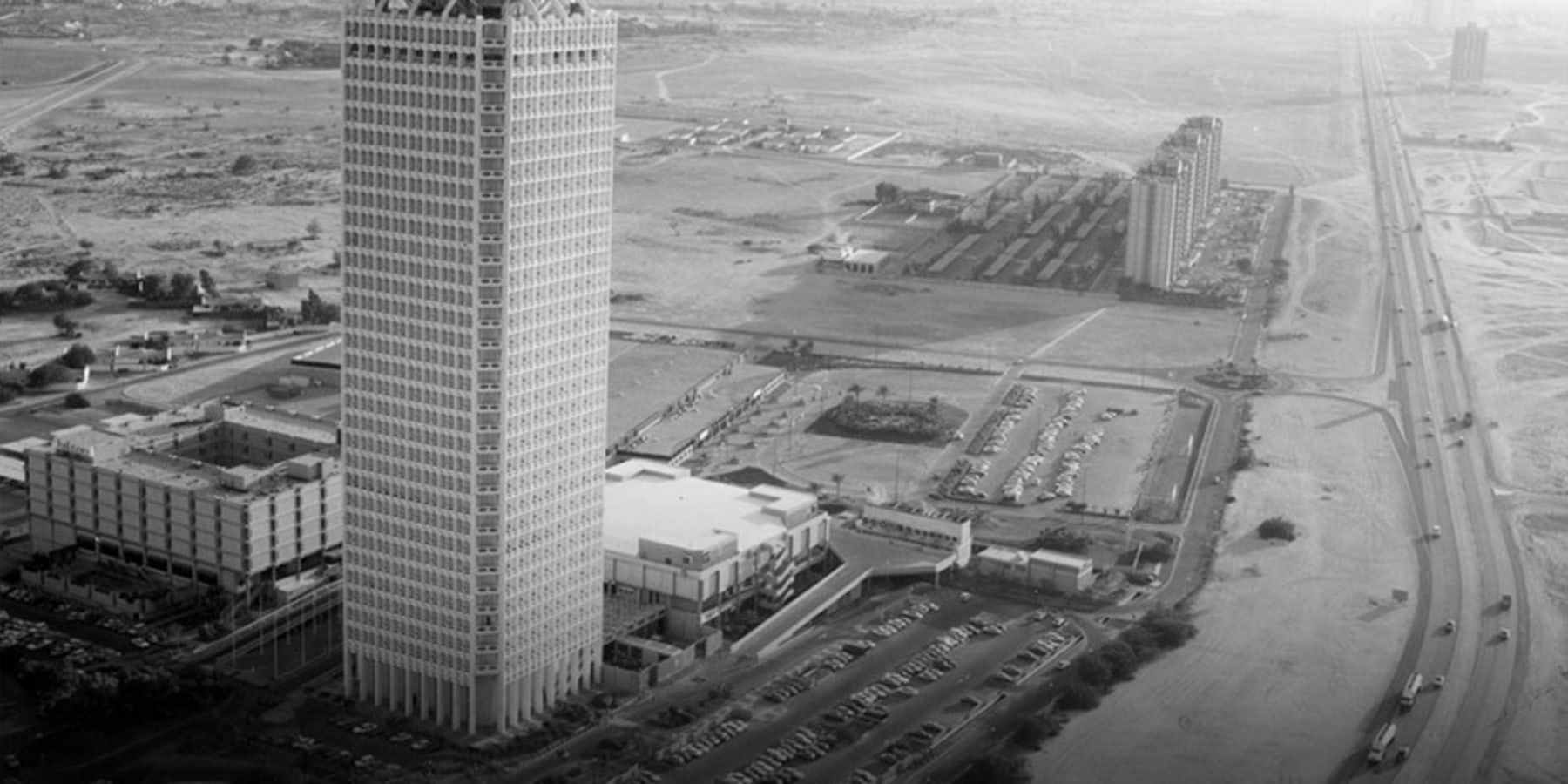

Sheikh Zayed Road (E11) is more than just a highway; it is the spine on which modern Dubai was built. Stretching over 55 km, E11 is the longest road in the UAE, connecting Abu Dhabi to Ras Al Khaimah, but its most iconic stretch runs through the heart of Dubai.
In the 1970s and early 1980s, Sheikh Zayed Road was a modest dual carriageway cutting through open desert. The 1980 photograph reminds us of a time when Dubai’s ambitions were just beginning to take shape. Visionary leadership recognized that infrastructure would drive growth, and this highway became the foundation for everything that followed.
From the 1990s onward, Dubai’s development strategy deliberately concentrated along Sheikh Zayed Road. Zoning regulations encouraged vertical growth, transforming empty land into a dense corridor of commerce, hospitality, and global business. Today, the road is lined with some of the world’s most recognizable landmarks, including the Dubai World Trade Centre, DIFC, Emirates Towers, and countless luxury hotels and corporate headquarters.
What makes Sheikh Zayed Road unique is how it blends mobility with identity. It connects residential districts, business hubs, exhibition centers, and tourist attractions, while also acting as a visual symbol of Dubai’s transformation. The 2025 skyline image reflects not just architectural progress but economic confidence, global connectivity, and long-term urban planning.
For visitors, Sheikh Zayed Road offers one of the most striking city drives in the world, especially at night, when glass towers and flowing traffic create a living postcard of Dubai’s success story.
Sheikh Zayed Road is proof that when infrastructure is planned with vision, it doesn’t just move people, it builds cities.