

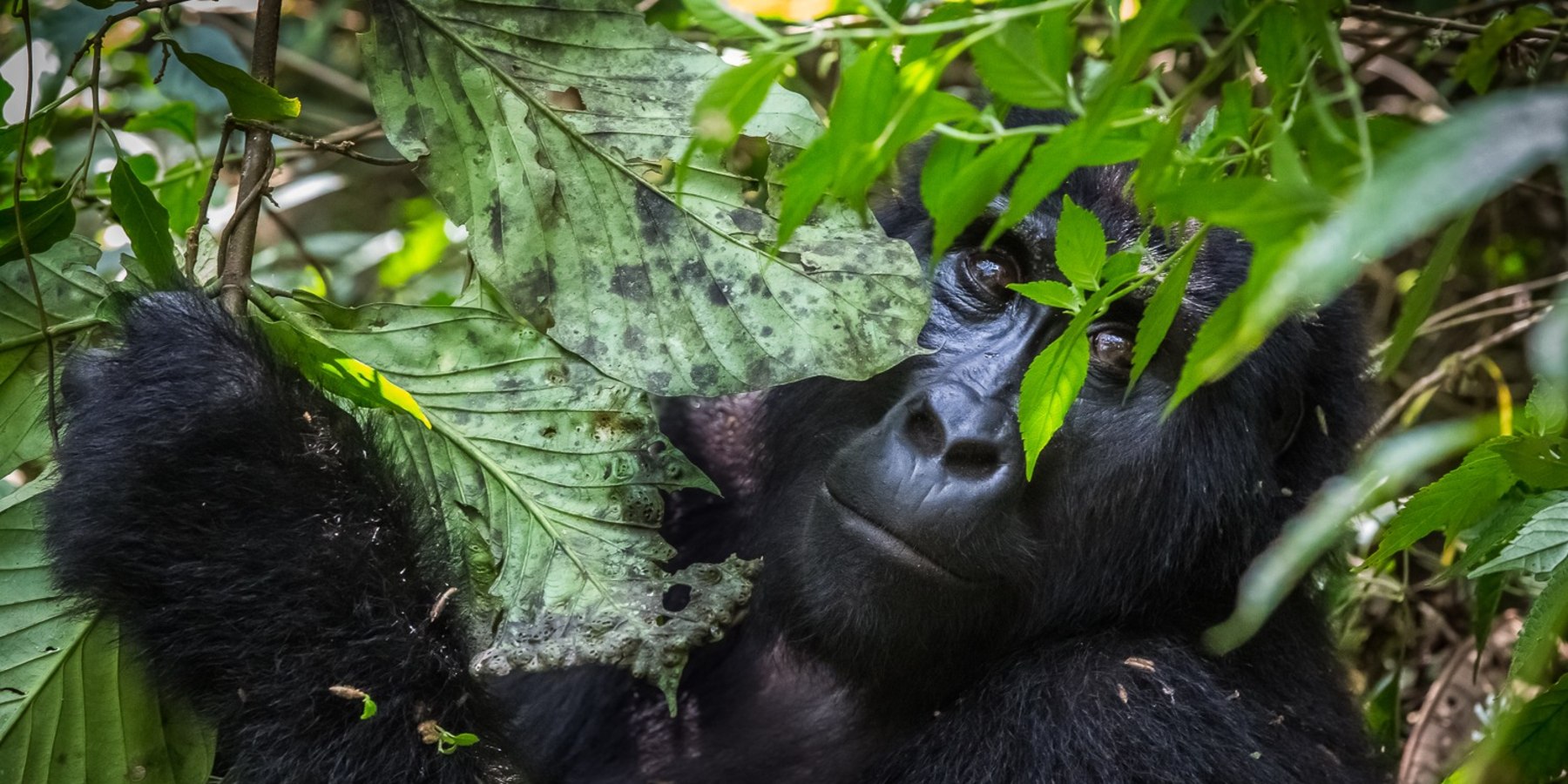

Gorillas live in isolated places. In East-Central Africa, mountain gorillas live only in two isolated dense forests of Bwindi Impenetrable national park and Mgahinga gorilla park. These places are found in high-altitude montane and bamboo forests which are surrounded by agriculture and settlements.
Mountain gorillas can live up to 40 years in the wild. It is believed that their life span can go up to 40 years of age. Gorillas are classified as infants until three and a half years, 8-12 as adults. From 12 years, a male gorilla will develop silver hair on the hip and back. After it develops silver hair, a gorilla is referred to as a silver back. He has the potential to lead a family in the wild.
Gorillas also share 98% of humans actually considered human’s closest relative. This means that we share the same genes with the gorillas or even identical with the similar version of the genes. This means that gorillas’ exposure to human illnesses, even cough, can have serious impacts on the gorillas. They are genetically similar to us though they have not yet developed necessary immunities in their bodies.
Gorillas are the biggest and power primates. Mountain gorillas are the largest and strongest apes due to their muscular and elongated arms. An average silverback weighs up to 180-200 kg and measures 170cm tall on all fours and a female gorilla weighs 90kg and measures 150cm, thus considered the most powerful and strongest primates.
The strongest primates spend a quarter of the day eating. Gorillas have muscular bodies that require them to eat too much and thus spend the whole day eating. However, 85% of their diet is made up of leaves, stems and shoots, but they can also feed on snails, ants, and even roots to build their powerful bodies.
Gorillas live in groups. Just like humans’ gorillas live in families which are led by a male silverback who takes care of the family; the head of the family ensures the safety of the family from attacks of other gorillas. They live in groups of about 10 individuals under the dominant silverback. However, both males and females take care of their families by hugging, carrying and playing with them.
Mountain gorillas are also cosy at night. At night, mountain gorillas sleep together in nests on the ground or in the trees, and the infants or babies share their mother’s nest for safety and for warmth from coldness and attacks.
In conclusion, mountain gorillas live under threat due to the degradation of their habitat. The region’s population growth scares the gorillas as their habitat is being converted for agriculture and competition for limited natural resources, which has led to deforestation. Due to increased demand for land for settlement, there may be poor disposal of waste which may lead to illness and cold in the inhabitant of Bwindi and Mgahinga Gorilla Park.