

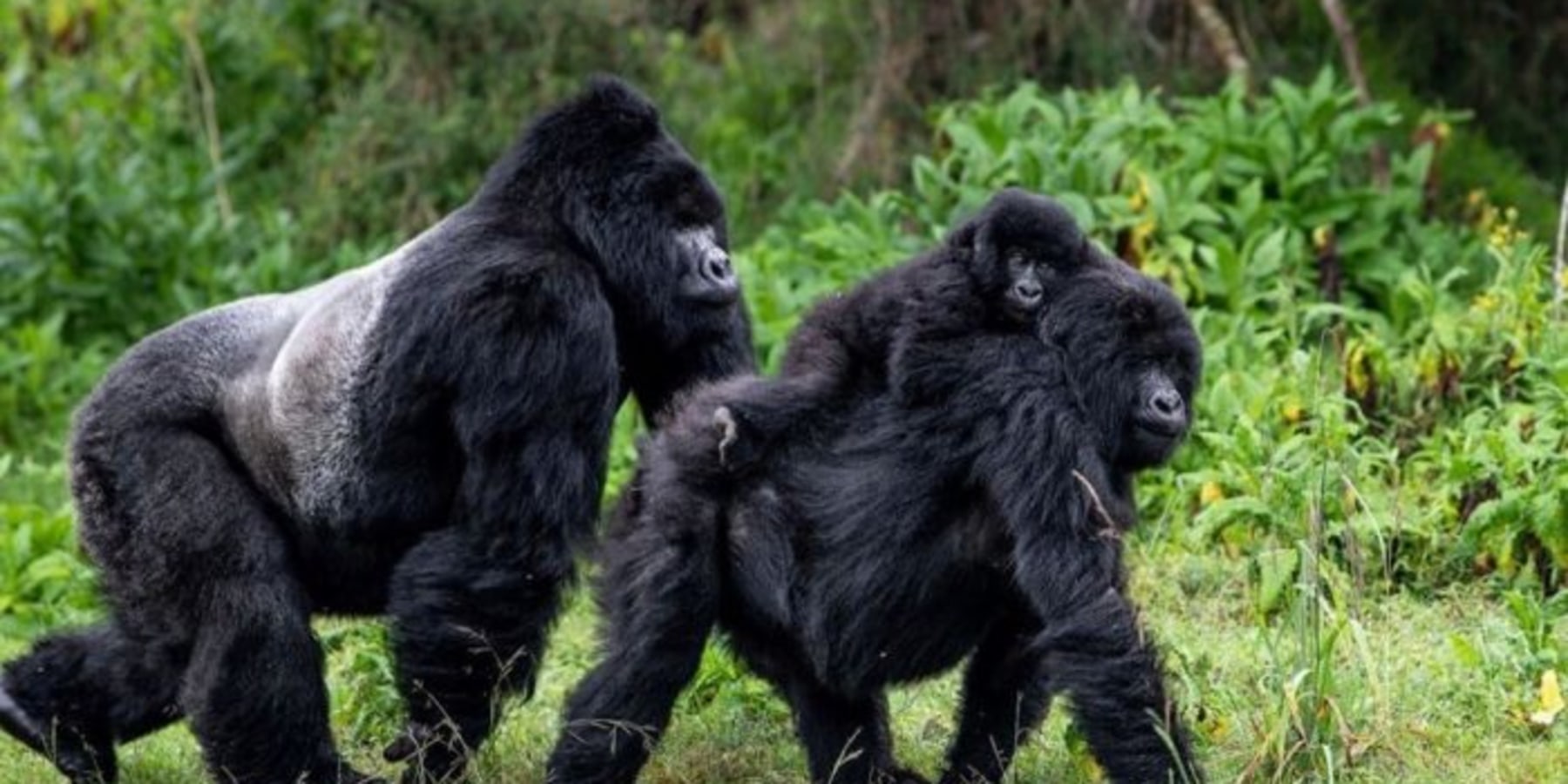

Gorilla families in Bwindi Impenetrable Forest National Park
Gorilla tracking in Uganda: Note that Habituated gorillas in Bwindi Uganda are in 5 sectors and live in 12 families for tourists and 2 families for habituation experience. A Silverback heads each family as an indisputable leader.
Bitukura Gorilla family; with 14 members available for gorilla tracking, it was previously a family of 24. Ndahura, who took over from Karamuzi, the family was habituated and opened in 2008. It’s found in the Ruhija sector.
Bweza Gorilla Family; Found in the Rushaga area, this family separated from the Nshongi family led by Mishaya. The family grew from 6 to currently 9 members.
Busingye Gorilla Family; Headed by Silverback Busingye with 13 members, it is found in Rushaga and was founded in 2013, departed from the Nshongi family. Known for his fighting behaviours, Busingye is known for stealing females from other Kanyonyo. This is why he parted away from Kahungye and grew from 9 to 13 members presently.
Habinyanja Gorilla family; Found in the Buhoma area, there are 17 members. It was the first family to be opened for tourists in 1997. This family name is located near water (Habinyanja means at the waterside).
Kahungye Gorilla family, found in the Rushaga sector, has 13 members with 3 silverbacks and is headed by Rumansi. This family was opened for visitors in 2011, and Busingye separated from this group led by Bwiji.
Kyaguriro Gorilla family, found in Ruhija with 15 members, is led by Rukina, who took over power from Zeus due to his old age. This family is set apart for research. Many interesting findings are coming from different researchers, especially about the difference between gorillas in Bwindi and those in Virunga Mountains.
Mishaya Gorilla family, found in Rushaga, has 12 members. The family is named after Mishaya, the family head Silverback). Departed from Nshongi in 2010, Mishaya is known for fighting with other families and has been wounded in different fights. He is known to be a successful fighter, especially in protecting his family members.
Mabare Gorilla family; Found in the Buhoma sector with 8 members, it’s led by Bunyonyi. This is the easiest family to track due to its location, and there is not much effort needed to reach this family.
Nkuringo Gorilla family; Located in the Nkuringo sector with 19 family members, it was habituated in 2008. It is named after Nkuringo, who died in 2008, and his son took over. The family is named after Nkuringo hill, where it was first sighted just near the park. They later had encounters with humans, and we’re habituated in 2008 when they were opened for tourists.
Nshongi Gorilla Family: Located in Rushaga, has 26 members, and it is the largest family ever to be habituated. It was opened for tourists in 2009 with 37 members and a splint in 2010. The family is named after River Nshongi, where this family was first spotted. Mishaya separated from this group in 2010, and now the family has 4 Silverbacks.
Aruzogo Gorilla Family: In the Ruhija sector has 25 members, with 2 Silverbacks being the second largest group. It is headed by Tibirikwata and is known as the most playful family.
Rushegura Gorilla Family: Located in the Buhoma sector with 19 members. The family is named after the Ebishegura tree species, common in the family territory. Mwirima is the family head, and he is known to have separated from his brother Rwansigazi in 2002.
Note that gorilla trekking experience, gorilla family allows 8 visitors a day.
Mountain Gorillas and their behaviours
Family: For gorilla tracking experience, the mountain gorilla, also known as gorilla Beringei Beringei is in the family of Hominidae and species of gorilla Beringei. They are known to be descendants of ancestral monkeys and apes in Africa and Arabia, and they were mainly discovered in 1902.
Location: Mountain gorillas are found in the Virunga Mountains shared by Uganda, Rwanda and the Democratic Republic of Congo (DRC) and in Bwindi impenetrable forest national park in Uganda.
They live in High altitude areas of 8,000 to 13,000 feet above sea level, with long and thick fur that enables them to survive in cold temperatures. They are believed to survive in freezing temperatures.
Physical appearance: Gorillas are physically stronger than humans but very gentle, shy and not violent as many people think. Their arms are longer than legs like other apes, unlike humans. A male gorilla can weigh 120 to 190kg with an average height of 1.5 to 1.7 meters, while a female can weigh 70 to 100 kg.
Habituation: Gorillas undergo habituation which takes about two years. This is a process where they are trained to get used to the presence of humans in their natural habitats. In other words, they won’t change their behaviours due to the presence of human beings.
Family life and Silverback: Gorillas live in families with long-term bonds, and most males leave their natal homes around 10 years and start their own. Most females stay in their natal families, and others leave earlier than males. Each family has a dominant silverback. Silverback is the male head of the family and an undisputable leader, and the name is due to the saddle of grey hair that develops on their back with age (silver-coloured hair). He plays a key role in keeping the family together. He can mediate conflicts, determines movements and defends the family even to the cost of his own life. Young ones stay with him, and he is always a center of attraction. Silverback is the only one to mate with all females, although other males can sneak and mate with females. In case of disagreements, old males (silverbacks) can leave to start their own families, and it takes a silverback even up to 5 years to attract females to join him in his new family.
Social life and bonding: For gorillas, social life is essential, especially during the resting time at around mid-day. They like social bonding where they play together, groom each other and have time to clean up their hair (removing dirt and parasites). Mothers help young ones, and Silverback also plays with young ones, and they stay close to him. Silverbackk is the centre of attraction for the entire family during this resting time. During this period, the Silverback can pay attention to the abandoned young ones, especially if their mother has left the family or has died. Female relationships are normally weak in families, and this is manifested in the misunderstandings between them and sometimes can lead to separation.
Feeding: Gorillas are herbivores and spend most of the day eating or searching for vegetation. Averagely, a male gorilla can eat up to 33kg and a female 18 kg of vegetation a day. Dominant Silverback determines the movements and better feeding sites. A home for the family is mainly determined by food availability (several vegetation zones). Gorillas can also feed on fruits, honey and insects. They can also climb trees in search of food.
Family inheritance: Silverback leads averagely for 4 to 5 years, and a son or young brother takes the role. This can be due to old age or death. In some cases, when a silverback is killed, the family is disrupted and disintegrated unless there has been a clear descendant that takes overpower. A new silverback may even kill the young ones of the old Silverback, especially if he is unrelated to the former.
Homes: Mountain gorillas sleep in nests, and each gorilla makes its own. Young ones sleep with their mothers. In case of death or departure, the mothSilverbackckk can allow young ones to sleep in his nest. Gorillas make a new nest every day, and they keep them clean.
Kit for Gorilla tracking in Uganda
Both Bwindi impenetrable forest national park and Mgahinga Gorilla national park are located on the elevations. Therefore you expect it to be rainy, humid, cold and windy. You need to be ready with what can help you through your tracking experience. You, therefore, take precautions against thorn pricks, coldness, insect bites and others.
Long-sleeved shirt and trousers, especially waterproof if possible or any other material. Cotton underwear garments are also necessary.
Hiking boots and waterproof boots are advisable. This will help you to keep your stability and balance in unfamiliar terrain.
Rain jacket, be ready as it can rain anytime, and it can also help you keep warm while in the deep cold forest. Depending on the material of your jacket, you can also have a warm sweater inside your jacket.
Gloves, Garden gloves are recommended. They help you to support yourself on branches and vines in the forest. This is just to facilitate your easy movement.
A Hat to protect your head from the sun or rain. African Safari hat is also one of the best you can have before your trekking experience.
Insect repellent is essential to protect you from insects. You can also have sunblock cream to protect your uncovered body parts.
There is so much information that can be shared about gorillas. You can contact us for a great safari experience at tourhq.com.