

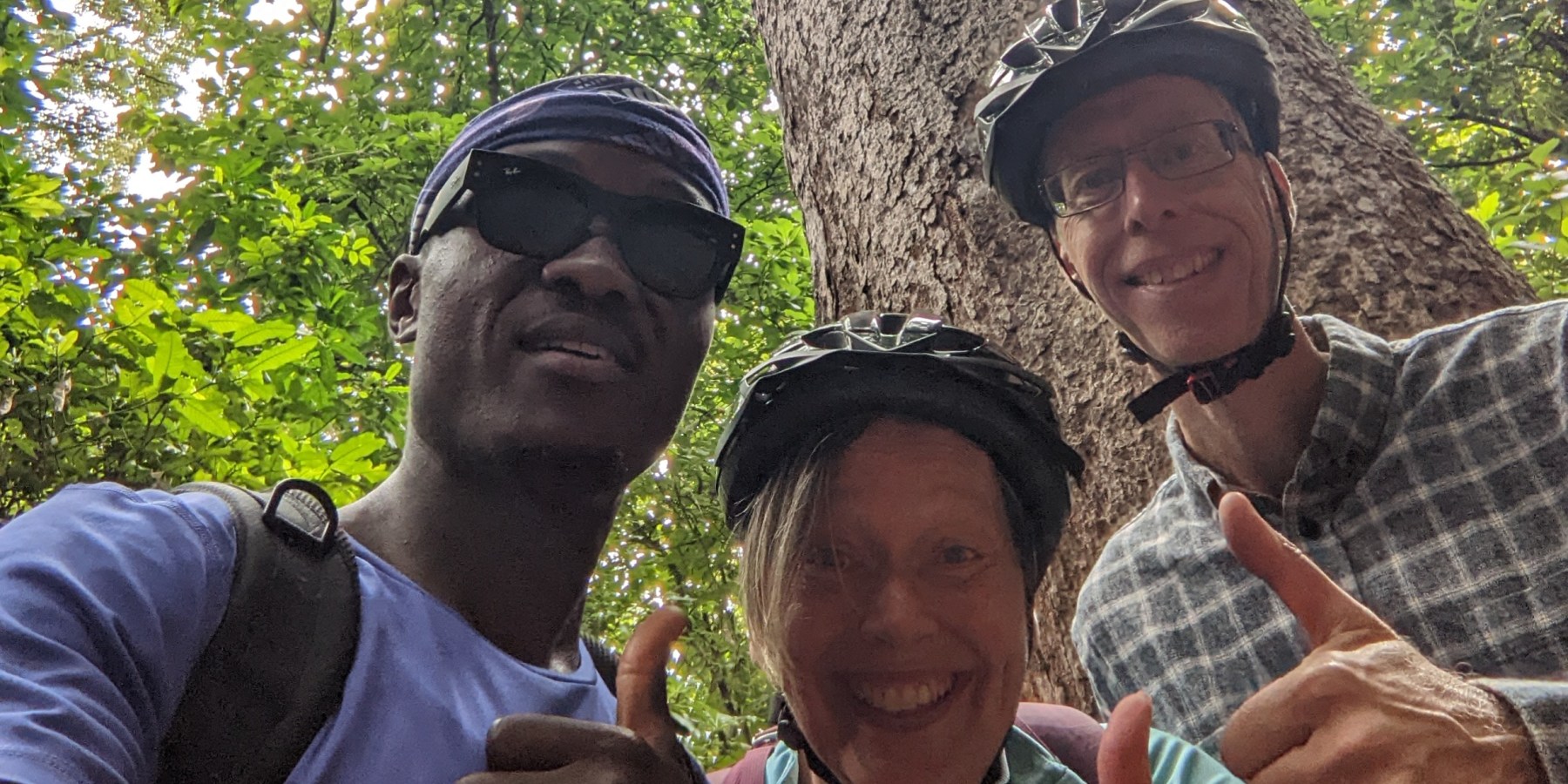

Choosing a bicycle in place of other modes of transportation for the holidays is a decision that can have many positive impacts on nature and on the local economy of rural areas. And as cycle tourists get away from traditional mass tourism destinations, these economic benefits can empower rural areas, also constituting an incentive to take care of protected areas as those are points of interest for many cycle tourists.
Cycling is a form of active transportation, sport, fitness, and recreation. Bicycle is first thought of as a sustainable mobility driving element and mostly for the urban environment, but it can also play an important role as a catalyst for sustainable tourist activities in protected and rural areas.
In addition to the obvious health and well-being benefits of cycling, the contemplative pace of cycling provides cycle tourists with the opportunity to enjoy the journey as much as the destination and promotes a deeper connection with the territory and the local community.
For cycling tourists, the bicycle is a means of transportation, a motivation for travel, and a way of doing tourism. Engaging with this active mode of transportation becomes an important part of the tourism experience and an alternative to the dominant model of tourism.
Cycle tourism is aligned with the slow tourism philosophy, which is characterized by shorter distances between destinations, less environmental impact, and more emphasis on quality over quantity of tourist visits. Due to these characteristics, cycle tourism is considered an expression of sustainable tourism.
Choosing a bicycle in place of other modes of transportation for the holidays is a decision that can have many positive impacts on nature and on the local economy of rural areas. And as cycle tourists get away from traditional mass tourism destinations, these economic benefits can empower rural areas, also constituting an incentive to take care of protected areas as those are points of interest for many cycle tourists.
Both cycle touring routes take from a single day to multiple days each, covered at a contemplative pace. They allow access to natural and cultural resources of the territories, generally neglected by traditional tourism. They also help to reduce vehicle traffic in their areas and increase the visitors’ stay, which provides deeper interaction with the local community and a greater increase in the consumption of its services and products, unlike tourists in vehicles, who usually cover this distance in just one day. The bicycle tourism development initiatives presented here have helped rural areas to make the best use of their territorial capital and have contributed to the enhancement of the environment, both by the cycle tourists and by the local community.