


Dr. Sun Yat-Sen Classical Chinese Garden – A Living Landscape of History, Nature and Philosophy
A Hidden Sanctuary in Vancouver’s Chinatown
Just a few steps away from the busy streets of Vancouver’s historic Chinatown lies one of the city’s most remarkable cultural treasures: Dr. Sun Yat-Sen Classical Chinese Garden and the adjoining Dr. Sun Yat-Sen Park.
Passing through the traditional gates, visitors discover a peaceful world of winding pathways, elegant pavilions, reflective ponds, sculpted limestone and carefully arranged vegetation.
This is much more than an ornamental garden. It is a landscape designed to express a philosophy of harmony between humanity and nature, where every element has a purpose and a story.
A Remarkable Connection Between China and Vancouver:
Opened in 1986, the Dr. Sun Yat-Sen Classical Chinese Garden was the first full-scale authentic Chinese classical garden constructed outside China.
Inspired by the celebrated scholars’ gardens of Suzhou, it was created through cooperation between Canadian and Chinese communities, governments, architects and skilled Chinese artisans.
The garden takes its name from Dr. Sun Yat-Sen (1866–1925), the revolutionary leader often described as the father of modern China. He visited Vancouver several times while gathering support for political change in his homeland.
The garden is therefore not only a beautiful cultural landmark but also a reminder of the important contributions of Chinese Canadians to Vancouver’s development.
Understanding the Language of Nature:
One of the most fascinating aspects of a traditional Chinese garden is the relationship between its four essential elements: rocks, water, plants and architecture.
Unlike many Western gardens, where flowers and colourful plantings often dominate, classical Chinese gardens emphasize balance, symbolism, carefully framed views and the changing experience of moving through a landscape.
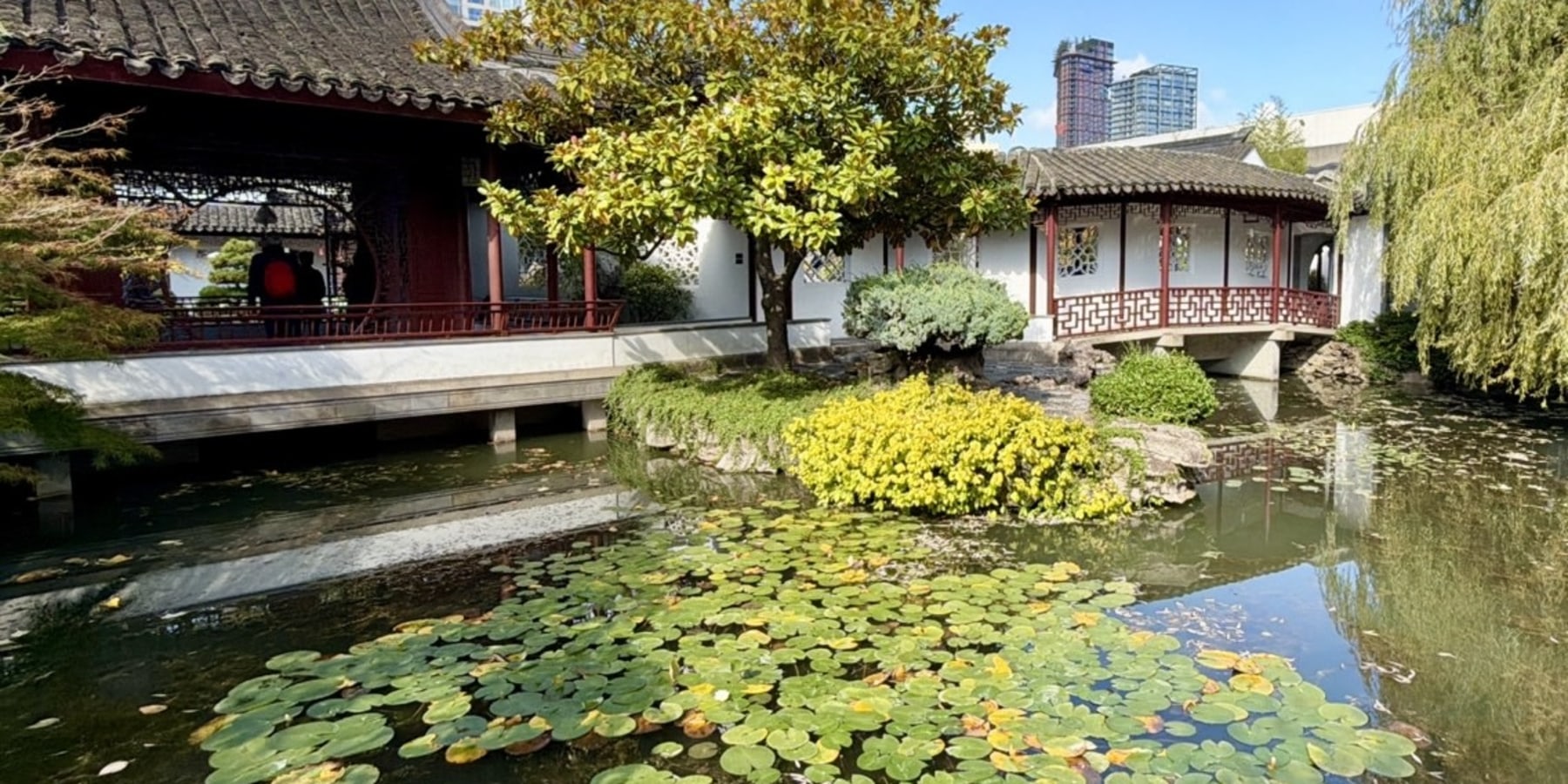
Rocks suggest mountains and permanence. Water introduces movement, reflection and tranquility. Architecture creates intimate spaces from which to appreciate nature, while vegetation connects the entire composition to the changing seasons.
A carefully positioned window may frame a single tree or an unusual rock formation, transforming an ordinary view into a living work of art.
A Forester’s Perspective – The Stories Told by Plants:
As a professional tour guide with a background in forestry, plants and nature interpretation, I find this garden particularly rewarding.
My forestry experience has taught me to look beyond the beauty of individual trees and plants and to appreciate their ecological relationships, adaptations and roles within a landscape.
In a classical Chinese garden, this scientific perspective meets centuries of cultural tradition.
Bamboo, for example, is admired for its flexibility and resilience. Its ability to bend without easily breaking has made it a symbol of strength through adversity.
Pine trees, which retain their foliage through the winter, represent endurance, steadfastness and longevity.
The ginkgo, an ancient tree lineage with distinctive fan-shaped leaves, connects the garden to China’s botanical heritage and the extraordinary evolutionary history of plants.
Flowering plum trees symbolize renewal and perseverance, as their blossoms traditionally announce the approach of spring.
Maples, meanwhile, bring a familiar Canadian connection to the landscape, illustrating how this garden bridges Chinese traditions and its Pacific Northwest setting.
During my guided walks, I enjoy explaining how these plants grow, adapt to their environments and contribute to the garden’s atmosphere. Understanding both their natural history and cultural significance adds another dimension to the visitor experience.
A Garden Designed to Be Discovered Slowly:
Another remarkable feature is the way the garden reveals itself gradually.
Rather than offering a single uninterrupted view, its designers created a sequence of small landscapes. A curved pathway, an opening in a wall or a reflection in the water introduces a new perspective.
This approach encourages visitors to slow down, observe and appreciate details that might otherwise go unnoticed.
For photography enthusiasts, the garden offers wonderful opportunities to explore reflections, natural framing, architectural patterns, textures and the contrast between light and shadow.
As a photographer and photography instructor, I particularly enjoy helping visitors recognize these compositions and discover how traditional garden design can inspire better photographs.
Two Gardens, One Cultural Experience:
Visitors should know that the site contains two connected but distinct spaces.
The Dr. Sun Yat-Sen Classical Chinese Garden is the historically inspired, admission-based garden, with traditional architecture, curated landscapes and cultural interpretation.
Immediately beside it is Dr. Sun Yat-Sen Park, a beautiful public green space that can be visited free of charge.
The public park includes a pond, water lilies, distinctive rocks, traditional Chinese architectural features and lush vegetation. It provides an excellent introduction to the design principles of Chinese gardens and is a delightful stop during a walking tour of Chinatown.
Although the two spaces have different access arrangements, they were conceived as complementary parts of the same landscape.
Discovering Vancouver Through History and Nature:
For me, the pleasure of guiding visitors through Vancouver lies in connecting seemingly different subjects: history, architecture, cultural traditions, geography, plants and the natural environment.
Dr. Sun Yat-Sen Park is a wonderful example of how these stories come together.
It allows us to explore the history of Vancouver’s Chinese community while discovering a landscape inspired by centuries of artistic and philosophical traditions.
With my background in forestry, nature interpretation and photography, I try to offer visitors more than a description of what they see. I invite them to understand why the landscape was created, what its plants symbolize and how the garden reflects the relationship between cultures and nature.
Sometimes, one of the most memorable discoveries in a busy city is a quiet garden where every tree, stone and reflection has a story to tell.
Ati Gereb
Local Tour Guide, Photographer and Nature Interpreter
East WOWs West Travel Adventures – Vancouver, British Columbia