


People come to Azerbaijan expecting a city break and leave talking about fire, mud, and 40,000‑year‑old art. My guiding area stretches from Baku across the Absheron Peninsula and south to Gobustan — a compact corner of the country where you can stand in front of prehistoric rock carvings in the morning and watch a hillside burn at sunset the same evening. Here’s what I’d want a first‑time visitor to know.
Gobustan Petroglyphs
Gobustan rewards the curious. The petroglyphs aren’t behind glass — you walk among the same rocks the carvers used, looking out over the Caspian.
Tip: Spend a few minutes in the small museum first. Once you understand what you’re looking at — hunting scenes, dancing figures, boats — the carvings stop being “old rocks” and start telling a story. Go in the morning; the light is kinder and the site is quieter.
Mud Volcanoes
The mud volcanoes are pure Azerbaijan. Nearly half the world’s mud volcanoes are here. They don’t erupt fire — they bubble cold, grey, mineral‑rich mud, and the landscape around them looks genuinely lunar. The track out is rough and unmarked, which is exactly why a local guide makes the difference; it’s easy to miss or get stuck without someone who knows the way.
Absheron Peninsula
Absheron is where the “Land of Fire” name makes sense.
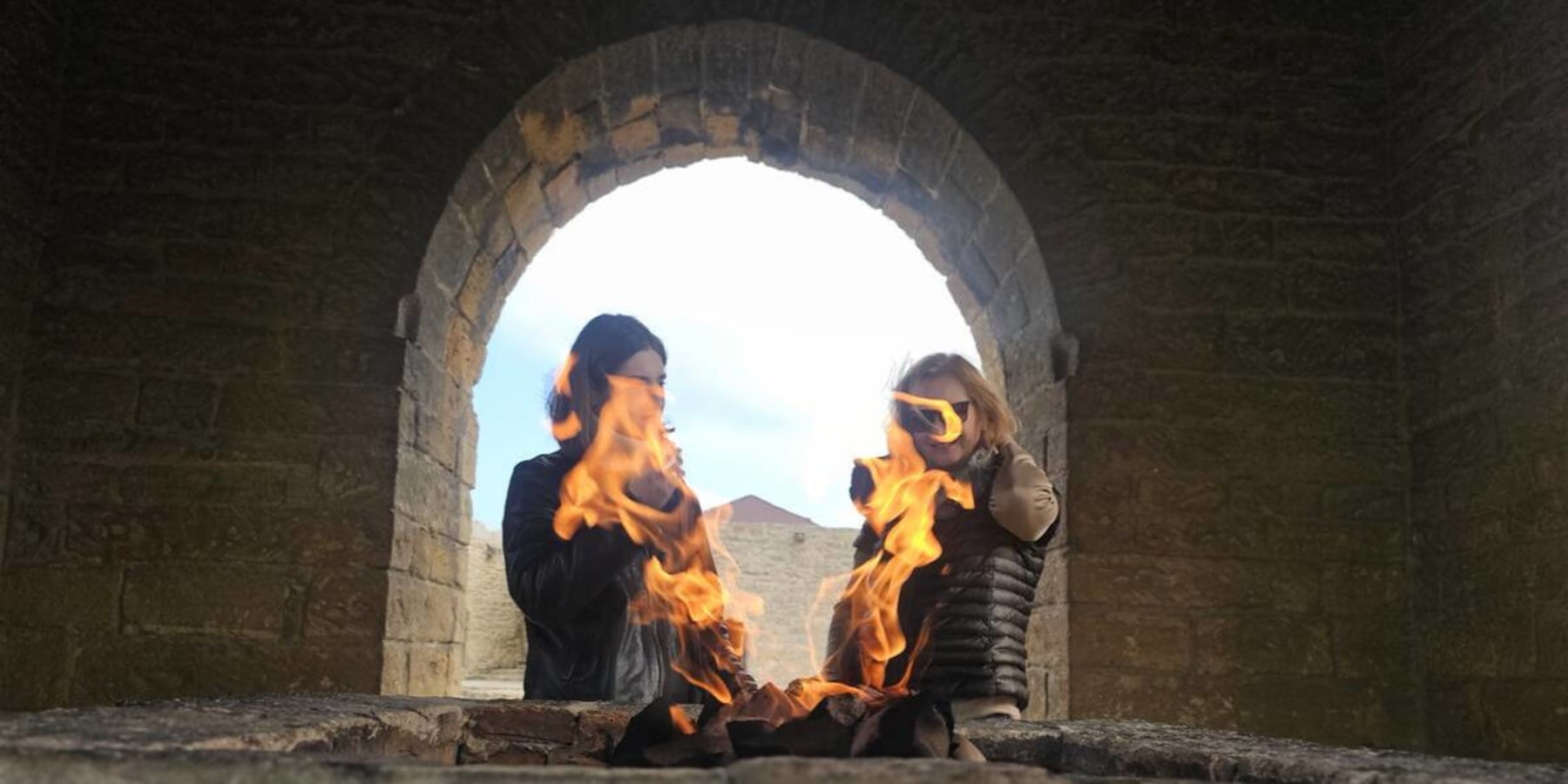
Ateshgah Fire Temple: In Surakhani, pilgrims once travelled from India to worship a natural flame fed by gas seeping from the ground.
Yanardag Burning Mountain: Flames that have never gone out. See it toward dusk if you can; the fire against the darkening slope is unforgettable, far better than the midday photos most people settle for.
Local Insights
Hospitality: Don’t be surprised if a stranger offers you tea. Saying yes is part of the experience — Azerbaijani tea, served in a pear‑shaped armudu glass, is a ritual worth slowing down for.
Language: Russian is widely spoken and English is common in Baku, so travellers usually feel at ease quickly.
Food: Eat local on the road. A lunch stop at a village restaurant — fresh bread, grilled meats, herbs straight from the garden — often becomes a highlight remembered as much as the sights.
Best Seasons: Spring and autumn are sweet spots. Mild weather for the trails; summer middays are hot and exposed, so bring water and sun cover.
Route Planning: Give it a full day. Gobustan sits southwest of Baku and the fire sites lie northeast, so a well‑planned route — not a rushed checklist — turns a long drive into a genuinely relaxed day.
The Contrast That Defines It
What ties it all together is contrast: stone‑age history and burning earth, ancient faith and Caspian coastline, big‑city Baku and quiet desert hills — all within an easy day of each other. It’s the kind of place that surprises people, and the reason I love showing it to visitors.