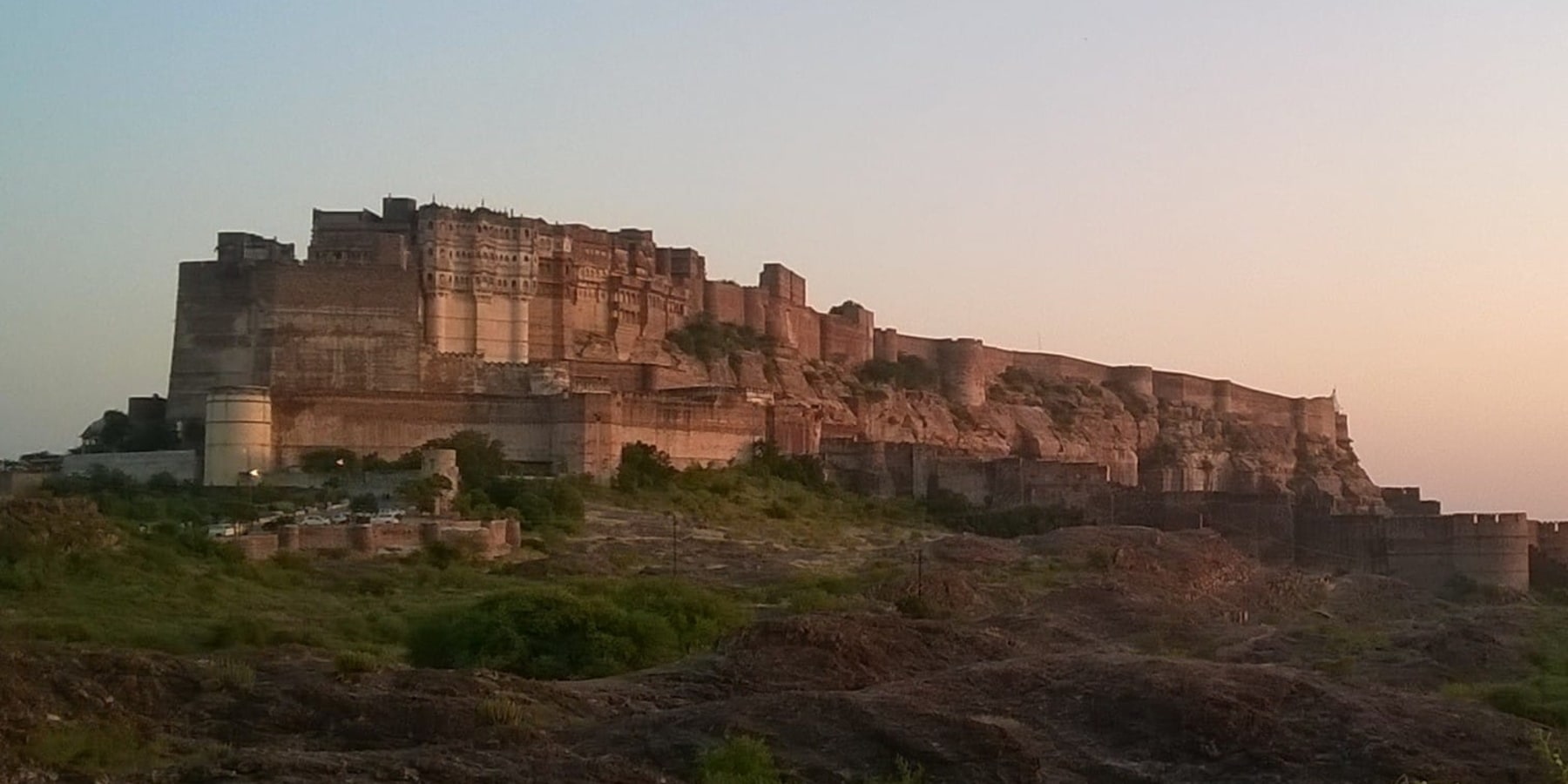

Jodhpur, the "Blue City" of Rajasthan, is a treasure trove of history, culture, and architectural splendor. A guided city tour of Jodhpur unveils the stories behind its iconic landmarks, such as the majestic Mehrangarh Fort, Jaswant Thada, Umaid Bhawan Palace, Madore Garden and the bustling Clock Tower Sardar Market. Exploring Jodhpur with an expert guide transforms a simple visit into a journey through centuries of culture.
Nestled on the edge of the Thar Desert, Jodhpur, the "Blue City" of Rajasthan, is a captivating destination where history comes alive through its vibrant streets, magnificent architecture, and rich cultural traditions. Jodhpur was the capital of the erstwhile Marwar princely State and was ruled by a Rajput Clan called Rathore. Their earlier capital was at Mandor 9 km, north of Jodhpur. They had Fort at Madore but it was already a 1000-year-old fort considered not any safer and stronger, that is why Rao Jodha shifted his capital to Jodhpur on top of volcanic rock. He laid the foundation stone of the Mehrangarh Fort, and the City and his successor Maharajas added something to build such a magnificent building. Jodha founded the city that’s why it is called Jodhpur which means “Jodha’s City”. Like all the other medieval cities of India, Jodhpur was also a walled city.
A guided city tour of Jodhpur offers more than just sightseeing—it’s an immersive experience that uncovers centuries-old stories and the soul of this regal city.
Mehrangarh Fort
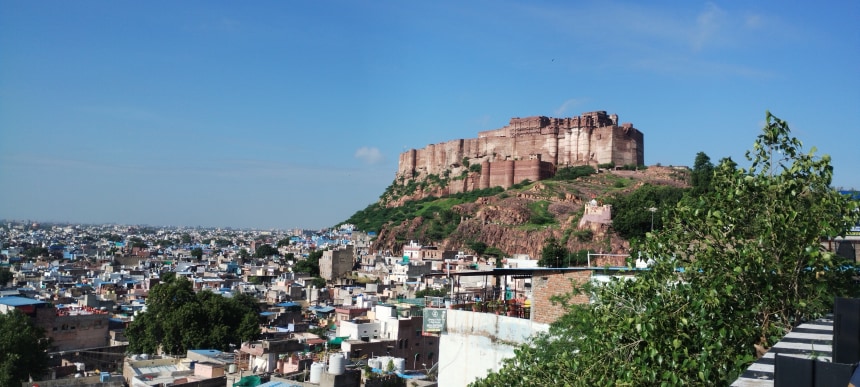
The Mehrangarh Fort was built on volcanic rock, approximately 120 meters above the city. Rao Jodha founded it in the 15th century. It was on May 12th, 1459, that Rao Jodha laid the foundation stone of the fort. To begin with, it was a small fort, but as this dynasty grew more powerful, the size of their fort expanded, and every succeeding Maharaja added something to that. So, we can see 15th-century to early 19th-century additions in this fort.
The fort houses intricately designed palaces like Sheeh Maharl; Phool Mahal; Takhat Villash, and Moti Mahal, courtyards like Shringar Chowk; Daulat Khana Chowk; Holi Chowk, Zanana Chowk, and galleries, which are converted into a museum. It will take a couple of hours to visit this museum.
The Fort has been open to the public since 1972 and is managed by a trust called, “Mehrangarh Museum Trust” one of the best-kept forts in India. In 2005-06 awarded by UNESCO with the Asia Pacific Heritage Award.
Jaswant Thada
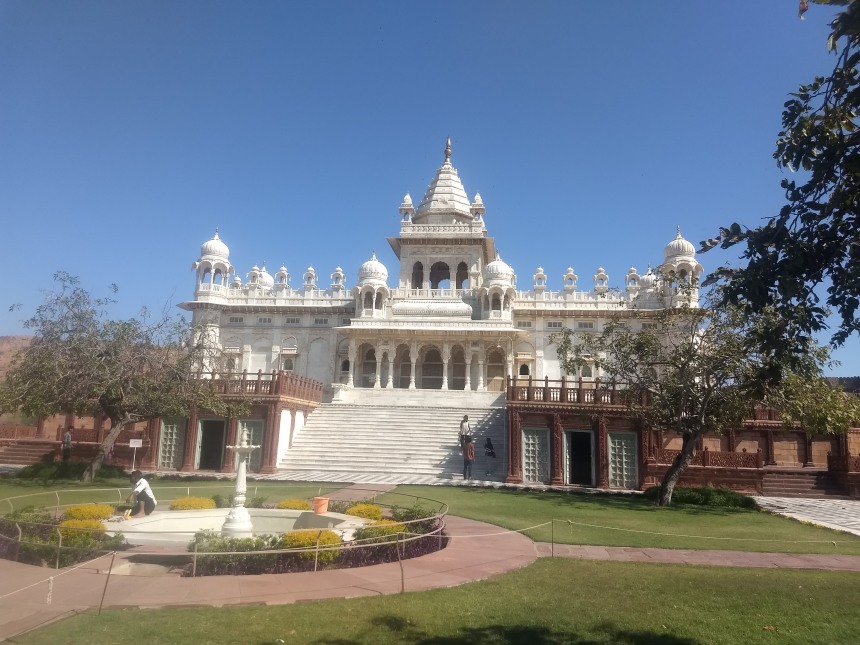
A short distance from the fort lies Jaswant Thada, a serene marble cenotaph dedicated to Maharaja Jaswant Singh II. Often called the “Taj Mahal of Marwar,” this site’s delicate architecture and tranquil surroundings are best appreciated by a guide who explains its symbolism, construction, and importance in local history.
Umaid Bhawan
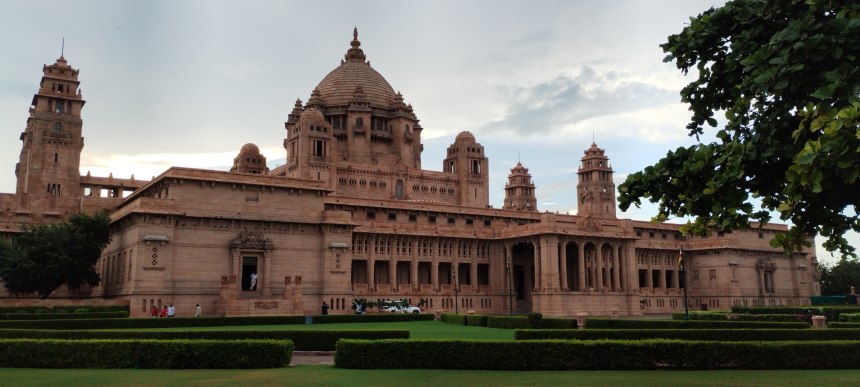
It was built between 1929 and 1943 for Maharaja Umaid Singh, which is why it’s known as Umaid Bhawan Palace. It’s among the world’s largest private homes. The palace complex is set on 26 acres (11ha) of land, including 15 acres (6.1ha) of gardens. The palace consists of a throne chamber, a private meeting hall, a Durbar Hall to meet the public, a vaulted banquet hall, private dining halls, a ballroom, a library, an indoor swimming pool and spa, a billiards room, four tennis courts, two marble squash courts, and long passages.
The principal architecture of the palace is an amalgam of Indo-Saracenic, Classical Revival, and Western Art Deco styles.
Mandore
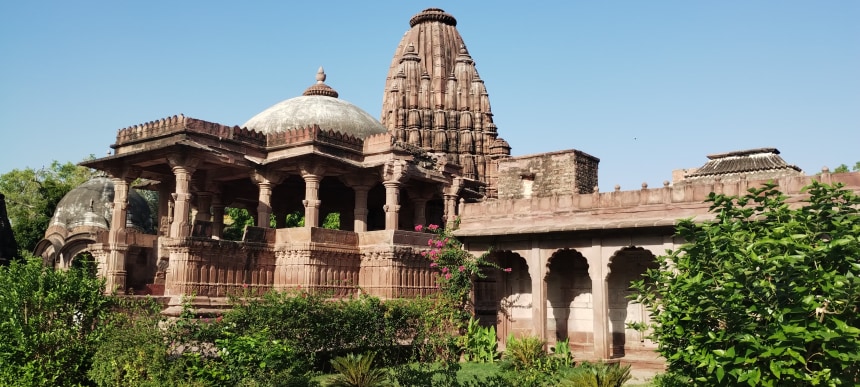
It is 9 km north of Jodhpur, the ancient capital of the Marwar region. Legends about its city say that it was founded by a Saga Mandu between the 5th and 6th centuries, so named the city after Saga Mandu Mandvyapurm. Later, it became called Mandore. Over the period, lots of different ruled here. Finally, it was captured by Rathore. In the 15th century, Rathore shifted its capital to Jodhpur. Now, local people call it Mandore Garden, and it is a popular picnic spot for them.
At the entrance of the garden, we can see Devals, which means cenotaphs of former rulers of Marwar, built in red sandstone.
The 18th-century building was built during Maharaja Ajeet Singh and Maharaja Abaya Singh’s time.
Now, there is an Archeological Survey of India’s museum.
Hall of Heros, where 16 figures are carved out of a single rock face.
Famous for sunken gardens.
Clock Tower
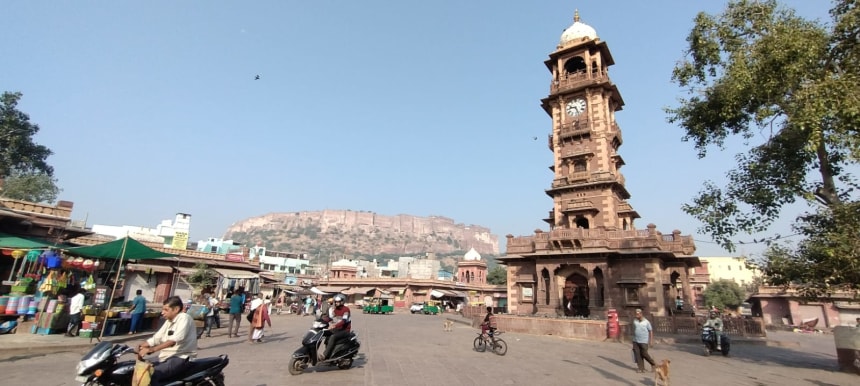
The clock tower market was built at the beginning of the 20th century during the time of Maharaja Sardar Singh (1895-1911). That’s why local people also called it Sardar Market, named after Maharaja. Now, this is one of the most colorful markets of India. Walking into the old market here gives us an experience of city life. There is a spice market, grain market, textile market, and many more to see. Through the gates of the market, we can also see a couple of old water reservoirs.
More to explore: -
Toorji ka Jhalra and Maila Bagh Jhalra are 18th-century step-wells recently restored that provide a glimpse into the city’s traditional water conservation technique.
Kunj Bihari Mandir, Achalnath Mandir, and Blue City Walk - if tourists have enough time then they may go for a city walk, it takes a two to three-hour walk through the oldest side of the city with blue houses.
For travelers seeking adventure, history enthusiasts, or those looking to immerse themselves in India's vibrant traditions, Jodhpur is a destination that delivers on every front. As a guide, I invite you to uncover its hidden gems, engage with its warm-hearted locals, and create memories that will last a lifetime. Let Jodhpur's timeless charm captivate you and leave you longing to return.