


Dubai is a dreamland that never sleeps, Dubai that looks to the distant future, Dubai that has reached outer space and enchants the countries of the world.
Tourists and businessmen from all over the world come to Dubai to enjoy tourism and commerce; everyone wants to spend their time in Dubai.
If you don't have a past, you don't have a present, and you don't have a future" is the Dubai motto, based on a quote by Sheikh Muhammad bin Rashid. This motivates them to preserve the old heritage and pass it on to their children.
The most famous skyscrapers, whose design reflects the ancient heritage, such as the palm tree, the falcon feather, the dolphin and the ocean wave, are located in the centre of the city.
The Burj Khalifa, the tallest building in the world at 829 metres, is one of the main tourist attractions in Dubai.
Most tourists visit the tower to enjoy a magnificent view of the clouds of the city and its historic buildings from the balcony on the 124th floor.
Be impressed by the dancing fountain shows, accompanied by world-famous music, where the water rushes down up to 150 metres.
The Dubai Mall offers 1,200 shops of the most important international brands, 250 restaurants and cafés, a gold market, an international watch market, a fashion centre, a pavilion for digital devices, the largest aquarium, a skating rink, a children's playground, a beautiful waterfall, a cinema and a large parking garage.
Dubai is a traditional city in terms of lifestyle but also a cosmopolitan city that combines Western luxury with the charm of Arab hospitality.
Al Shindagha has been a place of ancient past and the historical beginning of Dubai's development since 1822 when the ruling Al Maktoum family moved from Baniyas in Abu Dhabi to Al Shindagha, where they engaged in lulu fishing and trading on the Creek.
In Al Shindagha, the house of Sheikh Saeed Al Maktoum is in its place. Sheikh Saeed Al Maktoum was the ruler of Dubai from 1921 to 1958. He is head of the Al Maktoum family and grandfather of Sheikh Mohammed bin Rashid, the current ruler of Dubai.
The old houses were made of mud bricks mixed with grass and hay or burnt until they were dry and hard, and stones laid on the roof of the houses from the beach, built from the wood of palm trunks or sidr trees. Until the roof is completely covered, another layer of mud mixed with straw is placed on top of the palm leaves.
Al Fahidi Fort offers the opportunity to see the first method. The ancient houses were famous for their "burjeel" wind towers, an old traditional method of air conditioning to cool the houses during the high temperatures in summer. Also, in Bastakiya, you can visit the Sheikh Mohammed bin Rashid Center for Cultural Communication, where you can learn more about Emirati culture and hospitality, the Mint Museum and the Coffee Museum.
Al Fahidi Fort was built in 1887 to protect Dubai Creek.
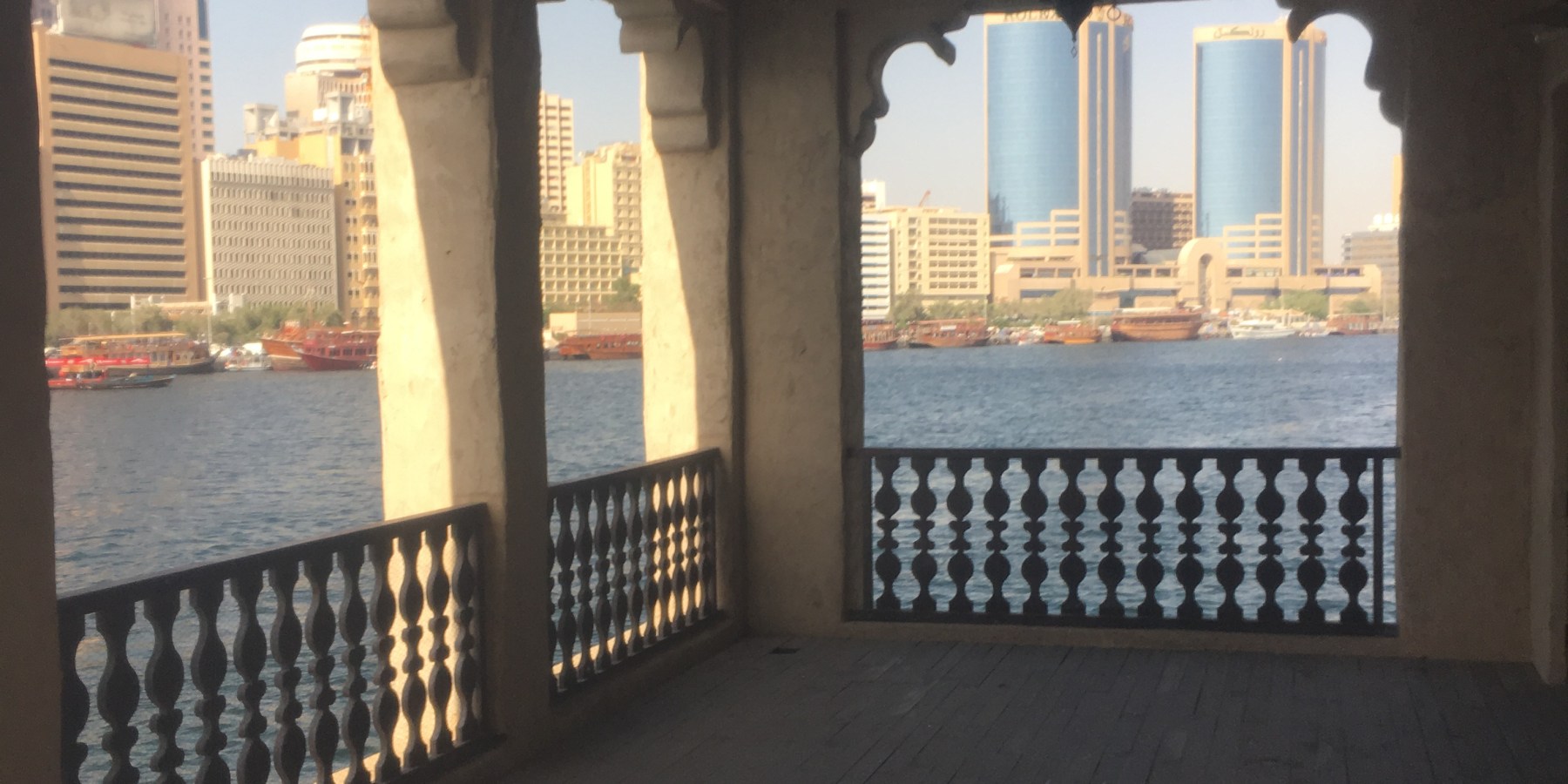
In the streets of Al Fahidi, characterized by a variety of shops, many electronic gadgets, video, audio and TV sets, we will take you between land and sea to get a comprehensive picture of Dubai. The city is divided by the Dubai Creek into two parts, Bur Dubai and Deira. It played an important and influential role in the growth of the Emirate of Dubai and was a major centre for fishing, diving and pearl collecting. Many traditional and simple boats operate here. A ferry takes you from Bur Dubai to Deira, where the famous gold and spice souk is located. Dubai is known as the "Gold City" because of its gold market, where visitors, especially women, can find all kinds of jewellery, jewels and gold bars at top prices. But Dubai also has other "gold": the spice market, which you can see and smell, with scents of frankincense, cinnamon, cardamom, cloves, dried fruit and other things that Dubai's traders import from Africa and Asia. Visit the Burj Al Arab, a seven-star hotel. It is the tallest hotel in the world at 320 metres.