


Planning a trip to China and worried about how to stay connected? eSIM, local SIM card, or international roaming? This article has you covered.
Hello, fellow travelers! One of the biggest concerns before landing in China is—how do I get my phone online as soon as I arrive?
Here's an important heads-up: China is a highly mobile-dependent society. Mobile payments, transportation, translation apps, food delivery, hotel bookings—almost every aspect of daily life relies on a smartphone and mobile data. Without a data connection, traveling in China can quickly become inconvenient. So getting connected right after landing should be your top priority.
Can't access Google Maps? WhatsApp won't work? No local phone number to register for WeChat or Alipay?
Don't worry! This guide covers everything about network and communication in China—from eSIM to local SIM cards, from internet restrictions to plan comparisons. One article, and you'll be ready to go.
- eSIM: The Best Choice for Short-Term Travelers
If you're visiting China for 7 days or less, eSIM is the most hassle-free and highly recommended option.
1. What is eSIM?
eSIM is a digital SIM chip built into your phone. You don't need to insert a physical card—just purchase a plan online before departure, scan a QR code, and download the data package to your phone. Turn on data roaming upon arrival, and you're online instantly—no need to visit a physical store.
2. Advantages of eSIM
• Ready to use upon arrival. Install it before you leave, and you'll have data the moment the plane touches down.
• No queuing. Skip the long lines at airport counters.
• Access to international apps. Most travel eSIMs route data through overseas servers, so Google, WhatsApp, and Instagram work directly without an additional VPN.
• Reasonable pricing. Much cheaper than international roaming.
3.Disadvantages of eSIM
• Phone compatibility required. Not all phones support eSIM functionality.
• Data only. Most eSIM plans provide data only—no local phone number for calls or SMS verification codes.
• Cannot register for local Chinese apps. Without a Chinese phone number, some local services requiring SMS verification won't be accessible. The longer you stay, the more inconvenient this becomes.
4. Popular eSIM Brands in 2026
• Nomad: From $4/7 days, starting at 1GB. High value for money, optimized for China with stable signal in high-speed trains and tunnels. Best for budget-conscious short-term travelers.
• Airalo: From $4.5/7 days, starting at 1GB. The world's most recognized travel eSIM brand, covering 200+ countries. Best for short trips and first-time users.
• Holafly: From $6.9/day, unlimited data. Built-in VPN, 24/7 customer support, no speed throttling. Best for heavy data users who need VPN.
• Saily: From $3.99/7 days, starting at 1GB. From a well-known VPN brand, clean interface, price similar to Nomad. Best for travelers who value brand reputation.
• Trip.com eSIM: From $0.11/day, pay-as-you-go. Direct China Mobile connection, lowest price. Best for flexible itineraries and budget seekers.
• MobiMatter: $7.99/30 days, 10GB. Lowest cost per GB. Best for travelers staying around 30 days.
5. Purchase Recommendations
• For short trips of 7 days or less, choose Nomad, Saily, or Airalo—1 to 3GB is enough for navigation and social media.
• For heavy data users, choose Holafly with unlimited data for seamless video streaming and livestreaming.
• If you're staying more than 7 days, skip to Chapter 2 below for local SIM cards—better value and includes a local phone number.
6. Important Reminders
After purchasing your eSIM, make sure to install and activate it before departure, while you still have a stable internet connection. Most plans start counting from the moment you land in China and connect to the network.
Before departure, confirm that your phone supports eSIM (iPhone XS and above, some Android models) and that your phone is unlocked. Otherwise, it may not work.
- Local Chinese SIM Card: Best for Longer Stays and Those Needing a Local Number
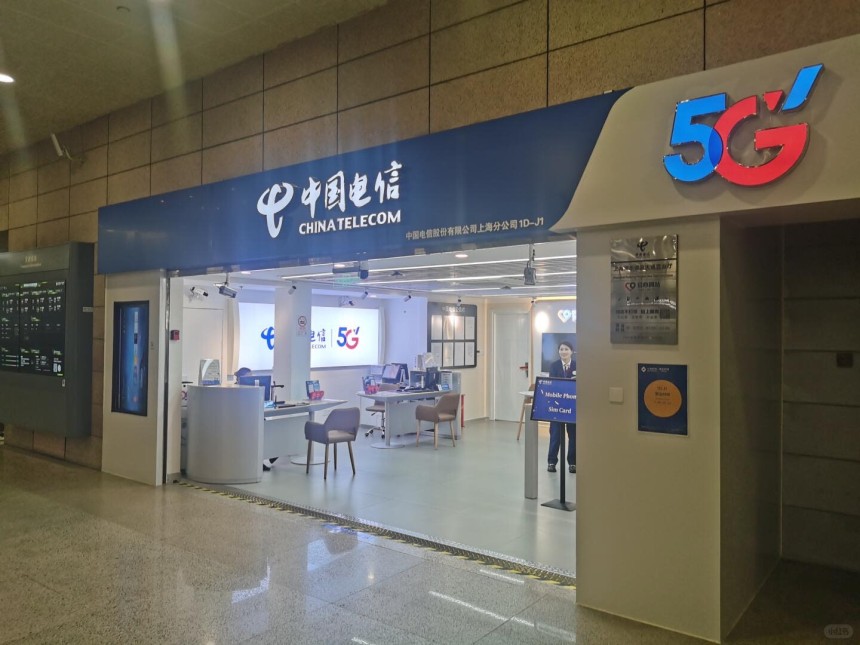
If you're staying in China for more than 1 week, or need a Chinese phone number to register for local apps like Didi or Meituan, getting a local SIM card is the better option. Most Chinese apps require a local number to receive SMS verification codes—foreign numbers often can't receive these messages.
1. Advantages of a Local SIM Card
• Affordable pricing. 30-day plans cost around $10–40, much cheaper than international roaming.
• Fastest network speeds. Enjoy full 4G and 5G local network speeds.
• Local phone number included. Receive SMS verification codes and register for various Chinese apps.
2. Disadvantages of a Local SIM Card
• Cannot access overseas apps directly. Google, Facebook, Instagram, WhatsApp—none of these work without additional tools.
• Requires real-name registration. Must visit a store in person with your passport.
• May require queuing. Airport peak hours may mean a 15 to 20-minute wait.
3. Which Carrier to Choose?
China has three major mobile carriers: China Mobile, China Unicom, and China Telecom.
• China Mobile has the widest coverage, best signal in rural and remote areas, the largest user base, and is generally considered the most reliable choice. Best for travelers heading to rural areas or villages.
• China Unicom is the most foreigner-friendly, with the easiest online purchasing options. Best for travelers mainly staying in cities.
• China Telecom has stronger coverage in southern China. Best for travelers visiting southern cities.

4. Latest 2026 Short-Term Plan Prices (Airport Reference)
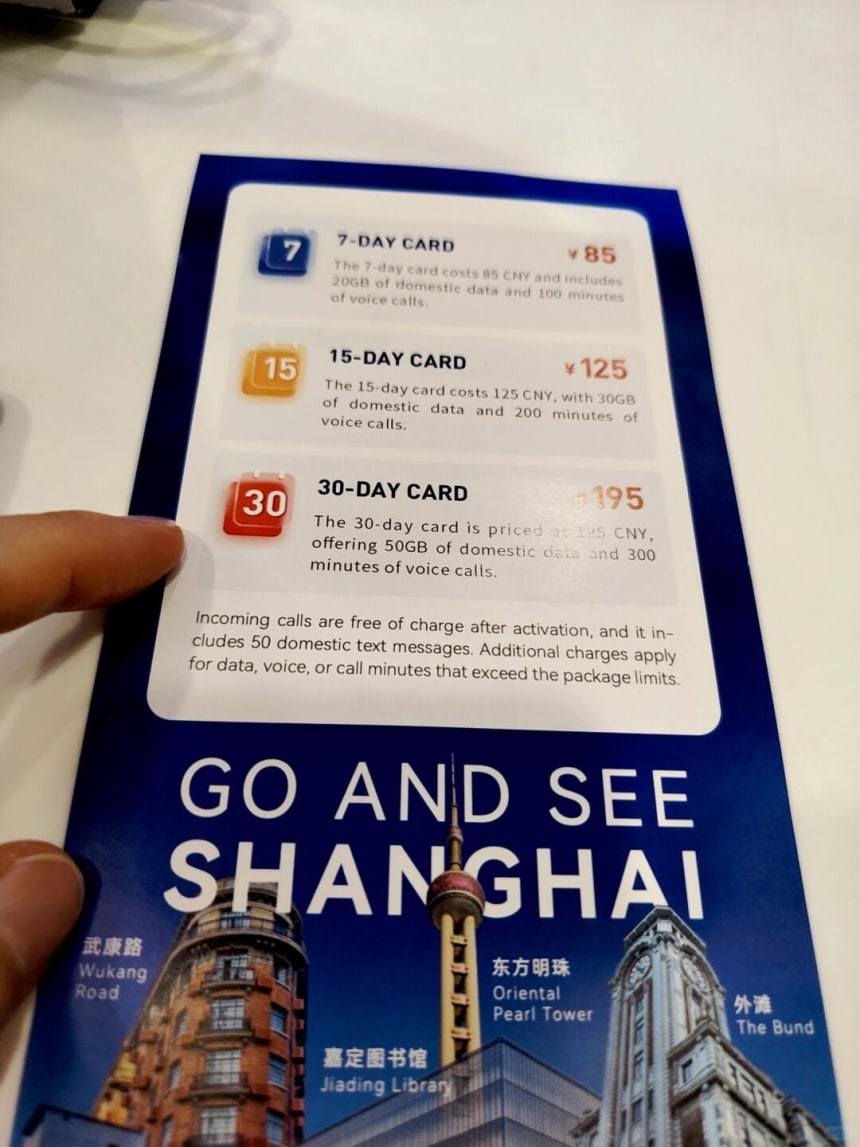
• China Telecom short-term plans: 7-day card 85 RMB, includes 100 min talk + 20GB data; 15-day card 125 RMB, includes 200 min talk + 30GB data; 30-day card 195 RMB, includes 300 min talk + 50GB data.
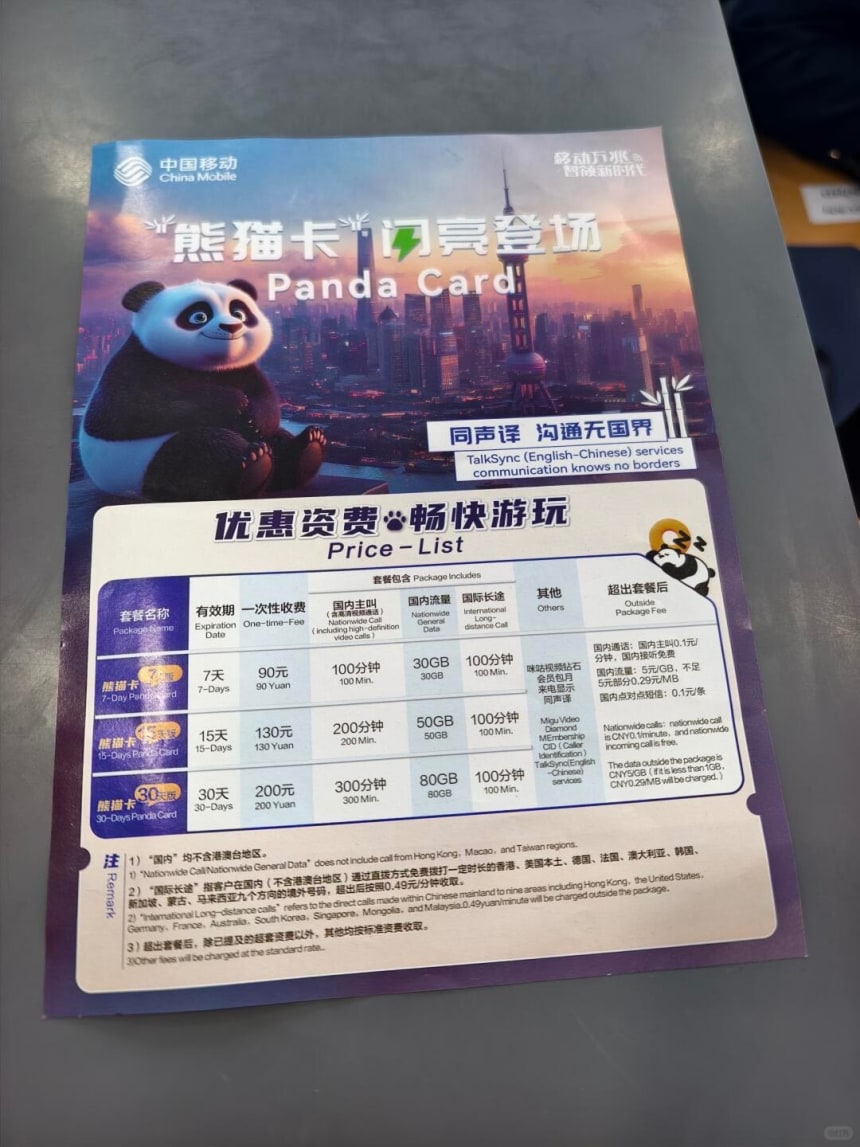
• China Mobile Panda Card / Leyou Card: 7-day card approx. 90 RMB, includes 100 min talk + 30GB data; 15-day card approx. 150 RMB, includes 200 min talk + 50GB data; 30-day card approx. 190 RMB, includes 300 min talk + 80GB data + 300 min international calls.
• China Unicom Nihao Card: 7-day card approx. 58–80 RMB, includes 10GB data + 100 min talk; 15-day card approx. 100–130 RMB, includes 20GB data + 200 min talk; 30-day card approx. 150–200 RMB, includes 30GB data + 300 min talk.
5. Purchase Recommendations
First-time visitors to China should prioritize China Mobile or China Telecom for more stable coverage. Choose the plan based on your stay duration: 7 days for short trips, 15 days for in-depth travel, 30 days for business trips.
6. Where to Buy?
The airport arrival hall is the most convenient location. Currently, major international airports across China have dedicated service counters for foreigners to purchase SIM cards.
• Shanghai Pudong Airport (PVG): China Mobile, China Unicom, and China Telecom counters at international arrival exits of Terminal 1 and Terminal 2. Accept foreign currency and foreign cards, with bilingual Chinese-English service.
• Chengdu Tianfu Airport: China's first full-service airport telecom store, 24/7 service—SIM card, currency exchange, and account setup all in one stop.
• Nanjing Lukou Airport: China Mobile Leyou Card available at Terminal 2 international arrival exit, with on-site staff assistance for activation.
If you prefer to buy in the city, search for "China Mobile service center" or "China Unicom service center" in map apps to find nearby locations.
Currently, over 1,400 service outlets nationwide accept foreigner SIM card applications, with some achieving 3 to 5-minute fast activation.
7. What You Need to Know Before Going
• Bring your original passport—real-name registration is mandatory. It's also wise to bring a photocopy of your passport photo page just in case.
• One passport is limited to one SIM card.
• Airport prices are typically 10%–30% higher than in the city. For short trips, buying at the airport is fine; for longer stays, head to a city store for better deals.
• Tell the staff your phone model to ensure compatibility. If your phone was purchased abroad, confirm it supports China's 4G or 5G bands.
• Before departure, confirm your phone is unlocked. A carrier-locked phone won't work with a Chinese local SIM card.
- International Roaming: The Easiest but Most Expensive Option
If you don't want to switch SIM cards or get a new number, simply use your home carrier's international roaming service.
1. Advantages of International Roaming
• No extra cards to apply for.
• Can usually access Google and other international services, depending on your carrier's routing.
2. Disadvantages of International Roaming
• Very expensive. Carriers like Verizon charge around $10/day—that's $140 for two weeks.
• Slower speeds. Roaming connection speeds are often sluggish.
• Cannot use local Chinese services. Without a local number, you can't register for Didi, Meituan, etc.
3. Recommendation
Unless you're staying 1–2 days and have a generous budget, this is not recommended.
- Internet Restrictions: What's Blocked and What to Do?
1. Overseas Services Inaccessible in China
Due to China's internet management policies, the following overseas services are not accessible via local WiFi or local SIM cards: Google Search, Gmail, Google Maps; YouTube; Facebook, Instagram, Twitter/X; WhatsApp; Google Play Store.
Note: Changing DNS to 8.8.8.8 or 1.1.1.1 will not bypass restrictions. Hong Kong and Macau are not subject to these restrictions.
2. Three Ways to Bypass Restrictions
• Option 1: Use a travel eSIM (Most Recommended)
Most travel eSIMs designed for China route data through overseas servers, allowing direct access to Google, WhatsApp, and Instagram without a VPN. This is the most hassle-free solution for travelers.
• Option 2: Use International Roaming
If your home carrier's roaming routes through your home network (rather than China's local network), you can also access international services. But as mentioned—it's expensive.
• Option 3: Use a VPN
Some travelers use personal VPN services. Note: In China, unauthorized establishment or rental of VPN channels for cross-border activities is illegal. Ordinary personal browsing typically does not constitute a criminal offense, but may result in warnings or administrative fines.
Suggestion: Prioritize eSIMs with built-in VPN functionality, such as Holafly or Yesim, to avoid the hassle of downloading and configuring a separate VPN.
- Quick Plan Selection Guide
• Staying 7 days or less → Travel eSIM (Nomad, Saily, or Airalo)—ready on arrival, no VPN needed, reasonable price.
• Staying 7 days or less + heavy data usage → Holafly eSIM with unlimited data + built-in VPN.
• Staying more than 1 week + need a local number → Local Chinese SIM card at the airport—cheaper and lets you register for local apps.
• Staying 1–2 days + generous budget → International roaming—easiest but most expensive.
• Traveling in a group → Portable WiFi hotspot—one device shared among multiple people.
Got more questions about your trip to China? Drop them below—I'm happy to help!

I'm Yuan, a local tour guide registered on tourHQ, based in Shanghai and covering the Yangtze River Delta region (including Suzhou, Hangzhou, Nanjing, and beyond). I don't just take you to the famous sights—I'll bring you to hidden alleyway eateries, share stories that never make it into guidebooks, and craft a journey that fits your pace and interests.
Ready to explore the real China with a local? Click on my profile now to learn more!
My profile: https://www.tourhq.com/guide/CN38750/yuan-shen
Let me help make your China trip truly unforgettable—see you soon!