

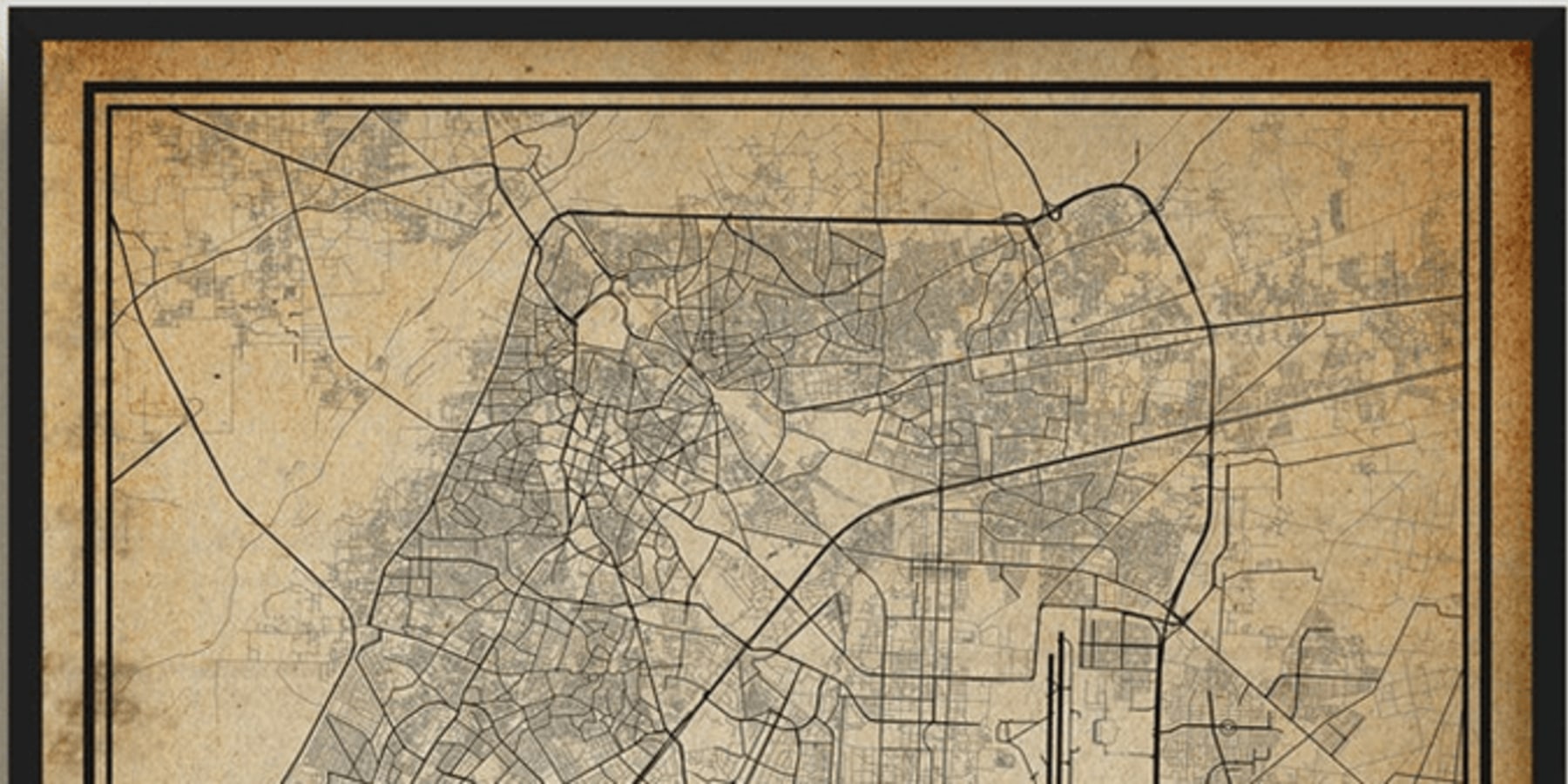

LAHORE
Lahore is the second largest city of Pakistan and capital of Punjab. It is cultural, historical, literary, political and educational centre of the country. People of Lahore are considered to be very lively and warm hearted. A famous Punjabi saying declares that:
"Lahore is Lahore"
and according to another:
''Who has not seen Lahore is not born as yet.''
Geographical Facts
Geographically Lahore can be divided into three parts. First one is confined within walls with twelve gates. Second is its extension outside the walls during Mughal, Sikh and British periods. Third is the modern Lahore which developed after independence. Lahore lies between Latitudes 31.15° and 31.50° North and Longitude 74.01° and 74. 39° East. It is a border town, with India lying on its East. On its South lies Kasur district. The Northern and Western boundaries are formed by the River Ravi. It is 217 meters above sea level with an estimated population of 15 million.
Climate of Lahore has two extremes. May, June and July are hottest months while December and January are coldest. Spring and Autumn are very pleasant which fall in the months of March and October respectively. Lahore receives heavy showers during July and August. Moderate winter rains come in late November.
Myths about its origin
Like most ancient cities of the world origin of Lahore is based on different myths and theories. The most popular is that it was founded by "Loh the son of Lord Ram", on the left bank of River Ravi. It is thought that Lahore came into existence between first and seventh centuries CE and rose to importance between second and fourth centuries. According to one belief the city came into existence in 882 CE, but nothing can be claimed definitely.
Ancient Names
In different eras Lahore had different names like Lahawar, Lahanoor, Lohpur, Mahmoodpur, Lohkot, Lohawar and Samandpal Nagiri.
Languages Spoken
Original language of Lahore is Punjabi which is spoken and understood throughout the city. Since new generation hardly speaks it and is more inclined towards Urdu and English, it is gradually being replaced by these two. It is a matter of serious concern for old Lahoris who love their mother tongue and are striving hard for its survival.
Brief History
Like most ancient cities early history of Lahore is obscure. Lahore was ruled by many dynasties and plundered by as much invaders. The history of Lahore can be divided into different periods. Governance changed hands among Jains, Hindus, Muslims, Sikhs and the British. It ultimately became a Muslim ruled city after partition of India.
Sultan Mehmood Ghaznavi was the first Muslim ruler of Lahore. It was the capital of Ghaznavi Empire. Then came the rule of Delhi Sultanates which included Khiljis, Tughlaqs, Sayeds, Lodhis and Suris. In 1524 CE Lahore became part of Mughal empire and remained in it till 1752. It reached the height of its glory during Mughal period. In 1761 after the Mughals, Lahore became part of Marhata empire, for a brief period. Marhatas were succeeded by Sikhs. During this era Lahore was divided among three Sikh chieftains of Bhangi Misl (tribe) named Lehna Singh, Gujjar Singh and Sobha Singh. They remained in control till 1799, when Sikh Raj was consolidated by Maharaja Ranjeet Singh. He made Lahore his capital and extended his raj up to Multan, Kashmir and present day Khyber Pakhtunkhawa. His rule ended with his death in 1839. The successors of Maharaja Ranjeet Singh were weak and could remain in control of Lahore till 1846 when the British captured it. British period ended in 1947 with the partition of India.
Buildings of Lahore
Historical
The Royal Fort ( Shahi Qila)
Origin of this fort is traced to Loh, the son of Ram the Hindu god. It was rebuilt in the 17nt century during the Mughal period during the reign of Akbar-e-Azem. Many buildings within the fort were added during Sikh and British rule. At present this fort is on the UNESCO heritage list. Bara Dari Hazuri Bagh built in the garden between Shahi Qila and Badshahi Mosque is a marble pavilion built by Maharaja Ranjeet Singh. Originally it was a double storied structure but only one story remains now as the upper one collapsed as a result of an earthquake.
Badshahi Mosque
Badshahi Mosque was built by the Mughal Emperor Aurangzeb Alamgir in 1671. It is situated on the western side of Shahi Qila separated by a small garden. The mosque is made of red sand stone and marble.
Jahangir's Tomb
Jahangir was the fourth ruler of Mughal Dynasty. He is buried on the right bank of River Ravi. His Tomb was built by his wife Noor Jahan. This Majestic building is made of yellow sandstone and marble and is surrounded by a huge garden.
Tomb of Noor Jahan
The Tomb is located close to that of Jahangir and was built in the 17th century. The Tomb's marble facade was plundered during the Sikh era.
Shalimar Gardens
Mughals were very fond of gardens therefore like every city they made Shalimar Garden in Lahore. It is a beautiful combination of architectural beauty and horticultural Finesse. It was built IN 1642 by the Mughal Emperor Shah Jahan.
The Tomb of Anarkali
This 16th century tomb is situated within the present day Punjab Civil Secretariat. This is the burial place of a courtesan of Mughal Prince Saleem who later became Emperor Jahangir. In addition to these historical buildings a large number of other such pieces of old architecture can be found in the environs of old and extended city of Lahore
Building of Colonial Era
The look of Lahore changed during the British rule when a number of new buildings were added during this period. Most of these are situated on or around the famous Mall Road. These include Punjab Civil Secretariat, Government Collage Lahore, The Town Hall, The Lahore Museum, University of the Punjab (Old Campus), Aitcheson College, National College of Arts, GPO, The Lahore High Court, Punjab Assembly Building, Dayal Singh Mansion, Dinga Singh Building, Ghulam Rasool Building, Shah Din Building and Free Mason Hall. Governor's House, State Guest House and Lahore Railway Station were also built during the British period.
Modern Buildings
Alfalah building was the first multi storied venture of Lahore. It was built by the Government of Pakistan in the sixties. Minar-e-Pakistan is a favorite tourist site and is situated close to the Shahi Qila. It was built to commemorate the passage of Pakistan Resolution. Wapda House, State Bank Building and Arfa Kareem Tower. In addition to these a large number of modern buildings have been made both by the government and private sector, in the modern city of Lahore.
Sufis and Saints of Lahore
Sayed Usman Ali Hajwere popularly known as Data Ganj Baksh, Pir Makki Sahib, Madho Lal Hussain, Mian Mir Sahib and Sayed Mauj Darya are notable Saints of Lahore. They were instrumental to spread of Islam and religious teachings in the region. People from all walks of life visit their mausoleums to pay homage.
Notables of Lahore
Fakeer Syed Azizuddin was the Head Minister of Maharaja Ranjeet Singh. He had great influence and commanded respect and authority is his court.
Sir Ganga Ram was a civil engineer and philanthropist. Construction of famous buildings of Lahore are to his credit. In fact Lahore got its new face due to his engineering expertise, during the British period.
Bhai Ram Singh was the chief architect of Punjab. Most of the buildings built by Sir Ganga Ram owe their architectural designing to Bhai Ram Singh.
Literary Figures of Lahore
Doctor Allamah Iqbal the poet philosopher who gave the idea of Pakistan was a resident of Lahore. In addition to many, Syed Imtaiz Ali Taj (play write), Faiz Ahmed Faiz (poet), Saadat Hassan Manto (writer), Bapsi Sidhwa (writer) Munir Niazi (Poet), Intezar Hussain (writer) and Rudyard Kipling (writer) are notable literary figures of Lahore.
Celebrations, Festivals and Occasions
Religious festivals like Eids are celebrated with joy and fervor. The Urs of Data Ganj Baksh and Mela Chiraghan at the tomb of Madholal Hussain are important events of Lahore. Yom-e-Ashoor is observed with great sanctity every year.
Educational Institution
Lahore has always been a centre of Learning and education. Its famous educational institutions include University of the Punjab, Government College University, FC College, Islamia College, Lahore College for Women University, Kinnaird College, National College of Arts, King Edward Medical University, Fatimah Jinnah Medical College, University of Engineering and Technology and Aitcheson College Lahore. There are also a number of private schools, colleges and universities both for male and female students.
Transport System
Lahore is linked with national and international destinations by its modern airport named after Allamah Iqbal. It also has the honour of having the oldest airport of the country which is now used for training purposes and is called Walton Airport. Lahore can proudly boast of having the largest and most beautiful railway station of the country. From here trains come and go in all four directions. Intercity road transport offering different travel classes are available round the clock. The city has an Orange Line Train, Metro Bus Service and other feeder services to facilitate every day commuters.
Gardens
Lahore is called the city of gardens. The famous Shalimar Garden is a symbol of Mughal architecture and Bagh-e-Jinnah traces its origin to the British period. Jillani Park, Greater Iqbal Park, Gulshane Iqbal Park, Jallo Safari Park, and Lahore Park are relatively later additions to this list.
Art, literature and Culture
Lahore has always been a centre of artistic, literary and cultural activities. For the promotion of these, several institutions are present in the city. Alhamra Cultural Complex, Open Air Theater Bagh-e-Jinnah, Qazafi Cultural Complex, Aiwan-e-Iqbal and Shakir Ali Museum are few examples of such institutions.
Sports Activities
Lahoris are very fond of sports and games. Worth mentioning are hockey, cricket, football, volley ball, badminton, Kabadi and wrestling. Qazafi Stadium has dedicated grounds for cricket and hockey. Railway Stadium, Atique Stadium, Gymkhana Cricket Ground and Army Stadium also have all the facilities for many sports events.
Cuisine of Lahore
Lahore is famous for its sumptuous and traditional dishes. Lahori dishes are very rich and delicious. The people who like spicy dishes can go for biryani, chicken karahi, paaye, taka tak or kata kat, chanay, pathooray and qeemay wale naan are for them but if you like food with less salt and spices you have to tell in advance. Some famous snacks of Lahore include samosay, ladu peethy, gol gappay and dahi barray. Famous breakfast food are halwa puri, kulcha, siri paye, bong and nihari. All the famous international fast food chains like Pizza Hut, McDonald, KFC and Burger King are operating in Lahore. If we talk about the local ice-cream there is only one and that is ''kulfi'' and it is sold locally on carts. Lahore has very good foods to offer. In short desi foods of Lahore are a feast for everyone.